
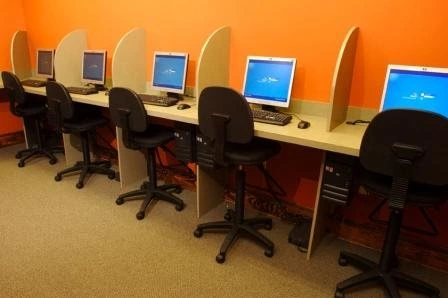
Cyber Cafes

In a world dominated by smartphones and personal internet access, one might wonder if cybercafes have become a cliché. Yet, these digital hubs persist and even thrive in a smartphone world. In the past cyber cafes played a vital role in providing internet access and any computer/technology-related services. It was the only option available since there were no alternatives. People used to visit cyber cafes to browse for a fee and mostly saved their data in compact disks (CDs) for future retrieval. Cyber cafes used to be congested with customers who wanted to be served, and at that time the service fees were so high. Both the youth and elderly depended squarely on cybercafes, and even knowing how to use a computer was considered prestigious. These digital dens were run by a few who knew how to use computers, it did not require an in-depth understanding of computer operations to run cyber-café.
With the advent of smartphones and the widespread of smartphones, cybercafes’ roles started deteriorating. Smartphones are capable of doing several services offered in cybercafes if not all. People could use smartphones to browse and do a variety of online services without necessarily visiting cyber cafes. The new generation is characterized by high proficiency in computers and technology. Most of them have barely visited cybercafes throughout their lives.
The cybercafe business was one of the booming businesses in which one could do well and prosper, but since 2009 things changed, and the business started going down. There was a change in trend since most people started using smartphones instead of visiting cyber cafes. Smartphones were well equipped just as PCs and carried out did same tasks.
To remain relevant in the smartphone world, cyber cafes had to adapt and change to fit in the smartphone world. Mostly in service provision; cyber cafés owners had to introduce some other services to keep their businesses running. The major role of cyber cafes was internet browsing service changed, they started offering other services like graphic design, computer repair, and ‘complex’ government services and many cybers were integrated into computer training institutions. With these many cybers have remained relevant today.
Cyber cafes use printing as their main aspect of business. This saw the coming up of high-speed printers to meet the printing and photocopying needs of customers. From printing simple business cards, invitation cards, Harambee/ contributions cards, marketing flyers, and posters to name but a few. Only a handful of people have printers of their own, this makes cyber cafes the only option.
The transition of government service provision to digital through e-citizen revived the dying cyber café business. Most government employees visit cybercafes to be helped in accessing online services. The government has simplified most if not all of the services that were initially offered physically and one had to visit government offices to be served.
Cybercafé business near institutions of higher learning is booming, this is due to a high demand for printing services by students and other stakeholders in the institution. To meet the high demand for printing services, cyber cafes around universities and colleges invest a lot in printing, and also other a few online services which students do.
Cyber cafes have withstood the test of time and have evolved to fit in the smartphone world. They offer more than just internet access, they provide printing, resources, and other opportunities that go beyond the capabilities of a smartphone. Cyber cafes continue to play a crucial role in the modern world.
By Orifwa Ruben.
Similar Posts by The Mt Kenya Times:
- Mt Kenya Times ePAPER October 22, 2026
- Ruto heads to Harare for COMESA summit on trade and regional security
- Mudavadi and Wetangula walk out as Sifuna speaks at Nabwera memorial
- Police accountability on trial as seven officers face probe over journalist’s arrest
- Learners, teachers graduate from thrive for good organic farming training
About the Author


Good work Orifwa….