Traditions Of Customs, Ceremonies And Holidays Of The Uzbekistan People
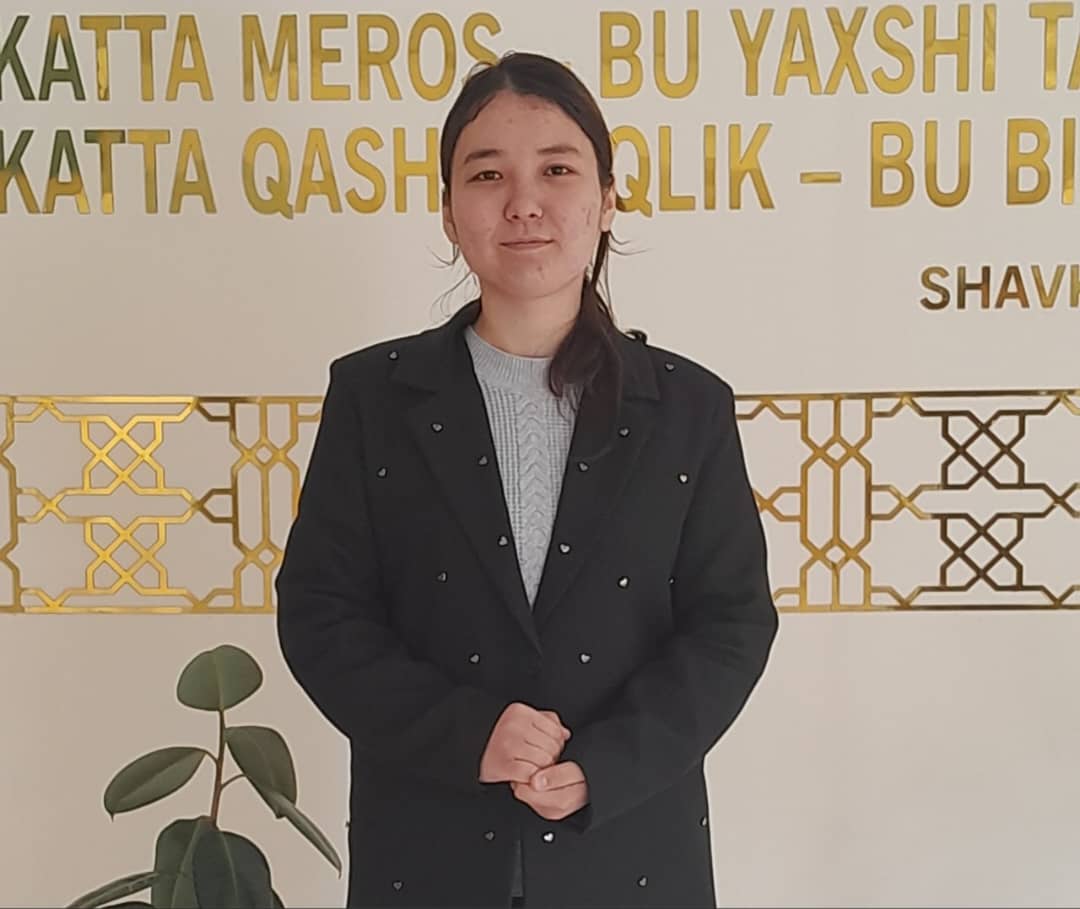
Marjona Tokhtayeva Boybori

By: Marjona Tokhtayeva Boybori
Abstract: Three articles provide an explanation of customs, rituals, and holidays. A detailed discussion of the customs, rituals, and holidays of the Uzbek people is provided.
Keywords: Tradition, people, ceremony, Navruz, holiday
It is of great importance to know and study the various traditions, ceremonies, customs that have been living together with the people, as well as the circumstances of their origin. Because although these are ethnographic data, they are closely related to the history and past of the people. Customs are a specific practical aspect of social culture. They have a stable and stable description, and are implemented not by individual or single individuals, but by the majority.
The concept of a ritual also implies the repetition of certain words and actions, but in this case, words and actions acquire conditional symbolism. Rituals have internal integrity, compositional unity, and formal elegance. For example, let’s take harvest festivals, cotton festivals, flower and spring festivals, grape and melon festivals. These festivals and holidays are held as a celebration of joy, abundance, and elegance [pp. 1,4-11]. Today, when our country has gained independence, the traditions and rituals of the peoples of our country have restored their ancient manifestations and have become a great force accelerating the development of our society.
Positive customs and traditions that have been formed and preserved over the centuries: loyalty to the Motherland, respect for the elderly, care for parents, orphans, the elderly, blood relations, hospitality, etc. are reflected in holidays and rituals of a social nature. These social characteristics have been preserved from ancient times to the present day.
Various holidays, mass games, seasonal and professional rituals created by the people and of great social significance occupy a special place in the cultural heritage of the Uzbek people. Among the most widespread and national traditions among the Uzbek people, seasonal rituals are noteworthy. According to some researchers, Uzbek seasonal rituals can be classified into the following categories:
- Winter rituals such as chats.
- Spring rituals such as Navruz, shokhmoylar (joining), tulip or red flower sayli, project tashy, “slow wife” and others.
- Summer rituals – “Kovun sayli”, “Choy momo”, etc.
- Autumn rituals – “Mehrjon”, “Oblobaraka”, shamo sayli, grape sayli, etc. related to the harvest.
One of the long-standing traditions of the Uzbek people is hospitality. When a guest arrives, they are asked about his well-being, have a cordial conversation, and are showered with all the delicacies in the house. Friends and relatives from far and near are remembered. The guest conveys the warm love and greetings of his relatives and friends to the host. In our society, along with our traditions and rituals, there are also holidays. For example, the holiday of Navruz, which is widely celebrated among nature holidays, can be cited as an example. On the day of the holiday, people give each other sugar and sweets (meaning may your life be sweet), present flowers (meaning may you be beautiful), sprinkle water on each other (meaning may there be plenty of water this year, may there be a bountiful harvest), and a number of other customs have been formed.
In addition, there are many more holidays in our country. These are Independence Day, Teachers and Mentors Day, the day the Constitution was adopted, the first days of Ramadan and Eid al-Adha [page 2, 6]. Holidays have been fulfilling the task of restoring the national pride of our people, raising the morale of people, and encouraging them to work for the betterment of the country, creativity, and innovation. The traditions and rituals of the Uzbek people are being studied by ethnographers. In this regard, it is especially appropriate to mention the works of such Russian scholars as L.P. Potapov, G.P. Snesarev, Sazonova, K.L. Zadikhina, K. Shoniyozov, O.A. Sukhareva, N.A. Kislyakov, N.P. Lobacheva, B.Kh. Karmisheva, and the studies and articles of such folklorists as M. Alaviya, B. Sarimdokov, N. Kurbanova, N. Kurbanbayeva, O. Usmanova, M. Juraev, S. Davlatov. In conclusion, it can be said that the existing customs, rituals, and holidays of each people served to form the spiritual world of that people. Similarly, the customs, rituals, and holidays of the Uzbek people have been passed down from ancestors to generations for centuries, enriching our cultural life.
Marjona Tokhtayeva Boybori
Chirchik State Pedagogical University,
Faculty of Humanities,
History Department, 2nd year student
Similar Posts by The Mt Kenya Times:
- Mt Kenya Times ePAPER September 17, 2026
- Ruto and Uhuru: The rupture at the heart of Kenya’s 2027 election
- Gakoromone traders and rights group demand closure of sewage discharge
- Retirement is not disenfranchisement: Reclaiming the constitutional rights of Kenya’s former presidents
- Kenya’s 2027 election: Can technology strengthen democracy or manipulate voters?
About the Author