WE MUST NOT PREVARICATE: RECEIVING THE JURIST OF THE YEAR AWARD
 The Mt Kenya Times
Njonjo Mue
By Njonjo Mue
Worth Noting:
- I am delighted and deeply humbled to be able to accept the Jurist of the Year Award for 2000. I come to this place from a point of distinct disadvantage on two scores. Not only shall I be attempting to walk in the giant footsteps of such luminaries as Pheroze Nowrojee, Martha Karua, James Orengo and Kivutha Kibwana, I am also somewhat of an outsider having spent the last three-and-a- half years working from South Africa. You will therefore forgive me tonight if I come across as being a little intimidated.
- Let me start by pointing out that in electing me Jurist of the Year, ICJ-K has taken two bold steps in one, for which I would like to pause and congratulate you.
I felt exhausted and in need of change. This might come as a bit of a surprise as I had worked in Johannesburg for only three and a half years.
However, it was a time not only of hard work setting up and running the regional office of ARTICLE 19, which was my day job, I was also at the forefront of mobilizing Kenyans in the Diaspora to do their part to push for democratic reforms back at home. Both roles involved a really busy travel schedule which was rewarding but also very demanding on my body which struggled to keep up with being in so many time zones.
As I was preparing to return home to Kenya after resigning my position with ARTICLE 19, I received unexpected good tidings that my hard work on behalf of the motherland had been recognised and was about to be rewarded.
It was early December 2000 when I received a call from my old friend, Kagwiria Mbogori in Nairobi, who was then serving as the Executive Director of the Kenya Section of the International Commission of Jurists (ICJ – Kenya).
“I have some good news for you, my friend,” she said after asking me how I was, “You have been elected the Jurist of the Year!”
It took me a while to absorb the news. The Jurist of the Year award is one of the most coveted and prestigious awards that is given annually by members of ICJ – Kenya to a jurist “who has demonstrated unparalleled courage, determination for the preservation and restoration of human dignity, and realization of the tenets of democracy and the rule of law.”
“The awardee needs to have consistently, fearlessly and impartially promoted the rule of law, democracy and human rights in Kenya.”
The award had been previously been awarded to such luminaries as Pheroze Nowrojee, Professor Kivutha Kibwana, Martha Karua, and James Orengo.
I would be the first Jurist of the Year in the twenty-first century and, at the age of 33, I was going to be by far the youngest recipient of the award.
“Are you still there?” Kagwiria’s voice brought me back to the present.
“Yes, I am,” I replied, “I am just a bit shocked, to be honest.”
“Why should you be?” she asked matter-of-factly, “You have been really consistent, whether at home or abroad, in standing up for the values that ICJ – K stands for and, needless to say, you have had quite a year of writing, giving speeches, rallying the troops and keeping hope alive.”
She informed me that the ceremony for the presentation of the award would normally take place on the day the world celebrated International Human Rights Day.
The 10th of December that year, however, fell on a Sunday, which meant that the ceremony would be brought forward to Friday, 8 December 2000.
I confirmed that I would be available on the said date to receive the award in person in Nairobi.
A light wind was blowing over a cloudy city in the early evening of Thursday 7 December 2000 when my flight landed at the Jomo Kenyatta International Airport from Johannesburg.
I was picked up from the airport by my friend and long-time ICJ – Kenya driver, David Kimani, who drove me through Mombasa Road and Uhuru Highway until Museum Hill where we branched off, joined Ojijo Road and headed towards Parklands Sports Club where I was booked to stay for the next two nights.
The following day, I fought off the nervousness that was creeping up on me when I was picked up by one of the ICJ – K Council members to be driven to the ICJ-K offices in Kileleshwa where the award ceremony was to be held.
We drove in to the compound to find a number of tents and tables set up for food and drinks ready for the cocktail party with music playing as if to announce to all and sundry that the Christmas season had officially began.
A few guests had already arrived and were exchanging pleasantries over drinks and snacks.
I asked for a quiet office where I took a few minutes to finish typing and printing my acceptance speech before joining the growing number of guests outside.
They were clearly the who’s who of the legal and civil society fraternities who were joined by some notable diplomats and the odd government official.
I enjoyed mingling and catching up with old friends whom I had not seen in a while as well as current ICJ – Kenya staff members who were clearly enjoying the flagship, and final, event of what must have been a busy year.
My animated conversation with my friend, the TV journalist Linus Kaikai, was interrupted by the tapping of a wine glass to call the guests to attention and direct our gaze to the podium where the speeches were about to begin.
Kagwiria gave a brief welcoming speech and invited the ICJ – K Chair, Mohamed Nyaoga, who then invited the Guest of Honour to deliver his remarks.
Finally, the citation of that year’s awardee was read out to the curious audience. It was long and detailed. In addition to explaining the achievements that had led to my selection it also gave three specific reasons why over and above the traditional criteria, that year’s selection was unique.
“This year’s recipient of the Jurist of the Year award is remarkable in three respects:
“Firstly, he is by far the youngest person to receive this award at only 33 years of age.
“Secondly, although many of his efforts in the advancement of human rights have clearly impacted in Kenya, the recipient has been resident in South Africa for the last three years. Despite his relative young age, he has been a critical force in getting Kenyans outside the country… to rally together for democracy and human rights back at home.
“Thirdly, as a prolific writer, he has been at the forefront in the use of electronic mail and the Internet to advance the cause of human rights in Kenya. In this way, he has opened our eyes to the unlimited potential that exists in these new technologies.
“It is thus with great pride and pleasure that the ICJ-K presents the 2000 Jurist of the Year Award to Mr. Njonjo Mue.”
When the applause finally died down and those around me enthusiastically gave me congratulatory handshakes and pats on the back, I was invited to receive the award and deliver my address.
In my remarks, I spoke not only of the importance of new technologies in advancing human rights; I also spoke of the necessity of freedom in pushing back against poverty and underdevelopment.
I quoted authors such as Thomas L. Friedman and Nobel Prize winning economist Amartya Sen to buttress the case for creating a stable political, legal and economic environment friendly to entrepreneurship and investment, in which people can start businesses and raise their productivity, which is the precursor to effectively fighting poverty.
I critiqued globalization yet called upon African countries to make the right choices that would take advantage of it and encourage prosperity to come and stay.
I called on our governments to be more tolerant to criticism from citizens disaffected by their decisions and challenged civil society to be courageous in identifying the issues to take up and pursue on behalf of their constituencies.
I concluded my remarks by pointing to three challenges that faced us as we embraced the opportunities presented by the dawn of a new century.
First, we needed to organise the unorganised (not disorganised!). The role of education, I noted, was not to speak for the voiceless because the best people to speak for the voiceless are the voiceless themselves.
“In this context then,” I said. “The real challenge is to help the excluded and the marginalized to find their own voice and to articulate their own concerns, for this enables the people themselves to become the guarantors of their own liberty.”
The second challenge was that of dragging all our issues out into the public domain to enable us to deal with them as a society.
I pointed out that the human rights movement was sometimes selective in choosing the issues to articulate partly based on convenience and practical considerations such as availability of funding.
“But we cannot choose our battles only because they can be won,” I said. “We must choose our battles because they must be fought.”
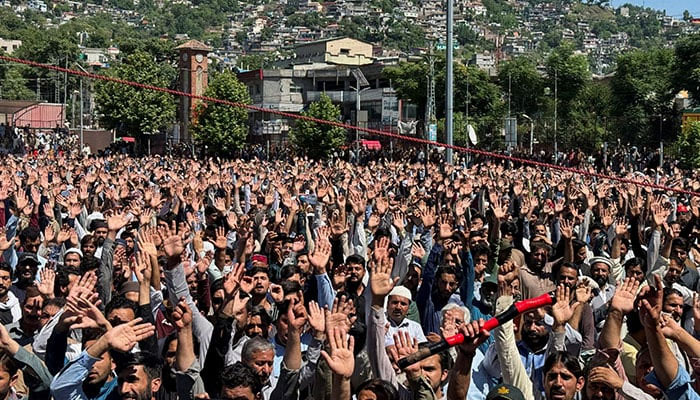
Thirdly, I told the audience, we needed to be more robust in reclaiming public places for peaceful protest because no meaningful change could take place in society unless people were free to express their choices in public without fearing violence or victimization.
This not only called for the necessary law reform to guarantee this right but a less insecure executive arm of the government and vigorous education of people across all cadres of our society on the value, philosophy and practice of nonviolent direct action.
Finally, I told my audience that these were just some of the challenges that we needed to rise up to if we were to realize our vision of building a strong, free and united African country where liberty, human dignity and respect for the rights of all would form the basis of social behaviour by both the citizen and the State alike.
“In meeting these challenges we must not prevaricate,” I concluded. “In staying this course, we dare not fail.”
****
ACCEPTANCE SPEECH BY NJONJO MUE, JURIST OF THE YEAR 2000
Fellow human rights crusaders, ladies and gentlemen, good evening.
I am delighted and deeply humbled to be able to accept the Jurist of the Year Award for 2000. I come to this place from a point of distinct disadvantage on two scores. Not only shall I be attempting to walk in the giant footsteps of such luminaries as Pheroze Nowrojee, Martha Karua, James Orengo and Kivutha Kibwana, I am also somewhat of an outsider having spent the last three-and-a- half years working from South Africa. You will therefore forgive me tonight if I come across as being a little intimidated.
Let me start by pointing out that in electing me Jurist of the Year, ICJ-K has taken two bold steps in one, for which I would like to pause and congratulate you.
First, you have this year chosen by far the youngest person to hold this coveted title. This is a rare show of confidence in the young people of our country – those I like to call The Uhuru Generation – just like you broke another barrier last year when you named Ms. Martha Karua the first woman Jurist of the Year.
I am aware that neither age nor gender should qualify or disqualify one for any office, position or title, least of all a human rights achievement award. However, in a country that has traditionally elevated old males sometimes far above their deserved status by virtue of their age and gender alone, the election of a woman or a relatively young man is an important symbolic assertion that Kenya belongs to all who live in it and who work to improve the lives of its people, young and old, male and female.
Second, …. it is clear that it my selection as Jurist of the Year was based in part on my contribution and that of my colleagues to the cause of democracy and human rights during the last three years while I was resident in South Africa. This is a recognition of the universality and indivisibility of our struggle and the fact that what matters is not where one is but what one stands for.
It is also an acknowledgement of the role of technology in advancing that struggle. For it is technology that has enabled me to reach countless Kenyans here and around the world with my writings and my view of the challenges facing us; and it is technology that has enabled us in South Africa to share what we were doing for our cause with many people here at home and throughout the world.
And yet it has to be said that we in Africa have fallen woefully behind in exploiting the potential of new technologies. The human rights movement has been at the forefront in using electronic mail and the Internet to advance our cause, but we have not done nearly enough.
These new technologies offer almost unlimited potential in breaking down traditional barriers in a world without walls. While it is true that Africa faces many challenges of connectivity and high costs of communication, it is still the case that we are not fully exploiting what is already available to us. It is a question of mind-set rather that access that needs most urgently to be addressed if we are to stake our claim to this heritage of humankind and to deploy it to tackle the twin challenges of poverty and underdevelopment. I would like to challenge us here to take the lead in this regard.
But as journalist and author Thomas L. Friedman reminds us in his excellent book on globalization, The Lexus and the Olive Tree, technology, or its absence, is not the only variable in combating poverty and underdevelopment. How societies are governed remains the most important variable.
Creating a stable political, legal and economic environment friendly to entrepreneurship and investment, in which people can start businesses and raise their productivity, is the precursor for effectively fighting poverty.
Nobel Prize economist Amartya Sen makes this clear in his book, Development as Freedom. He argues that freedom, the ability of a person to make decisions about his or her life, is not only the most efficient means for building a healthy, developed society, but also its ultimate goal.
When you put assets in the hands of the poor in a politically distorted environment, not much happens. (And for that reason, we can pour all the money at our disposal into so-called poverty eradication initiatives, but without addressing the distortions in our political environment, we shall be wasting precious time and resources.)
But when we do summon up the courage and political will to create a reasonably stable and free socio-political environment, a few assets in the hands of the poor will go a long way towards combating underdevelopment and eradicating poverty.
As Sen points out, there has never been a famine in a country that is democratic, has multi-party politics and a free media.
“Political freedom,” Sen notes, “gives voice to the vulnerable sections of the population and provides them with the power to demand and receive support in times of emergency crisis.”
In recent years, we have watched neighbouring countries we once regarded as examples of ruin and degradation make great strides in improving the lot of their people, and we have publicly or privately wondered what went wrong with the Kenyan dream.
It is not that Uganda has suddenly discovered a special gene that enables people to advance. Rather, Kenya has fallen behind in the globalization era because we have failed to put in place even the minimum political, economic and legal infrastructure to take advantage of globalization. Prosperity did not run away from us; we failed to make the choices that would encourage it to stay. Countries like Uganda, Poland and South Korea have made the right choices and reaped the benefits.
But what are the right choices, you ask, and do they include the massive retrenchments that are causing so much social dislocation? And where do we strike the balance between massive lay-offs on the one hand and, on the other, the old centralized planning, regulation and price controls that attempted to guarantee everyone a job at the expense of costly inefficiencies in the system, and that are now threatening to come riding on the back of an inevitable backlash?
The paradigm of a global free market has been called seriously into question all over the world and it would be premature to suggest that globalization will have the final say in regulating human affairs in this millennium. But for the foreseeable future, it is the defining socio-economic formation of our time.
Thus, while in the long run, we must work to promulgate a more just and inclusive world order, in the interim, we have to make difficult choices if we are to take advantage of the global free market paradigm.
But the more difficult the choices we have to make, the more seriously we need to reach political consensus on the direction to take as a country. We cannot massively lay off people and then violently prevent them from expressing their anger and frustration as we did outside Harambee House last week.
Reasonable people anywhere will only support that which they have had a part in deciding. That is why to attempt economic reform without fundamentally altering our political landscape to make it more inclusive and accountable is to put the plough before the ox. This will simply not work.
Nor am I here merely referring to the need for meaningful constitutional reform. Such reform is a necessary but not sufficient condition for realizing the fundamental changes of which I speak. Indeed the most sustainable constitution-making processes have been those where the people have risen up and asserted their rights, with the writing of the actual document coming at the tail end. Any effort to do the opposite in Kenya will be doomed to fail no matter who leads it.
We can borrow or craft the best document in the world and make it our Basic Law, but until our people are sufficiently empowered to enforce their own rights, such a constitution shall be a document full of purpose and promise but signifying nothing.
For this reason, even in this age of globalization and technological advancement, the vital challenges that face us today are quite simple to grasp. In my view, they fall into three categories:
First, we must robustly embark upon the task of organizing the unorganized. I was once led to believe that the role of education was to enable us to speak for the voiceless; but I have since come to know that the best people to speak for the voiceless are the voiceless themselves.
In this context then, the real challenge is to help the excluded and the marginalized to find their own voice and to articulate their own concerns, for this enables the people themselves to become the guarantors of their own liberty.
The second challenge is that of dragging our issues – all our issues – out into the public domain to enable us to deal with them as a society. The human rights movement has sometimes tended to be selective in choosing the issues to articulate partly based on convenience and practical considerations.
But we cannot choose our battles only because they can be won. We must choose our battles because they must be fought. In this regard, we must place the rights of people with disability right up there with the right to political expression or to popular participation in constitution making.
Thirdly, we need to be more robust in reclaiming public places for peaceful protest. In Kenya today, the right to peacefully demonstrate in public places is virtually non-existent. Indeed the very word demonstration has come to be associated in the minds of people with riot and violence.
And yet, no meaningful change can take place in a society unless people are free to express their choices in public without fearing violence or victimization. This calls not only for law reform to guarantee this right, but a less insecure executive arm of the government and vigorous education of people across all cares of our society on the value, philosophy and practice of non-violent direct action.
These are just some of the challenges that we must rise up to if we are to realize our vision of building a strong, free and united African country where liberty, human dignity and respect for the rights of all shall form the basis of social behaviour by both the citizen and the State alike.
In meeting these challenges we must not prevaricate; in staying this course, we dare not fail.
I thank you.
Njonjo Mue
Nairobi
8 December 2000.
Similar Posts by The Mt Kenya Times:
- Mt Kenya Times ePAPER October 1, 2026
- Museveni backs Lamu but keeps Uganda’s money at home
- Sifuna’s party wins its name — and Kenya’s opposition race begins in earnest
- Lamu’s $16B gamble: Africa’s biggest refinery divides the region
- Ruto launches KSh2.2 trillion Lamu refinery in East Africa’s biggest energy bet
About the Author