Why it is currently unwise for Kenya to ban import of second hand clothes
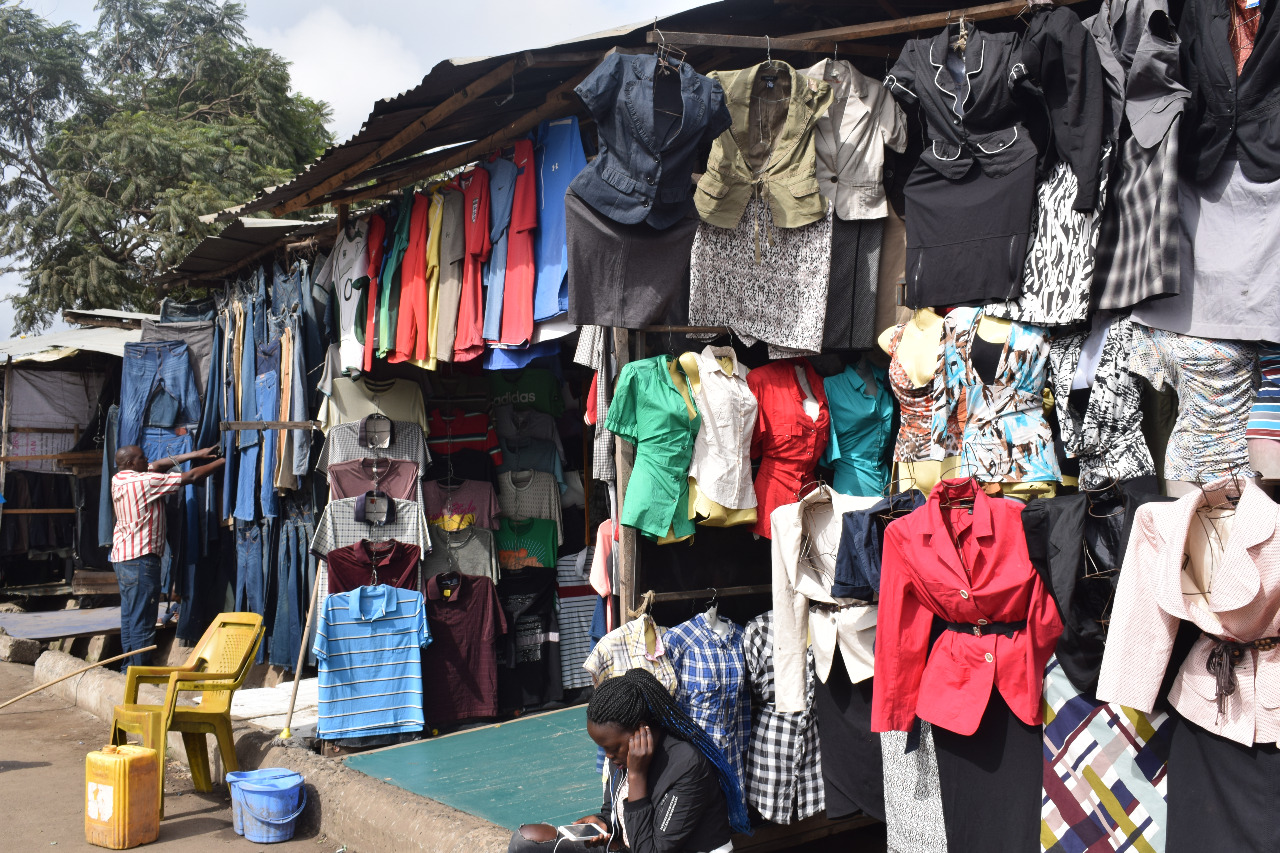
mitumba

By: N. George
Worth Noting:
- In 2019 in Kenya 2.5 per cent of private consumption was spent on clothing and footwear. This spending amounts to Sh197.5 billion which comes to an average of Sh4,150 per person per year for all purchases of second-hand garments, new clothes and footwear.
- In the first week of June 2022 a leading presidential candidate in August 2022 general election Raila Odinga talked about need to protect local textile industries by banning imported second hand an issue which elicited a lot of reactions from his main competitor Dr. William Ruto, second hand cloth sellers as well as general population majority of whom wears mitumba clothes due to various factors among them low income levels.
Textile industry is a labour intensive so it offers huge employment opportunities not only to Kenya through forex from exports but also to factory workers and farmers who grow cotton.
The period post liberalization of the economy the performance of the textile sector deteriorated as the sector could not compete with cheap products from other countries.
In 1990 to save the textile and apparels sector, promote exports, increase foreign exchange earnings, transfer of technology and skills, employment creation and enhancement of industrialization Kenya started implementing the export processing zones EPZ programme which came with incentives like 10 year tax holiday, unrestricted foreign ownership and employment, waivers for import tariffs and freedom to repatriate unlimited amount of earnings. Today majority of EPZs in Kenya produce garments for export to the U.S.
The apparel industry in Kenya enjoys duty free exports to USA under the African Growth and Opportunity Act (AGOA). The AGOA has boosted Kenya trade in apparel with exports to US increasing from $8.5 million in 2000 to $332 million in 2014. Investments in this sector has also improved having to a tune of 21% Compound annual growth rate (CAGR) while employment grew at a 12% CAGR to reach 37,758 people. According to the World Bank in 2015 exports, employment, and investment in Kenya’s textile and apparel industry grew by 24%, 14.7%, and 10.3% respectively.
There are about 52,000 people employed in the export processing zone in Kenya located at a satellite town of Nairobi called Athi River. According to the national economic survey of 2018 where they manufacture pants, vests and T-shirts. The manufacture these clothes package them as per orders placed by renowned brands in USA like Calvin Klein, Tommy Hilfiger, wrangler and Dickies. Prior to October 2019 the exports of the clothes was done through shipping but now some are flown by Kenya airways.
Worldwide textile export is a multibillion industry with earnings of China USD 154B, European Union (EU) USD 64B, India USD 15B, Turkey USD 12B, United States USD 11B and Vietnam USD 10B in 2020.
In 1980s the textile and apparels industry was the second largest employer after the public sector. However, the trend changed in early 1990s apart from liberalization which allowed import of cheap second hand clothes commonly known as mitumba which has become the greatest threat to textile industry.
Other factors include high costs of finance and difficulties in accessing credit facilities, weak business environment, unpredictability in market prices, lack of a clear national policy on textile and apparel, low value addition in locally produced cotton, high transport costs from farmer to ginnery, high labour costs with government raising wages almost on every labour day celebrations and high production costs due to cost of energy bearing in mind that Power costs in Kenya are among the highest worldwide.
The key players in the textiles and apparel industry in Kenya are farmers, input suppliers, extension service providers, ginners, textile manufacturers and researchers. It is the second largest manufacturing industry in Kenya after food and processing.
There are only three active public ginneries in Kenya located at Eldoret, Western and Makueni areas with the rest being either community or privately owned. Approximately 85 per cent of the clothing made in Kenya is sold to the US.
The local production costs for cotton has been increasing since 1963 due to periodic drought, low quality seeds, high cost of pesticides, volatile producer prices and the collapse of co-operative societies, ginneries and former state-owned textile firms.
It is estimated that currently approximately 40,000 farmers are involved in cotton farming down from 200,000 in 1980s, while the overall sector provides livelihood to approximately 200,000 households according to Kenya Investment Authority (2016). Cotton in Kenya is mainly grown by about 30,000 to 45,000 smallholder farmers in arid and marginal regions, under rain-fed conditions on small land holdings of about one hectare.
Cotton thrive well in low rainfall areas and more than 60 per cent of Kenya is either arid or semi-arid there is a huge potential of producing it if necessary measures are put in place like research for quality of seeds, provision of credit facilities to farmers and construction of ginneries among other measures.
In 2019 Kenya imported 185,000 tonnes equivalent to approximately 8,000 containers of second-hand clothing. The tax paid amounted to Sh12 billion.
The report by the Institute of Economic Affairs and Mitumba Consortium Association of Kenya indicates that 91.5 per cent of households across the country bought second-hand clothes well known as mitumba in the year 2019.
The value of these imports for the corresponding years has risen by 80% from Sh10 billion to Sh18 billion in a six-year period.
The report added that apart from revenue generation for government, they offer livelihoods to almost two million people. The two million people estimated to be in the second-hand clothes industry are employed in more than one sector such as farming.
In 2019 in Kenya 2.5 per cent of private consumption was spent on clothing and footwear. This spending amounts to Sh197.5 billion which comes to an average of Sh4,150 per person per year for all purchases of second-hand garments, new clothes and footwear.
In the first week of June 2022 a leading presidential candidate in August 2022 general election Raila Odinga talked about need to protect local textile industries by banning imported second hand an issue which elicited a lot of reactions from his main competitor Dr. William Ruto, second hand cloth sellers as well as general population majority of whom wears mitumba clothes due to various factors among them low income levels.
This month the parliament approved increase in debt ceiling to 10 trillion in order to cater for the deficit in the 2022/23 budget. Having not allocated massively in the textile industry we cannot expect the currently to be self-sufficient in clothing needs in the near future bearing in mind that a lot of money is going to repayment of the huge debts that Kenya has borrowed and invested in infrastructure development.
Majority of the current loans Kenya is servicing are external like China, European Union (EU), World Bank and International Monetary Fund (IMF) and some of the conditions in them are that the country should continue liberalizing the economy so no way Kenya can ban imports of second hand clothes from these countries without attracting tough sanctions from them.
Kenya eager to benefit from AGOA agreement by continued export of textile and apparels yet it does not have enough cotton production will continue importing raw cotton from China and India processing it then exporting apparels to USA. The locals will be left with limited choices the easiest being to import cheap second hand clothes.
In June 2019 president Uhuru reopened revived Rivatex East Africa however, with rise demand for textiles due to increase in population, poor technology in Kenyan textile industry and lack of synthetic materials in the country will continue importing raw materials for textiles both domestic consumption and manufacture for export.
Currently in sub-Saharan Africa Kenya is the leading importer of secondhand clothing. The demand is quite high that is why there is increase in import volume from one year to the other.
In 2020 Kenya was 11th largest importer of United Kingdom (UK) second hand clothes with the value of USD 6,642,310. Kenya being a former colony of Britons who enjoys close ties more so on trade and security, it could not be left out when UK is protecting its interest. Kenyans prefer ex UK products arguing that they are of high quality so their demand is always high.
A look at 2016-2020 second hand clothes imports in Kenya China was the leading exporter with a tune of 231,531 tons followed by Pakistan, Canada, United Kingdom, USA, Poland, Germany, UAE, India and South Korea.
In 2020 the United States of America (USA ) was the largest exporter of second hand clothes in the world with the value amounting to USD 712.6 million. According to the Council for Textile Recycling, the average American throws away 70 pounds of textile waste every year. Having a market in countries like Kenya where people would prefer second hand clothes due to low per capita income in majority of households and deficit in supply from local industries seems a lucrative idea for the USA who would otherwise throw these textiles into landfills.
In 2017 East African community proposed to ban import of second hand clothes by 2019 a proposal which flopped on the material year. In the year the EAC proposed the ban USA claimed that such a move would impose significant hardship on the US clothing industry and put 40,000 jobs in jeopardy, the US Trade Representative (USTR) threatened to impose trade sanctions on African nations and launched a review of AGOA, a trade agreement that allows tariff-free access for thousands of goods from 38 African nations to the US.
Should Kenya continue with a move to ban mitumba in 2022 it would face similar consequences as US would not be willing to let such an important market close. Over 70% of Kenya’s U.S. exports are covered by AGOA, supporting thousands of workers and farmers. Kenya would not be willing to suffer the consequences of such a move bearing in mind that exports under AGOA amounted to Sh42.2 billion in 2020 and Sh50.6 billion in 2021.
In 2020 due to covid-19 there was a temporary ban of second hand merchandise import in Kenya despite that it imported it imported goods worth USD 4.79 billion.
Pakistan is the second largest export partner destination for Kenyan goods after the UAE in Asia. In 2020, Kenya exported USD 515M. Its second hand clothes imports amounted to USD 25.5 million. To ensure balance of trade Kenya could not be willing to take a move that would disadvantage such an important trading partner like Pakistan.
In 2021 Kenya exports to Canada amounted to USD 93.4 million while imports were worth USD 44.9 million a surplus for Kenya. In the same year Kenya received USD 99.39 million in international assistance from Canada. The value of imported Worn clothing and other worn textile was USD 13.41 million. A policy to reduce imports from Canada would lead to a counter move by Canada in the existing balance of trade it would only be wise for Kenya to maintain status quo.
According to the Kenya Investment Authority (KenInvest), India is the second largest investor in Kenya. Over 60 major Indian companies have invested in various sectors including manufacturing, real estate, pharmaceuticals, telecom, IT & ITES, banking and agro-based industries.
Kenya would protect trade with India so as to maintain this great investor. If banning of second hand clothes in Kenya would attract economic sanctions from India Kenya government is unlikely to implement the ban.
Similar Posts by The Mt Kenya Times:
- Beyond the rubble: Nairobi’s building collapses are a failure of systemic oversight
- Political alliances intensify ahead of Kenya’s 2027 elections
- The pressure to make it before thirty
- A rich man without generosity is just a poor man with money
- The two-minute switch: How electric boda bodas are reshaping Kenya’s streets
About the Author