Why Literary Artists Deserve A Seat In The Creative Technical Committee
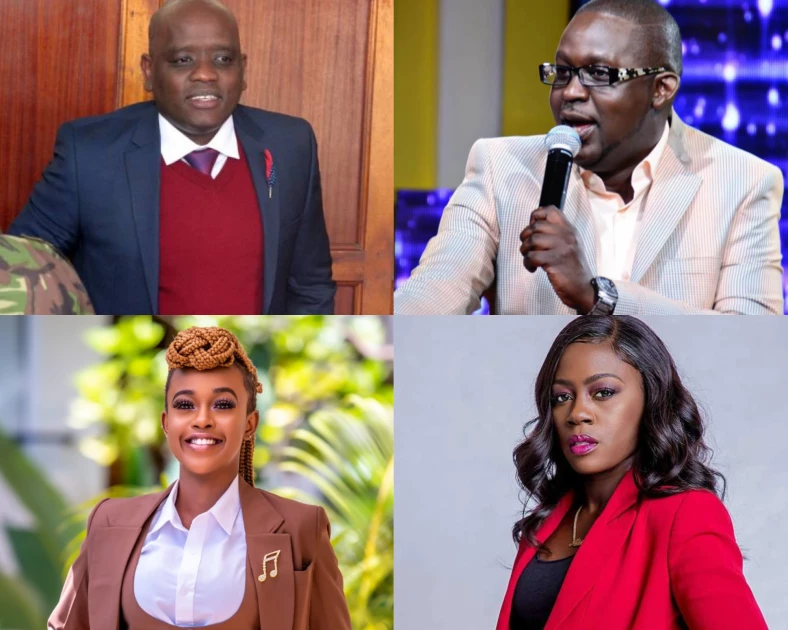
File images of Dennis Itumbi, Churchill, Azziad, and Akothee. PHOTOS | COURTESY

By Jerameel Kevins Owuor Odhiambo
Worth Noting:
- Art comes in many forms, from the culinary arts to the performing arts. Art has managed to weave itself into the fabric of our everyday lives. Every type of art can take years to learn and decades to master.
- Writers are those who have dedicated themselves to the literary arts, but does this make them artists? Yes, writers are artists. According to the Merriam-Webster Dictionary, an artist is a person who creates art using skill and creativity.
- The dictionary even includes writing as one of the examples of art. However, writers aren’t the first people to come to mind when people are thinking of examples of artists. Instead, most people point to painters, illustrators, sculptors, and musicians as more common when considering examples of artists.
The Ministry of Youth Affairs, Sports, and the Arts last week announced the establishment of Talanta Hela Council and its two technical committees, one for sports and one for creatives. The committees and council were announced through a gazette notice published on Friday by the Cabinet Secretary for Youth Affairs, the Arts, and Sports, Ababu Namwamba. The council will be headed by the CS. Members of the council include; David Langat, Debra Mallowah, Abraham Kipyego Mutai, Charles Gacheru, Claudia Naisabwa Leshomoo, Nobert Ouma, June Chepkemei and Dennis Itumbi. The Creatives Technical Committee will be chaired by Daniel Ndambuki, better known by his stage name Churchill. Members of the creatives committee are artiste Akinyi Odongo, Jimmi Gathu, Catherine Kamau, Esther Akoth (Akothee), Kizito Makhande, Azziad Nasenya, Rosemary Wahu Kagwi, Awadhi Salim, Awadhi, Douglas Kipkirui Langat, and Susan Ekasiba. The creatives team will be in charge of the collection and distribution of royalties to all creatives, propose implementation frameworks for the National Creatives Economy Plan, manage the National Creatives Awards (Kenyan Grammys), deploy the digital space in talent search, identification, nurturing and exposure; establish a robust framework to monetize the creatives sector to expand employment opportunities and support Kenya’s economic growth
Following the appointments by Cabinet secretary Ababu Namwamba, Maisha Yetu in a Facebook post noting as follows: ‘Not a single literary artiste in this team. Their interpretation of creative is rather shallow.’ Otieno Opondo who is the best-selling author of Beer Pressure in similar vein commented as follows: ‘Writers are artists yet we are the most overlooked whenever the term creative pops up. This, in retrospect, stems from the 844 system which turned writing into a chore, something we do just to pass exams. That’s why after exams, we throw away the pen and the paper, only to pick them later when we are writing CVs and cover letters. Writing is just a nuisance we have to endure to get a certain level. Just read a cover letter of a fresh Kenyan graduate and you’ll get my point. We hate writing. But writers are artists who deserve a prominent seat at the creative table. An artist is someone who creates art through skills and creativity. Writers produce literary art, yet we don’t feature where creative are mentioned. Instead, priority is given to musicians, actors, Tik-Tok users, comedians and the so-called social media influencers who, in my opinion, do nothing for the arts.’
This debate led to think on the issue. Definitely I agree with the sentiments I have noted above. By the way, who is a creative? Maybe by first noting this, it will relatively easier to decode the whole thing. A creative is an artist. In ages past, an “artist” usually refers to someone who paints, composes music, or writes novels. But the word “creative” is much broader than that; a creative is a person who sees the world a bit differently than the average person. You probably grew up recognizing the word creative as an adjective, describing someone who is full of new ideas for doing things. These days, the word is also used as a noun. A creative is also someone who doesn’t fit into a mold. They tend to want to break out of the norm, winning them the well-deserved label of rebel or iconoclasts. They are also known as thought leaders or detonators, people who influence others with their talents and gifts.
Although creatives are distinguished by their principle of working at their art for art’s sake, many of them do get paid for their work. Also, they’re not limited to the field of traditional art; some science-based work requires the touch of creatives too!
Some examples of creatives include: the novelist who just enjoys writing stories without worrying too much about whether it will be a bestseller or not; the songwriter who keeps composing songs whether or not it gets out to the public; the calligrapher who creates designs for the sheer joy of the process, but may also host workshops to share her art with others; the crochet and knitting artisan who crafts unique designs of costumes for children; the chef who invents new types of food for his clientele; the macrame creator who refuses to put her output in competition with mass-produced items; the entrepreneur who thinks up one new idea after another for a product or service to make things easier for other people; the web designer who meticulously fixes every tiny detail in the latest website he’s working on, to ensure maximum impact for its readers; the scientist who thinks out of the box for a potential solution to a problem; the coders who create apps that make life easier for a whole bunch of people; the photographer who would haul countless props and drive miles to a secluded spot at the crack of dawn just to get the perfect shot. To broaden your picture of what comprises a creative, think about the creative thinking skills. A creative will usually be involved in one or more of these: visual art, communication, writing, problem-solving, and open-mindedness.
Art comes in many forms, from the culinary arts to the performing arts. Art has managed to weave itself into the fabric of our everyday lives. Every type of art can take years to learn and decades to master. Writers are those who have dedicated themselves to the literary arts, but does this make them artists? Yes, writers are artists. According to the Merriam-Webster Dictionary, an artist is a person who creates art using skill and creativity. The dictionary even includes writing as one of the examples of art. However, writers aren’t the first people to come to mind when people are thinking of examples of artists. Instead, most people point to painters, illustrators, sculptors, and musicians as more common when considering examples of artists.
Perhaps the idea that a writer isn’t an artist comes from the thought that writing isn’t an art form. Most people see writing as a chore that they’re forced to do for school or work, but writing can become a relaxing hobby for those who shake the expectations from previous writing experiences. Another reason that people may not see writers as artists is that most people only consider the visual arts and the performing arts to be the only “real” types of art.
Writing is considered to be one of many forms of art. The traditional categories of art include literary arts, visual arts, graphic arts, plastic arts, decorative arts, performing arts, and architectural arts. Each type of these arts requires creativity and skill in order to complete the projects they work on. Visual arts, plastic arts, graphic arts, and performing arts are the most recognizable out of the traditional art categories. Meanwhile, literary art and architectural arts are often not even considered to be art by those who may not be as invested in the artistic world. Visual artists, graphic artists, and plastic artists are the ones who are most typically referred to simply as artists.
Writing falls under the category of literary art. Any piece of literary work requires conscious skill and some degree of creative thinking in order to form different ways of communicating ideas to your reader. There are many different types of literary works, such as fiction, nonfiction, dissertations, reports, computer programs, and poetry. The more rigid a writer must be, the less the artistic representation flows. However, it may be difficult to see the art in factual texts and harder to express creativity. This is why many people have a difficult time seeing writing as an art form. When it is harder for people to see the artistic process, it is harder for them to believe it is art.
One of the biggest reasons that people don’t see writers as artists is that they can’t visually see the creative process. For writers to write something that is different from what has already been written, they must use their creativity to come up with new sentence structures and new ways of helping the readers understand a topic. Painters are easily seen as artists because people are able to see what goes into painting. People know that a painter must take their brush and their paints to a canvas in order to create the painting that the public is viewing. Most people’s experience with writing comes from their education, where the writing process is taught as a formulaic process, rather than a creative one
Like a painter, writers use our words instead of colors to create stories. We create these stories out of nowhere, weaving them into strings and hooking our readers at the same time. These stories evoke the same emotions as when you observe a painting or even watch a movie. Writing even influences other forms of art. Music, for example, is nothing but literature. All visual art forms can be judged instantly. Everyone appreciates paintings and sculptures in museums because it’s easy and right in front of your eyes. You can make a judgment within seconds, the medium is either visually or audibly pleasing to you. Writers’ medium of expressing art isn’t that visual and their work cannot be showcased in a dramatic manner. You cannot just walk in a library and read every book stacked up just by observing. You can only form an opinion when you have read the entire content. Sometimes it takes days to appreciate the quality of a book and the writer behind it.
Having noted that writers are artists and creatives. The big question to be posed is why they were left out when the Cabinet Secretary was coming up with the creative technical committee honestly literary artists’ lives matter and they deserve a seat in the committee. What the appointments denote is the narrow view with which Kenyans deem the term creative to include. It is time for literary artists to demand that they be part of the wider arts and creatives discourse in the country. The onus is on writers to build a bigger profile for themselves. Writers, poets, songwriters’ have to get their act together and raise their collective voice so that they get noticed. No one will do it for them.
Jerameel Kevins Owuor Odhiambo is a law student at University of Nairobi, Parklands Campus. He regularly comments on legal, social, political and contemporary issues.
Similar Posts by The Mt Kenya Times:
- Diaspora Times Global Sep 19 – Sep 25, 2026
- Tibet’s glacial catastrophe: Behind Beijing’s wall of silence, a climate disaster reshapes a region
- Museveni says Uganda overpaid for fuel through Kenyan middlemen as new terminal breaks ground
- Court orders throw KPL season kickoff into doubt
- Can Kenyans abroad become the untapped force that transforms Kenya?
About the Author