Why Many Kenyans Were Anxious To Hear DP Gachagua’s Statement On Gen-Z Protests?
 The Mt Kenya Times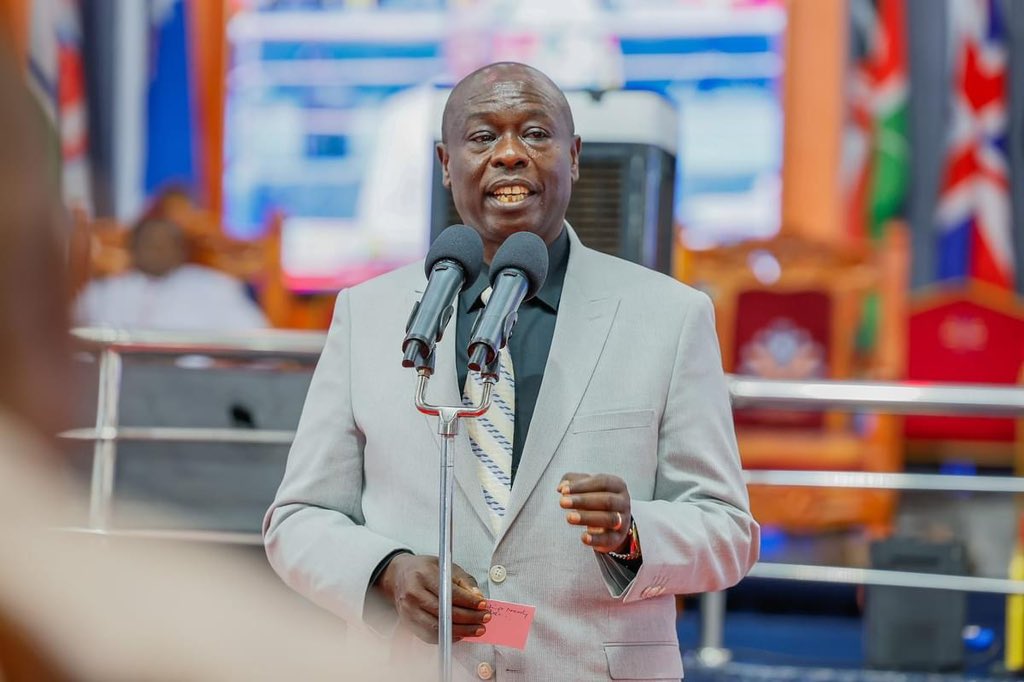
Deputy president Rigathi Gachagua
By: Joseph Mutua Ndonga
Worth Noting:
- During the campaign and when we assumed we said we will be listening to what the people of Kenya are telling us. So the youth had a right to air their views. This should never happen again in our country. I’m happy the President has listened to the young people. This by refusing to sign the Finance Bill.
- The DP laid the blame squarely on the doorsteps of the Director General of National Intelligence Service Nordin Haji.
- He had totally failed the President and misled him. If he gave the President the correct advice, this bloodshed could have been avoided. The President could have moved with speed to preempt the killings. Therefore, I call upon the head of NIS to resign with immediate effect.
As I write this, the media reports indicated that the Deputy President Rigathi Gachagua is due to address a press conference in Mombasa.
The second-in-command lived up to his word by releasing his first public statement since Generation-Z and millennials commenced their protests.
There were two other reasons why Kenyans were anxious to hear DP’s response.
This came just one day after the protests which were initially peaceful turned chaotic and bloody.
A number of the young protestors lost their lives in the ensuing street battles with the Kenyan Police.
Hundreds of others also suffered injuries and were admitted in different hospitals across the country.
The DP’s presser also came one day after President released a hard hitting statement. He minced no word in condemning hired and organized criminal gangs for infiltration of otherwise peaceful demonstrations.
The DP did not attend President Ruto’s first and second press conferences. The second presser coincided with Gachagua’s. In this pressor, the President has made it very clear that he will not sign Finance Bill 2024. Besides while consoling the bereaved families, he reiterated his readiness to hold dialogue with young protestors.
To me, this was a wise move.
A day earlier he had reiterated.
Were it not for criminal gangs, we could not have lost the lives.
In his press conference, DP Gachagua minced no in roundly condemning the shooting and killings of our young people.
During the campaign and when we assumed we said we will be listening to what the people of Kenya are telling us. So the youth had a right to air their views. This should never happen again in our country. I’m happy the President has listened to the young people. This by refusing to sign the Finance Bill.
The DP laid the blame squarely on the doorsteps of the Director General of National Intelligence Service Nordin Haji.
He had totally failed the President and misled him. If he gave the President the correct advice, this bloodshed could have been avoided. The President could have moved with speed to preempt the killings. Therefore, I call upon the head of NIS to resign with immediate effect.
I would also expect him to convey messages of condolences to the families of those who lost their loved ones.
Some days earlier, the President had attended a church service in Nyahururu. He reiterated: “I have listened to what the young people are saying. These are our children and we have to listen to them. I’m going to engage them and I want to assure them of my commitment to address the concerns they had raised”
He spoke as Generation Z piled pressure on members of parliament (MPs) to reject the Finance Bill 2024.
They have also listed a raft of demands that they want President Ruto to address.
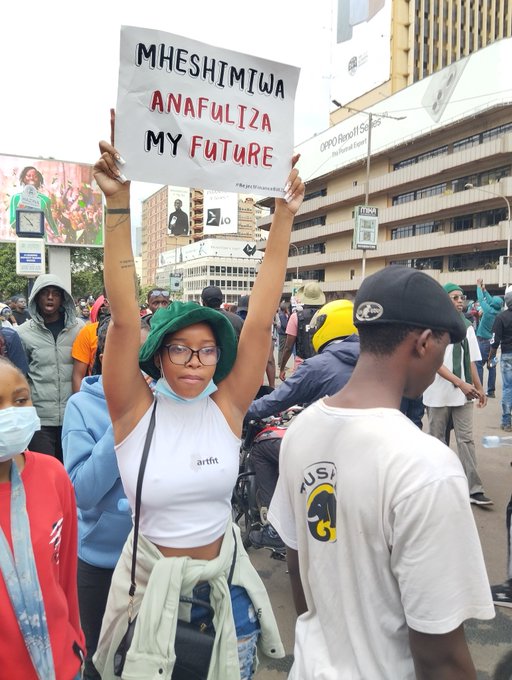
For the first time, the protests were digitally driven. Besides, thousands of young people under the banner of Gen Z demonstrated a high level courage and boldness.
The youths who had turned up to oppose the Finance Bill 2024 were aged between 18-34 years.
It is worth to note some protestors were armed with smartphones and according to some politicians some had been dropped by Uber taxis. The church service in Nyahururu was presided by ACK archbishop who was quoted in a post on social media as saying that his son was taking part in these protests.
A renowned political analyst had alleged the protests were being sponsored by a foreign power. He did name this power and what it intended to achieve.
But organizers were quick to dismiss these claims. By then, the protests had been held in 18 counties.
The protests started on a a day the chairpersons of the two powerful committees of the National Assembly namely Budget and Appropriation and Finance and National Planning tabled their financial report in parliament.
The report had taken into consideration the views of Kenyans opposed to the Finance Bill 2024 collected during the public participation.
As you can see in our report, we have clustered taxes in contention into three categories. We have removed some and we have proposed zero rating and exemptions on others.
Noting that the priority of this house is to safeguard the interests of Kenyans, we have no doubt our report will be adopted.
The Chairman of Budget and Appropriation Committee Ndindi Nyoro had a few days earlier set the ball rolling when he unveiled a list of some of the taxes that would be dropped.
They included proposed 16 percent VAT on bread; 2.5 percent motor vehicle tax. Eco levy will also be adjusted with baby pampers, sanitary towels and other products being zero-rated.
Ndindi, the Kiharu MP, further stated: We have also listened to parents, guardians and other stakeholders in education sector. So, we have reinstated the school feeding programme. We have also allocated enough funds to employ Junior Secondary School (JSS) teachers on permanent and pensionable terms.
But Generation-Z and millennial would hear none of this. They maintained that the budget should be more leaner.
The protestors who carried placards and flyers with inscription ‘Occupy Parliament’ chanted anti-President William Ruto slogans.
This is not the first time we are witnessing this. Similar protests had rocked the country during the tenures of former Presidents Daniel Arap Moi, Mwai Kibaki and Uhuru Kenyatta.
During the public participation, many Kenyans reasoned; Yes, we agree paying taxes is a legal civic duty. However, some of the taxes contained in Finance Bill 2024 are very high. The burden will be too heavy particularly to the low income earners.
So, we recommend they should be reduced.
The Finance Bill 2024 has so far gone through the first reading and second reading. During the third and final reading, chaos and bloodshed rocked parliament as the police tried to stop the protestors from accessing it.
President William Ruto had earlier revisited the topic of taxation.
My critics were peddling a false narrative that Kenyans were paying highest taxes.
In the contrary, they were paying the lowest tax in the continent of Africa. It is currently capped at 14 percent.
In other countries of Africa, the tax ranges between 22 to 25 percent.
In Europe, he gave an example of France where the tax is capped at 45.
President Ruto further reiterated that he intended to increase the taxes. My plan is to leave the tax at 22 percent when my two terms come to an end in 2032.
President Ruto however noted. Constitutionally, the mandate to enact the Finance Bill is vested in Parliament. I hope the House will support me.
Turning to his critics, he noted that they would want Kenyans to believe that this would make them more poorer.
The opposite is the true position. Dr Ruto said his interventions are designed to ensure a faster growth of our economy.
This will herald in creation of more jobs in both formal and informal sectors. As such, Kenyans will put more money into their pockets and smile all the way to the bank.
Everyone of us has a duty to develop our country.
When I assumed office, the economy was in bad shape.
I said the pain of tightening your belt will be for a short time.
Today the cost of living is coming down. You are buying a 2kg packet of maize flour (Unga) at Sh100. When i took over, the price of the same packet was Sh230.
The prices of other essential commodities have also drastically come down.
In an article I had earlier written in this column, I zeroed in on a President Ruto’s speech during the ceremony organized by Kenya Revenue Authority (KRA) to cerebrate and reward Kenyans who were paying their taxes in full and within the timelines stipulated in law.
The President minced no word in praising them for being a key pillar of enabling his government to deliver services to Kenyans.
The government does not have monies of its own and it majorly relies on these revenues.
With this in mind, the President noted. Without you, we will not be able to do the implementation. So, I salute and commend you. Indeed, you are our Mashujaa.
The previous government’s appetite of borrowing foreign loans was very high. This was hampering the growth of our economy. As such, I told you I will not follow that route. A time has come for us to live within our means.
I urge those who were not paying taxes to emulate these patriotic Kenyans, Mashujaa.
In the meantime he asked KRA to expand the scope of tax collection. This is by ensuring that all Kenyans were brought on board.
Having set the targets, you have a duty to meet them.
He however cautioned KRA against harassing Kenyans when collecting the taxes. You should handle this matter in a humane and respectable manner.
If a Kenyan is not willing to pay taxes, explain to them why it is important to pay and the gains they would reap.
Dr Ruto further noted. I know some of you fear that monies would be stolen by some greedy and corrupt state officials. This is because the previous administrations were associated with mega corruption scandals. Mark my words.
Under my watch, this will not happen.
Early this year, President Ruto became the first Kenyan head of state to personally file his tax returns at Kenya Revenue Authority (KRA) headquarters in Nairobi.
At the time, he challenged KRA to pull up their socks.
As a country, we are facing a serious financial crisis and this has incapacitated our job of delivering services to the people of Kenya.
He vowed to deal firmly with KRA rogue officials.
Your days are numbered. I know some of you do not mean well for the country. You are out to sabotage my administration.
At the time the president fall short of saying some of KRA officials owed loyalties to his political opponents and they were serving their interests.
If you don’t meet the targets, the message is clear. You want me (President) to resort to imposing more taxes to Kenyans and borrowing foreign loans. In so doing, you hand my opponents political fodder to fight me.
President Ruto is facing challenges similar to those encountered by his predecessors- Mwai Kibaki and Uhuru Kenyatta.
For President William Ruto, I have no reason to doubt his commitment to slay the dragon of corruption.
Joseph Mutua Ndonga is a writer and political analyst based in Nairobi
Similar Posts by The Mt Kenya Times:
- Mt Kenya Times ePAPER October 24-25, 2026
- Muturi calls on IEBC to keep election technology tender clean and on schedule
- Ruto meets UAE minister in push to deepen trade ties
- Gideon Moi breaks silence on Ruto fallout, cites broken promises
- The doctor who refused to abandon a sick Uganda
About the Author