Will President Mnangagwa sign Bill 3? The pen, the pressure and the future
 The Mt Kenya Times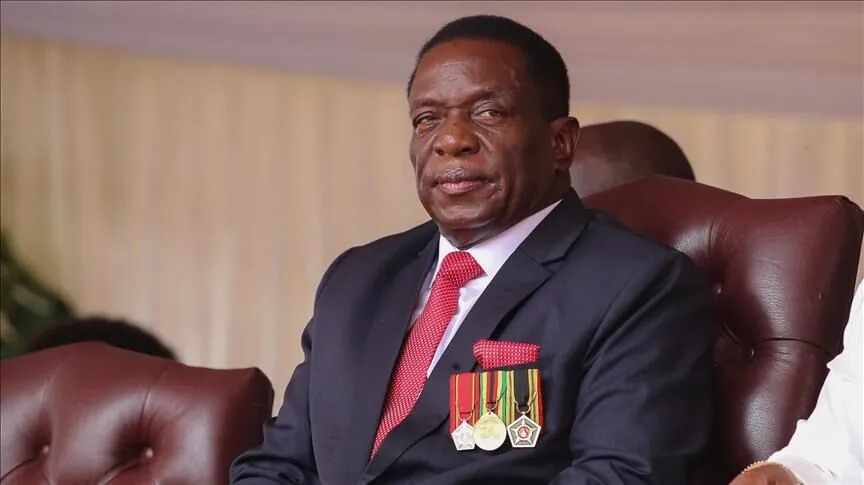
President Emmerson Mnangagwa
As Zimbabwe’s National Assembly reconvenes in an extraordinary sitting today, Emmerson Mnangagwa faces the most consequential decision of his presidency — and the clock is ticking
By Norman Mwale
“I have always opposed the constitutional amendment from the word go. What Mnangagwa is doing is going to be a catalyst for change. He is digging his own grave.” — Nelson Chamisa
President Emmerson Mnangagwa now stands at the desk where Zimbabwe’s constitutional future will either be written or deferred. The National Assembly has been recalled for an extraordinary sitting at 2:15 pm today, 30 June 2026, to consider the Senate’s amendments to the Constitution of Zimbabwe Amendment Bill No. 3, after both Houses passed it with the required two-thirds majority. If MPs accept the Senate’s version without further change, the Bill moves directly to the President for assent. If they amend it again, it returns to the Senate. Either way, the signature is the next decisive act.
Bill 3 proposes to extend the presidential term from five years to seven, which would allow Mnangagwa to remain in office until 2030 rather than stepping down in 2028. It also removes the direct election of the president, replacing it with election by a joint sitting of the Senate and National Assembly, and transfers voter registration from the Zimbabwe Electoral Commission to the Registrar-General. The Senate would expand from 80 to 90 members, with ten additional appointees selected on the basis of professional skills.
The case from within Zanu PF
Justice Minister Ziyambi Ziyambi, who tabled the Bill, frames it as governance reform. “This Bill introduces a set of constructive reforms that, taken together, reinforce constitutional governance, strengthen democratic structures, clarify institutional mandates, and harmonise Zimbabwe’s constitutional order with tested and successful practices in other progressive jurisdictions,” he told Parliament. After the First Reading he said he was “confident it is progressive legislation which we must proceed to enact” and pointed to “overwhelming support from members of Parliament.”
Government links the Bill to the Zanu PF “2030 agenda” adopted at the party’s annual conference in Bulawayo in 2024, arguing that continuity will reduce “election-related toxicity” and advance Vision 2030. The party holds a supermajority and, by parliamentary arithmetic, has the numbers to pass the amendments without a referendum.
The opposition and civic counterweight
Opposition leader Nelson Chamisa has rejected the Bill outright, characterising it as “the wrong move, a misguided initiative and a selfish national mistake.” “As things stand, there is no done deal. In fact, there is no deal at all. Any arrangement that lacks the consent and participation of the citizens remains incomplete and illegitimate,” he said.
Critics also point to Section 328 of the Constitution, which requires a referendum for entrenched provisions affecting presidential term limits and election methods. Legal challenges have been mounted in the Constitutional Court, with judgment reserved. Diaspora groups have protested the move to parliamentary election, arguing it would render the diaspora vote irrelevant. A group of retired military generals and senior civil servants, led by retired Air Vice-Marshal Henry Muchena, petitioned Parliament against the Bill, arguing that the amendments undermine the principles of the liberation struggle and the people’s electoral rights.
Inside Parliament: the 216-to-42 divide and a persistent dissent
The National Assembly passed CAB3 on 18 June 2026 with 216 legislators voting in favour and 42 against, surpassing the two-thirds threshold of 187 out of 280 members. Before the final vote, the government agreed to withdraw two of the most contentious provisions — proposals to merge the Zimbabwe Gender Commission with the Zimbabwe Human Rights Commission and to allow traditional leaders to participate in partisan politics. Despite those concessions, the core provisions remained intact. Speaker Jacob Mudenda declared the result in accordance with Section 328(5) of the Constitution. The Senate subsequently approved the Bill 75 votes to 4.
From the outset, Mbizo legislator Corban Madzivanyika has been one of the Bill’s most consistent critics. He has condemned CAB3 for proceeding without a referendum, arguing that “by not conducting a referendum, the government is disrespecting the people of Zimbabwe.” During debate he also raised procedural concerns, telling NewsDay Weekender that he had failed for four consecutive days to secure a place on the speaking list despite Parliament dedicating sessions exclusively to the Bill. “I don’t know how the list is compiled because that is not normally how we do things. We normally submit our names, but for the past four consecutive days, I haven’t been successful in contributing,” he said. His objections ran from the Bill’s introduction through to the final vote, framing the outcome as procedurally and democratically deficient.
What could make Mnangagwa comfortable to sign
Several factors would ease the President’s path. First, parliamentary arithmetic: Zanu PF commands the two-thirds threshold in both Houses, and the Senate has already approved the Bill. Second, party consolidation: the “2030 agenda” gives the amendment an internal narrative of stability and continuity. Third, institutional precedent: government argues that aligning terms to seven years creates space for long-term planning under Vision 2030. Fourth, controlled process: the extraordinary sitting, convened under Section 110(2)(c) of the Constitution, signals intent to conclude the matter quickly and within constitutional form.
What could make him uncomfortable to sign
The discomforts are political, legal and reputational. Legally, the referendum question remains live. If the courts or public opinion frame the Bill as requiring a popular vote, assent would invite protracted legal contestation. Politically, the Bill has exposed fissures even within Zanu PF. Vice-President Constantino Chiwenga, a key figure in the 2017 military intervention that brought Mnangagwa to power, is reported to be leading a faction that openly opposes Mnangagwa’s term extension. Silence from powerful factions often speaks louder than endorsement. Internationally, the shift from direct election to parliamentary selection would be read as democratic backsliding, complicating relations with partners and investors. Domestically, Mnangagwa has repeatedly described himself as a “constitutionalist” and pledged to respect the two-term limit enshrined in the 2013 Constitution. Signing would be seen as breaking that pledge. The persistent opposition of legislators like Madzivanyika — who were denied debate time and have rejected the process from day one — keeps that discomfort visible even after the 216-to-42 tally.
The stakes for the country
Bill 3 is not only about one man’s tenure. It reconfigures how power is acquired and held. Direct election gives citizens a periodic, national reckoning. Parliamentary election centralises leverage among MPs and party structures. The transfer of voter registration to the Registrar-General and the expansion of appointed senators also shift the balance of institutional oversight. For Zimbabweans trading at Beitbridge, farming in Masvingo or commuting from Chitungwiza, the question is whether these changes deliver stability or simply concentrate risk.
Mnangagwa’s calculation will weigh party cohesion against constitutional credibility, immediate legislative momentum against judicial and public pushback, and the optics of continuity against the optics of continuity at any cost. He can sign and own the break with the 2013 term-limit promise. He can withhold assent and force a reset, or return the Bill with amendments. He can also allow the process to stall in legal challenge.
The pen is in Harare. The pressure comes from Parliament, from the courts, from party corridors and from the streets. The future will read very differently depending on which side of that line the signature falls.
Similar Posts by The Mt Kenya Times:
- Mt Kenya Times ePAPER October 1, 2026
- Museveni backs Lamu but keeps Uganda’s money at home
- Sifuna’s party wins its name — and Kenya’s opposition race begins in earnest
- Lamu’s $16B gamble: Africa’s biggest refinery divides the region
- Ruto launches KSh2.2 trillion Lamu refinery in East Africa’s biggest energy bet
About the Author