With low number of teacher trainees ECD sector faces uncertain future
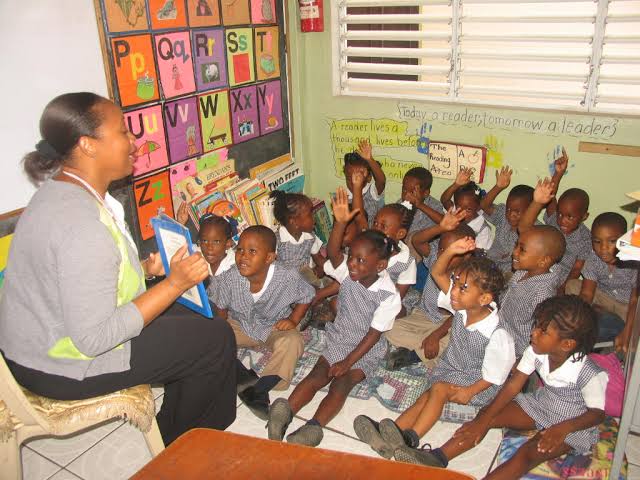
ECD teacher

By: Jackson Okata
Worth Noting:
- Government statistics put the ECDE Child-Teacher Ratio at 30.1 as of 2019 up from 25.1 in 2014.Turkana County has the highest disparity with a 161.1 child-teacher ratio.
- To cure the situation and forestall a crisis, Education policy expert Gilbert Munuve wants the government to provide incentives that would attract Kenyans towards training as ECD teachers.
- “Getting the government to fully find ECD teacher training and guaranteeing jobs is one way of solving this problem,” said Munuve.
- Munuve also wants county governments to offer attractive pay packages to ECD teachers as a measure of attracting more into joining the sector.
With the early childhood development (ECD) sector being devolved, county governments have since 2010 put some considerable investment towards infrastructural improvement in the critical sector.
And with the free ECD education policy, government data shows a continued rise in the number of pupils enrolling in ECD centres across the country.
A Kenya Counties ECD Profile report released in late 2021 indicated an increase in ECD enrolment nationally from 73.6 per cent in 2014 to 109.4 per cent in 2019.
But even as the country continues to record enhanced numbers in ECD centres, the widening student teacher ratio is worrying sector stakeholders.
Agnes Ndichu ,an early childhood education teacher trainer says that the country might not have ECD teachers because very few are trained or are currently training .
“The numbers of ECD pupils will keep rising but we are staring at a crisis if we do not get people to train as ECD teachers,” he said
Ndichu attributes the situation to the misconception that ECD teaching jobs are for failures
“Kenyans still view ECD teaching as a not so fashionable job”
Rahab Mukami, 50, has been an ECD teacher for 25 years and regrets that young high school graduates are not taking ECD training as a course.
“It’s saddening because we are not getting young ECD teachers joining the field. Soon majority of us will retire and our pupils will have no one to teach them,”
“It’s practically impossible for a single teacher to handle 50 ECD pupils,” equipped Mukami
Government statistics put the ECDE Child-Teacher Ratio at 30.1 as of 2019 up from 25.1 in 2014.Turkana County has the highest disparity with a 161.1 child-teacher ratio.
To cure the situation and forestall a crisis, Education policy expert Gilbert Munuve wants the government to provide incentives that would attract Kenyans towards training as ECD teachers.
“Getting the government to fully find ECD teacher training and guaranteeing jobs is one way of solving this problem,” said Munuve.
Munuve also wants county governments to offer attractive pay packages to ECD teachers as a measure of attracting more into joining the sector.
“Poor pay and working conditions has also contributed to the scarcity of ECD teachers and these two issues must be addressed going forward”
Priscah Mwenesi is a trained ECD teacher but has been jobless since graduating in 2015
“I was forced to pursue a different career path after failing to secure a job with the county government. Many of those we trained with are doing totally different things and not ECD teaching,” she said.
Munuve warns that the risk of not having enough ECD teachers is having a weak education foundation for pupils transiting to primary school
Between 2014 and 2019, Kenya recorded a reduction of 22,472 ECD teachers from 114,831 to 92,359
Nairobi, Nakuru, Kakamega, Kisii, Kiambu, Bungoma and Migori are among counties recording a huge drop in the number of ECD teachers.
Kenya has an estimated 46,530 ECD centres with an estimated population of 6.7 million children.
Similar Posts by The Mt Kenya Times:
- Diaspora Times Global Oct 24 – Oct 30, 2026
- America’s baby bust: U.S. birth rate hits record low as women choose later motherhood
- Literary Outreach Incubation Program Instills The Culture From Book Adaption To Spoken Words
- Why starting school too early is failing our children
- Who defines Africa’s destiny? The western lens, African compliance and the struggle for intellectual sovereignty
About the Author