

Theme: MAXIMIZING AFRICA’S LITERACY POTENTIAL THROUGH DIGITALIZATION.
DATE: 6-7th September 2022
SUMMARY
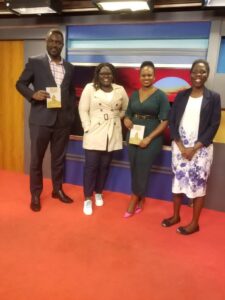
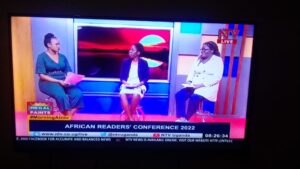
This 2nd African Readers Conference, which will be hosted at Makerere University from 6th-7th September shall physically and virtually unite all minds in African governments, civil society, academia, and private sector that have a vision of promoting a strong reading culture in this technologically fast-growing generation of young people in the African Continent. This is to act as a springboard for the renaissance of the consciousness that they have a contribution to make if Africa is to see her glory days in the literary world.
The event shall comprise of several activities like exhibitions, panel discussions, workshops, launch of DEAD MANNERS, an anthology that features 50 poets from 10 African countries, awarding winners of ARC writing fundraise among others, with a grand aim of forming stable synergies that can see to it that this dream of establishing a social system that will fully maximize digital spaces to robustly promote the reading and writing potency to enable Africa’s young population enjoy reading as a matter of interest rather than coercion as a precursor to achieving the strategic milestone of creating digital conscious populations that appreciate their role in harnessing digital knowledge, skills, remote infrastructure and ; a drum that should be led by enlightened minds in a good relationship with digitalized literature.
ABOUT READ US AFRICA
READ-US AFRICA is a community of young African visionaries who are potentially nurturing the African dream with a unique identity by fostering a sound reading culture among African communities. We are a fully registered non-profit organization that aspires to empower potential change agents in Africa through intentional capacity building, synergies, and outreaches. RUA upholds the values of Pan Africanism, professionalism, timekeeping, and Godliness in all her operations. Our work has been documented periodically at www.readusafrica.org.
CONTEXTUAL ANALYSIS
September 8th was proclaimed as International Literacy Day (ILD) at the 14th session of UNESCO’s General Conference on 26 October 1966. Since 1967, ILD celebrations have taken place annually around the world to remind the public of the importance of literacy as a matter of dignity and human rights, and to advance the literacy agenda towards a more literate and sustainable society. Read Us Africa in their financial year 2020/2021 commemorated the ILD virtually with the first-ever African Readers Conference (ARC) on the theme ‘Changing Reading Narratives in The African Continent.’ with over 700 people around Africa in attendance including over 30 renowned authors, publishers and content creators in creative and arts industry. The Conference was preceded by a one-month hybrid reading campaign.
Literacy is a basic right and an essential motor for human development. It paves the way to autonomy, the acquisition of skills, cultural expression, and full participation in society. It is the motor of sustainable and inclusive development. According to UNESCO, Literacy is the ability to identify, understand, interpret, create, communicate and compute using printed and written (and visual) materials associated with varying contexts.
To sustain the vision of the African Union is that of: “An integrated, prosperous and peaceful Africa, driven by its citizens and representing a dynamic force in the global arena”, young Africans must be built up with hunger or knowledge that is sufficient to enable them to know that they have a contribution to the development of Africa.
The opening session of the high-level workshop on promoting a reading culture in Africa also addressed by the Head of Education Division, Dr. Beatrice Njenga, said that under the implementation framework of Agenda 2063 the African Union adopted the Continental Education Strategy for Africa, (CESA 16-25) to ensure inclusive and equitable quality education and promote lifelong learning opportunities for all and to foster the skills, human capital, and education revolution in Africa. She further said that “Without wide reading, learners cannot develop skills of locating, selecting, organizing, manipulating, analyzing, evaluating and processing information”.
Pervasive illiteracy can pose serious challenges anchored in ignorance, including crime, poor health-seeking behavior, and inadequate participation in democratic institutions of governance. Much progress has been made in Africa, with the literate population currently about 70% compared to a world average of nearly 90%. But there’s more to be done to ensure sustained and functional literacy’, emphasized Dr. Beatrice Njenga.
Several initiatives have been carried out that have projected Africa as a strong reading continent the Zimbabwe International Book Fair, the South Africa battle of book clubs, the South Africa book week, South Africa BOOK FAIR with a rise in African centered literature by African writers including Chimamanda Ngozi Adichie, Chinua Achebe, Wangari Mathai among others.
Why digital integration?
Africa is rich in local content that includes printed texts, original manuscripts and archives, maps, museum artifacts, rare books, images, fragile documents, audio and video materials among other forms. With this rich potential, digitization of cultural, literary heritage, and contemporary materials would command considerable popularity internationally and countries’ input to the Global Information Infrastructure (GII). This is still not fully realized.
This untapped potential to fully employ Information Communication Technology (ICTs) to create, adapt, and exchange local content in various formats, packages, and media has been impeded by several factors. According to a research paper by Akinde Taiwo Adetoun on Digitizing African Local Content: The Way forward (2007), mentions some core factors like the threat of cultural imperialism, laxity of intellectual Property rights and community property of African oral literature, the problem of standardization, literacy barriers as the vast majority of information on the internet is written for an audience that reads at ana average or advanced literacy level. In addition, the language barrier is a huge block; 87% of on the internet are in English while nearly 70% of websites are in English (One World International, 2005) yet English is not a primary language to the majority of Africans. This limits learning hence there is a need to create and transmit content in multiple languages to benefit everyone everywhere.
We believe that with the trigger of Covid-19, it was realized that there are digital skills, spaces, and ventures that we can harness to promote literacy agenda.
As such, the 2nd African Readers Conference shall be a space where readers, writers, creative and fictional artists, content creators, policy analysts, NGOs, government institutions, and all other entities interested in maximizing Africa’s literacy potential through digitalization shall meet to celebrate reading and the strides it’s taking or is about to take in the digital era.
RATIONALE/ JUSTIFICATION.
One Ugandan journalist succinctly summed up the importance of reading when she related the following words: “If you seek a happy and interesting life, one of depth, meaning and accomplishment, you must read books.”
According to Beatrice Mbabazi of Change Makers, reading books forces you to imagine, question, ponder, reflect, and connect one historical event with another. In addition to that, it provides a deeper understanding of political figures and events of the world and life itself. Watching a movie about Van Vicker shows you drama. Reading the history of it presents you with a dilemma.
The book forces you to imagine the sound, cold, tone and tension, and the logic of events. It makes your brain do work. But oddly, it works the brain wants to do. A movie or a documentary is received passively. You sit back, see, and hear. Books demand more and reward more. When you read them, your knowledge base deepens and expands. In time, that deepening comes to inform your work. Sometimes in ways of which you are not fully conscious. You become smarter and deeper. That happens with books.
Even when poverty and lack of opportunity remain salient causes of developmental problems, access to relevant information/literary materials and education are vital resources required to alleviate intellectual poverty and build foundations for lifelong learning in ways that make young people conscious active participants in their empowerment by exploring, sharing, discovering and applying literacy and digital abilities.
It’s extremely vital in this generation to unite all forces in the reading and writing industry to forge a way forward to developing the strongest reading culture that is dynamic and sustainable in the world.
By Agatha Rachael Akullu
agatharachael4@gamil.com
Similar Posts by The Mt Kenya Times:
- Mt Kenya Times ePAPER October 29, 2026
- Ruto courts Moscow as Africa’s big powers rewrite the rules of engagement
- The running-mate puzzle: Who blinks first?
- Jubilee’s coalition gambit: The opposition clock is ticking towards 2027
- From Moscow with ambition: Ruto bets on Russia to rewrite Kenya’s economic story before 2027
About the Author


