The Mt Kenya Times
By: Wanjohi. P. Mugambi
Worth Noting:
- The children one sees in the paintings of the time do not have the characteristic “look” of modem children. Children who survived the critical period of early childhood immediately became “adults” in the eyes of society and were treated as such—with its positive and negative implications. Working, playing, and loving were shared with the young.
- Given the conditions of life, this was understandable. Life expectancy was short; most work was simple. The advent of the Renaissance and the Reformation, followed by the eighteenth century revolutions in America and France, brought about important economic, political, and social changes. The influence of the Church diminished, as did social stratification, and economic opportunities grew.
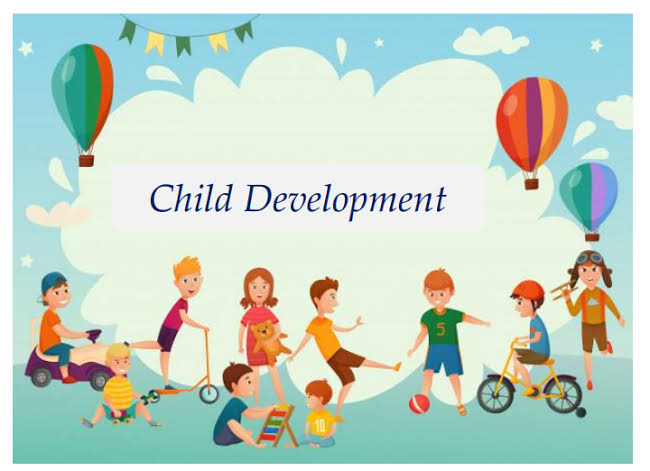 What is a child ? A thinking, feeling entity ? An organism shaped by parental constrictions? A possession of his or her imily, of the government, or of him or herself? A being in transit to adulthood? We see children as all of these, and more. We see children and their developmental needs as the fundamental building blocks of a human society. A society that does well by its children—and their parents—is basically sound (Bronfenbrenner, 1970).
This theme runs through all our discussions. Our goal in this chapter is to outline some of the basic processes and events in child development. We will follow this with a discussion of parent-child relationships. In this chapter, however, we are most directly concerned with the child’s own developmental agenda, albeit with a constant eye toward issues of social context. As ever, we are bringing to bear our ecological perspective. Our main thing is the child as a developing, thinking, acting organism able to take initiatives to meet the challenges of the environment.
We see children as resourceful and flexible, and we believe that challenge, within limits, is growth inducing. We will try in this chapter to outline some of these limits so that we will be in a better position to discuss how children use their resources in parent—child relations to meet developmentally appropriate challenges in their environments.
This in turn will help us see how human services and social policy can and should work on behalf of children and families. The way the child’s society defines the child influences contemporary policy and practice, and this macrosystem effect has existed since the ancient geniuses Plato and Aristotle began their efforts to develop a systematic conceptualisation of human development. Their concern was to define the child in relation to family and society. Plato believed that most parents, imbued with the moral decadence of contemporary Athenian society, were unfit to raise their own children.
Even parents who gave every appearance of being capable were still not up to the challenge of creating the caretakers of some future ideal state, because parenting techniques differed so widely that their separate influences would create a “medley of incongruities” in the character of the citizens. Therefore, all children were to be separated from their parents early in life, allowing the state to control child rearing and education.
Plato struggled with the eternal issues of child rearing, most particularly with how to establish self-control in the child without destroying individuality and initiative. In any case, this notion of the state as arbiter of the child’s well-being and best interests has obviously stayed with us and remains in contemporary child custody and child abuse laws (Biehler, 1981).
We will return to these legal implications later. Aristotle was also devoted to the concept of the “ideal society”. However, he opposed state controlof child rearing because he believed it denied most citizens the right to essential individual liberties and denied the family the right to provide personal and social stability for the child. He judged that different parents using different child rearing techniques would not provide undersirable “incongruities,” but rather positive individuality.
Aristotle proposed a transfer of power from the state to the parent. Rather than being a possession of the state, the child would be a possession of his parents. Unfortunately, to the present day, the child often finds himself either at the mercy of one force or another, always a possession, rarely a trust.
An abused child, if not taken under the wing of the state, is left to contend unaided with the abusive parent. The imbalance of power is too great. Nowhere is this more clearly seen than in the case of incest, where the child cannot give truly informed consent because the child is asked to make a judgment inappropriate for her or his age and is forced to do so in a coercive climate where all the power lies outside her or his real control (Finkelhor, 1979).
This is, of course, even true in those rare instances where incest occurs in a climate of love and respect. The Platonic and Aristotelian conceptions of childhood have influenced successive generations by focusing on the question: “Who owns the child?” Aries (1962) proposed that during the Middle Ages, this issue was resolved by downplaying the notion of childhood as a separate period of life. Thus, children were not thought to be qualitatively different from adults, only smaller. Artistic depiction of children represented them as little adults.
The children one sees in the paintings of the time do not have the characteristic “look” of modem children. Children who survived the critical period of early childhood immediately became “adults” in the eyes of society and were treated as such—with its positive and negative implications. Working, playing, and loving were shared with the young.
Given the conditions of life, this was understandable. Life expectancy was short; most work was simple. The advent of the Renaissance and the Reformation, followed by the eighteenth century revolutions in America and France, brought about important economic, political, and social changes. The influence of the Church diminished, as did social stratification, and economic opportunities grew. Families increasingly saw children as investments in the future.
Childhood became a separate part of life, and more people began to recognise that children have their own inner lives. Whereas earlier the hardest children had been sent to work or had been apprenticed, it became more and more common for children to go to school and prepare for careers (Gardner, 1978). One of the attitudes toward children that underwent a most profound change was the shift from believing children to be wicked to viewing them as being innocent. “Expert opinion” believed children to be inherently sinful during the Middle Ages, and parents were advised to punish them often.
Starting in the eighteenth century, however, a shift in attitude occurred. New religious forms stressed salvation and innocence. Baptism was believed to purif’ the soul. Child rearing began to be portrayed as a safeguard of the child’s innocence. Debates as to the requirements of child education and child rearing became common as Western culture experienced significant liberalisation.
The philosophers John Locke and Jean Jacques Rousseau placed particular emphasis on the importance of early child rearing and child learning. Locke developed what has been identified and handed down as the “environmental learning” view of child development. He envisioned the child’s mind at birth as a “white paper” or blank slate (“tabula rasa”) that provides form, but not content to the child as an individual.
The knowledge that a child attains is learned through contact with the environment. Locke saw experience and observation as the sources of all ideas, yet he believed that children have personalities at birth that guide their responses. He also believed that parents should encourage the child’s natural curiosity. He advocated the use of reinforcement rather than punishment in rearing and educating the child, techniques that have found their way into the theories of most contemporary psychologists, but still are resisted by some parents (Gardner, 1978).
Jean Jacques Rousseau believed in the inherent goodness of the young, but he believed this goodness was corrupted by the influences of society. His general message was that parents and teachers should fit education to the child, not force the child to learn what was beyond his or her natural grasp. If adults shield children from the negative aspects of society, their “natural goodness” would ensure that they make the right choices. Rousseau did not believe in the “perfectability” of human beings, as Locke did, but he suggested that education could “enhance” a child’s desire to learn and develop.
These ideas, too, have their contemporary counterparts (Biehler, 1981), although their philosophical character is foreign to much of contemporary scientific child development. Certainly one of the environmental factors contributing to the past legal and cultural status of children was their relative physical vulnerability, given the poor sanitation and the inadequate health care characteristic of earlier eras.
Children were not a good investment for the future, given their short life expectancy. As late as 1900, 55 per cent of the children bom in London’s slunis died before the age of five (Gardner, 1978), and even the rich had to contend with substantial infant mortality. After the Industrial Revolution, industrial managers came to see children as the least expensive source of labour, and their instrumental value increased. Concern for children began to increase in the early nineteenth century, as the standard of living began to rise and as epidemics became more subject to control.
A few medical practitioners began to specialise in childhood diseases. Along with the growing interest in the child and the questions raised about how best to train and educate children, the 1 800s saw the growth of the discipline of biology, which became concerned with the study of the development of organisms. It was natural to study the “child-as-organism.”
Early studies of child development were initiated by Charles Darwin in the form of “baby biographies,” daily diaries that reported happenings in a child’s physical, mental and emotional life. The first person to conduct empirical research with children was G. Stanley Hall.
Through the use of questionnaire data, he was able to develop an initial picture of how children viewed the world. Hall believed that human development proceeded in regular, ordered stages, one following the other, largely on the basis of internal cues. This approach was soon displaced, however, only to return to a position of prominence decades later.
Similar Posts by The Mt Kenya Times:
- Mt Kenya Times ePAPER October 28, 2026
- Ruto breaks ground on KSh70B cement plant that will create 3,000 jobs in Kitui
- Ruto orders Magadi soda ash monopoly broken as new investors set to enter
- Ruto heads to Moscow seeking trade deals and investment as Kenya eyes Russia partnership
- Waititu begs for mercy as Sh588M corruption sentencing looms
About the Author