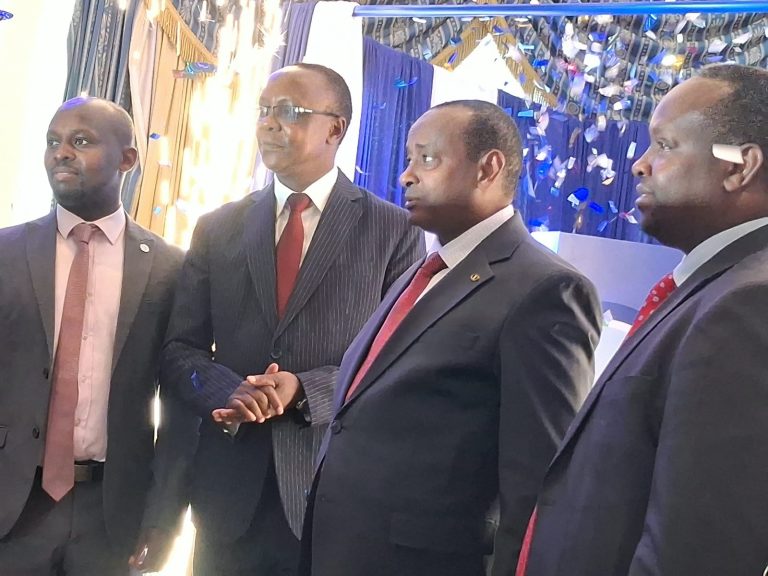
Civil Society and State Officials Unite in Celebrating Kenya’s Brave Whistleblowers
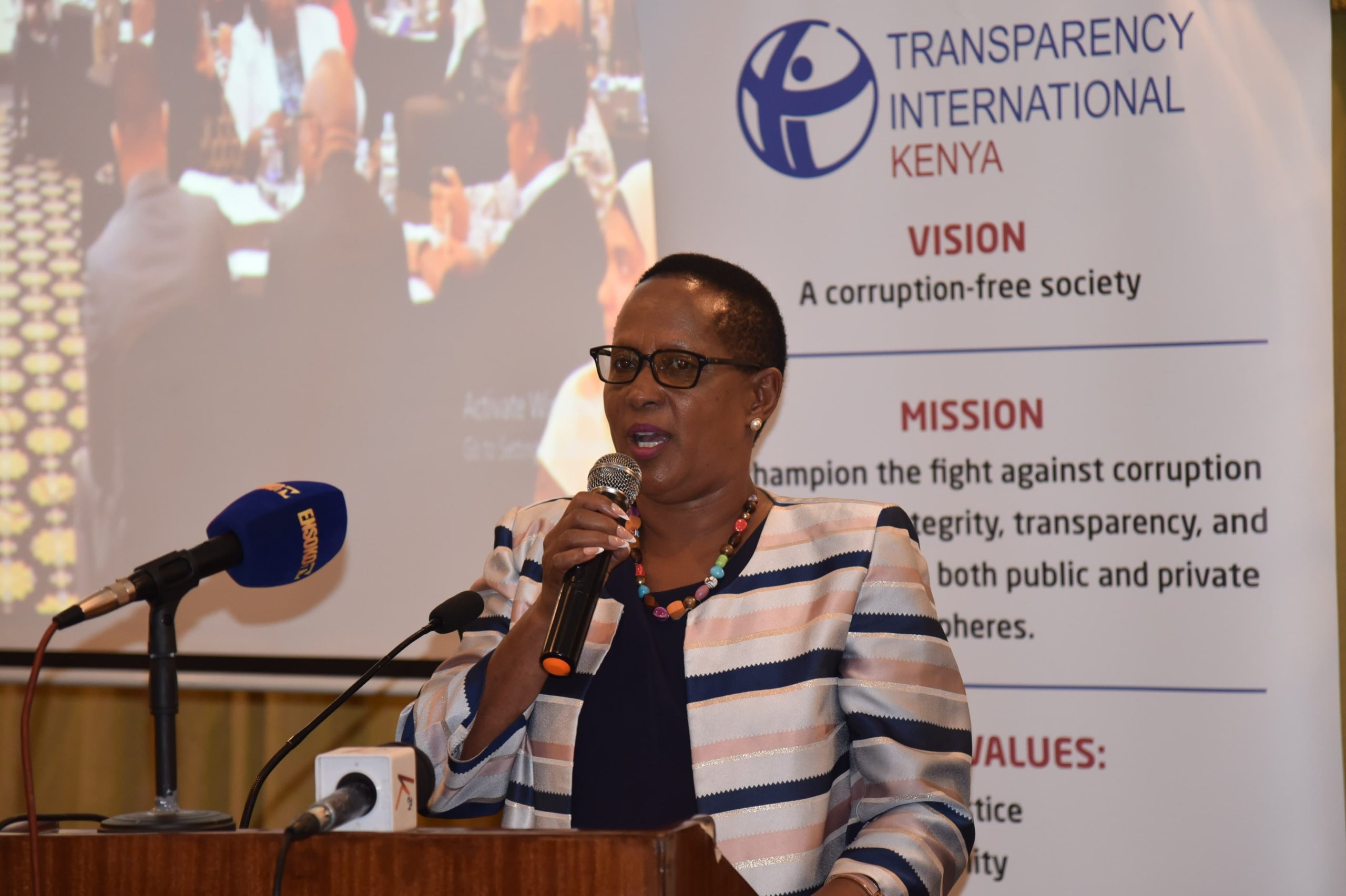
In picture, Principal Secretary, state department for Justice, Human Rights and Constitutional Affairs Judith Pareno, giving her opening remarks during the celebration of World Whistleblower Protection Day in Nairobi.
By Aoma Keziah,
On this year’s World Whistleblower Protection day, Transparency International Kenya, The Kenya Human Rights Commission (KHRC), The Institute of Social Accountability (TISA) and Inuka ni Sisi, joined the global community in recognizing and celebrating whistle blowers and the critical role they play towards promoting transparency, accountability and the rule of law.
In her opening remarks, Principal Secretary in the state department for Justice, Human Rights and Constitutional Affairs Judith Pareno, highlighted that the State Department For Justice, under the Office of the Attorney General, has taken decisive steps to address drafting a comprehensive Whistleblower Protection Bill, now undergoing public participation.
“This Bill proposes a robust framework to protect Whistleblowers, providing secure reporting mechanisms, shielding them from reprisals, and placing legal obligations on public institutions to create internal disclosure systems. This Bill is not a token gesture, It is a national necessity. Whistleblower Protection is not just about governance, its about justice, ensuring that every Kenyan, regardless of rank or status, is empowered to say this is wrong without fear of losing everything,” she stated.
Celebrating Courage in the Face of Adversity Globally, the experience of whistleblowers continues to be both inspiring and challenging. Their willingness to put principles before personal comfort has led to crucial reforms that protect millions of people worldwide. In Kenya whistleblowers have served as early warning system exposing fraud, budgeted corruption and human rights violations contributing towards strengthened democratic governance. Their testimonies have exposed unethical behavior in the public and private spheres, igniting public indignation and calling for reform.
“Whistleblowers are the conscience of our society. They keep our leaders in check, expose what others would rather conceal, and trigger the accountability our institutions desperately need. Yet today, we witness with concern an increase in harassment, unlawful detentions and even abductions targeting those who bravely stand up for the truth. These threats are real, and they are a direct attack on our democracy and our collective aspirations for justice and transparency,” remarked Sheila Masinde, Executive Director, Transparency International Kenya.
Despite their sacrifice, whistleblowers often face retaliation, threats, loss of livelihood, and even physical harm. CPA Spencer Sankale, one of the whistleblowers Of the ‘Maasai Mara Heist’ that came to light in 2019 was dismissed employment in 2021, the late David Munyakei, the whistleblower in the Goldenberg scandal who lost his job at the Central Bank of Kenya almost 30 years ago and died a destitute.
In 2021, Jennifer Wambua, who was the deputy communications director at the National Land Commission was found dead, at a time when she was a state witness in a Ksh 122.3 Million fraud case in which 18 people including public officials were charged. Her reporting, this case was suspected as a motive for her killing these stories are just but a fraction of the horrendous acts of retaliation that most Kenyans face when they speak up against corruption. This is unacceptable in any society that claims to uphold constitutional values and human dignity.
The despicable acts of high-level intimidation against whistleblowers are a reminder of the urgent need to put in place a robust legal framework to protect those who risk their lives and livelihoods exposing corruption and other related abuses. The absence of a comprehensive whistleblower protection framework in Kenya has left courageous individuals vulnerable and thereby demeaning anti-corruption efforts.
In 2015, a Task Force reviewing Kenya’s legal, policy, and institutional framework for combating corruption recommended the enactment of a comprehensive whistleblower protection law. This led to the drafting of the Whistleblower Protection Bill, which was later refined into the Protected Disclosures Bill, 2019. Amendments were also proposed to relate anti-corruption legislation, including the Access to Information Act, bribery Act, and the Proceeds of Crime and Anti-Money Laundering Act, to broaden the scope of designated entities under Designated Non-Financial Businesses and Professions (DNFBPs).
Despite these efforts, progress remained slow until the Whistleblower Protection Bill, 2023, was reintroduced by the Office of the Attorney General. Parallel versions of the bill were also tabled in the National Assembly and in the Senate.
The 2023 Bill by the Attorney General if enacted into law, will be critical in establishing a clear legal framework for the protection of whistleblowers, creating a confidential reporting mechanism and protection protocols, imposing penalties for acts of retaliation, offering incentives and support systems to encourage whistleblowing in the public interest.
They acknowledge the current efforts to enact the Whistleblower Bill through the Office of the Attorney General by providing amendments to the Witness Protection Act under the Anti-Corruption laws (Amendment) Bill 2025 to expand its protection to, not only general witnesses, but also the whistleblowers.
They also commend lawmakers and civil society partners who have championed this cause on this day, urging all public institutions involved in the process to expedite the passage of the Bill, which has been pending for more than 12 years now, without dilution of its protective provisions so that the law can truly ensure all Kenyans that risk life and limb to report corruption or other forms of wrongdoing.
They further called for the Fast-track the Whistleblower Protection Bill 2024, amend the Witness Protection Act ensure Interim Protection Measures by providing continued institutional and legal support to whistleblowers, Clarify Admission and Exit Criteria for Protection and define a Statutory Limitation Period for Disclosures.
Similar Posts by Aoma Keziah:
- Nationwide Youth Business Drive Enters Last Lap With New Nyota Trainings
- Green Light From Washington Sets G42 On Fast Track to Build Region’s Most Powerful AI Network
- Safina Eyes Kariobangi North Seat in Intensified Push Before Poll Day
- KEBS Opens Talks With Manufacturers On New Standards Levy Order 2025
- Kenya, Uganda And South Sudan Chart Way Forward On East Africa Rail Corridor
About the Author

 The Mt Kenya Times