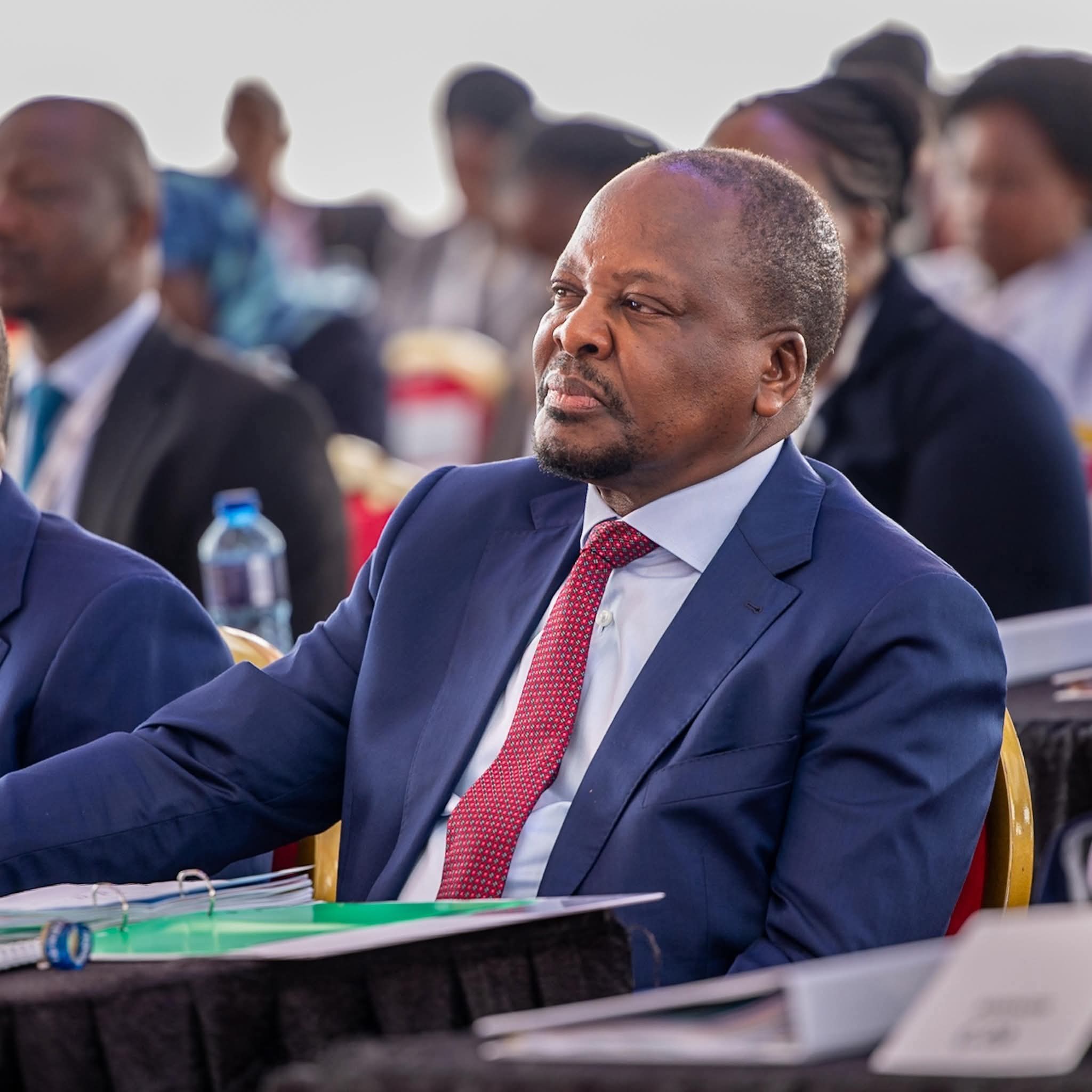
Ministry of Agriculture and Livestock Development Cabinet Secretary Mutahi Kagwe
Ministry of Agriculture and Livestock Development Cabinet Secretary Mutahi Kagwe yesterday announced that the government had withdrawn from the market 77 end-use pesticide products. Similarly, 202 others have been put under strict use on crops while 151 more under review by PCPB.
“We have taken decisive regulatory action to withdraw 77 end-use products from the Kenyan market and to restrict the use of 202 products on various crops. A further 151 products are under review by the Pest Control Products Board, with a decision on their approval expected by December 2025,” the CS disclosed.
In the meantime, the use or importation of the 151 products remains prohibited until the end of the review. To further safeguard the public, Kagwe added, the government has taken some measures: all pest control products (PCPs) considered for registration in Kenya must be registered in their country of origin, No pest control products banned at the international level under multilateral environmental agreements shall be registered for use in Kenya and the importation of any molecule under review that is not approved in the European Union, the United States of America, Australia, or Canada shall be prohibited until finalization and review.

Interior Principal Secretary Raymond Omollo has assured Kenyans that the only way to access quality and affordable healthcare is by registering with the health insurance fund under the Social Health Authority (SHA). Omollo emphasised that SHA is critical to the success of Universal Health Coverage (UHC).
“Families should no longer be forced to sell valuable assets to afford medical care,” he said, noting that many vulnerable households are already benefiting from the SHA cover. “Kenyans are convinced that SHA is working—the early doubts have faded. We urge all those who haven’t registered to do so without delay,” he added.

Media houses have been urged to help dispel misinformation surrounding the government’s affordable housing programme. National Housing Corporation (NHC) Board Chairman Yusuf Chanzu made the call during the signing of an MoU with Baringo County in Kabarnet. Chanzu expressed concern over misleading narratives by some politicians and wealthy individuals aimed at derailing public support. He emphasized the media’s role in shaping public opinion and boosting uptake of the initiative, calling it a “noble idea” to provide quality, dignified housing. Under the agreement, Baringo County will receive 360 housing units, beginning with 100 units at Kiboino. NHC will handle technical and financial aspects, while the county will provide land and key infrastructure. Governor Benjamin Cheboi welcomed the project, urging local contractors and communities to take part and benefit from the development.

Narok Governor Patrick Ole Ntutu has commissioned vital water infrastructure at the Narok Town Water Intake Facility, including new pumping systems and a protective flood control wall. The Sh42 million project; implemented by Narok Water and Sewerage Services Company (NARWASSCO) in partnership with Japan International Cooperation Agency (JICA) is set to improve water access for over 140,000 residents. The County funded the installation of submersible and turbine pumps, while JICA supported the flood protection wall. Ntutu hailed the initiative as a milestone in tackling water shortages in the semi-arid county and reaffirmed his administration’s commitment to enhancing essential services.

Health Cabinet Secretary Aden Duale yesterday held a strategic engagement with the International Organization for Migration (IOM), led by Chief of Mission John MacCue, to explore areas of collaboration in enhancing access to quality healthcare services for refugees and migrant populations in Kenya. The meeting addressed the need to improve registration of migrants and refugees, with the CS reaffirming the Ministry’s commitment to facilitating their enrolment into the health system to enable access to affordable care in line with the government’s Universal Health Coverage (UHC) agenda. Duale also noted the Ministry’s plans to establish a stronger regulatory role in ensuring quality healthcare is provided not only to migrant populations but also to the communities that host them. IOM expressed its commitment to collaborate with the Ministry in conducting a population mobility mapping exercise. The initiative will inform targeted public health interventions and identify areas at risk of cross-border disease transmission, particularly Ebola Virus Disease (EVD). It will also support capacity-building for Ministry officials, who will cascade the training to other points of entry and counties managing diseases of public health concern.
Similar Posts by The Mt Kenya Times:
- Olise seals France win over Belgium in Nations League thriller
- Fatuma faces Senate scrutiny in PSC commissioner bid
- Birik: Lokichar first oil on course for December
- Eng Mwangi: Dangote refinery could reshape Kenya’s industry
- Mt Kenya Times ePAPER September 29, 2026
About the Author