Choriyeva Oynur
By: Choriyeva Oynur
Abstract:
This article discusses the life, creative path, and literary significance of the People’s Poet of Uzbekistan, Erkin Vohidov. It highlights his childhood, the stages of his artistic formation, and his most famous works, along with their themes and meanings. The study also analyzes how national pride, patriotism, humanism, and the ideals of goodness are expressed in his poetry. Furthermore, the article reveals Erkin Vohidov’s contribution to Uzbek literature and culture, as well as his role in nurturing the spiritual values of the younger generation.
Keywords: Erkin Vohidov’s poems, life, creativity, translations, achievements, awards, legacy for youth.
Introduction
Erkin Vohidov (1936–2016) was a People’s Poet of Uzbekistan, a recipient of the title “Hero of Uzbekistan” and the “Order for Great Services.” His childhood coincided with the difficult years of World War II, yet he managed to live a prolific and meaningful creative life. Vohidov was not only a talented poet but also a skilled translator who introduced Uzbek readers to the masterpieces of world literature. He authored numerous poems, epics, and plays. Moreover, he was a courageous intellectual who glorified freedom and peace, and who dared to proudly declare “Oʻzbegim” (“My Uzbek”) during the Soviet era.
Vohidov translated the works of many prominent foreign writers, including Alexander Tvardovsky, Johann Wolfgang von Goethe, Muhammad Iqbal, Rasul Gamzatov, and Sergei Yesenin. Among his most remarkable translations are Yesenin’s lyrical works and Goethe’s “Faust.”
Main Part
Erkin Vohidov was born on December 28, 1936, in the Oltiariq district of Fergana region, in a teacher’s family. His childhood was full of hardships—he lost both parents at an early age and grew up as an orphan. He later recalled:
> “While my father was at the front, my mother worked as a clerk in the village council. Life was very difficult. I remember chewing corn stalks until my tongue bled, eating oilcake with other children, and how my mother slapped me in sorrow and cried all evening…”
His uncle in Tashkent took care of him and raised him. From a young age, Vohidov was interested in literature and poetry. He was greatly inspired by gatherings at their home with poets such as Chustiy, the singers Shojalilov brothers, Ma’rufkhoja Bahodirov, and the great scholar and translator Alikhon Sog‘uniy. Those poetic and intellectual discussions left a deep mark on his mind.
Under the guidance of G‘ayrativ, he attended literary circles and honed his writing skills. His first poem was published at the age of 14 in the magazine Mushtum. His first poetry collection, “Tong Nafasi” (“The Breath of Dawn”), was published in 1961. Later, his 1987 collection “Shoir, She’r va Shuur” (“The Poet, the Poem, and Consciousness”) gained wide recognition. He also wrote three plays: “The Golden Wall,” “The Tragedy of Istanbul,” and “The Second Talisman.” The comedy “The Golden Wall” was staged in Lahore, Pakistan.
After graduating from high school with excellent marks, Vohidov studied at the Faculty of Uzbek Philology at Tashkent State University (now the National University of Uzbekistan). His university years played a key role in the development of his intellectual and creative abilities.
From 1960 to 1963, he worked as an editor at the magazine “Yosh Gvardiya” and later became its editor-in-chief (1975–1982). He also held senior positions at the G‘afur G‘ulom Literature and Art Publishing House and the “Yoshlik” monthly magazine. After Uzbekistan gained independence, he served as Chairman of the Committee on International Affairs and Inter-Parliamentary Relations (1995–2005), and later as Chairman of the Committee on Science, Education, Culture, and Sports (2005–2009) in the Oliy Majlis (Parliament).
Among his most beloved poems are “Tong Lavhasi” (“Dawn Scene”), “Kamtarlik Haqida” (“About Modesty”), “Sevgi” (“Love”), “Buloq” (“The Spring”), and “Ona Tuproq” (“Motherland Soil”), which stand out for their simplicity, philosophical depth, and artistic beauty. In “Kamtarlik Haqida,” humility is expressed through the image of a teapot bowing to a cup — a profound metaphor for modesty.
> Though the teapot stands tall and proud,
It bows gently toward the cup.
So why should man be arrogant,
And what’s the use of vanity’s trap?
Be humble, take a modest step,
Avoid the threshold of pride.
That’s why the cup, not the pot,
Is kissed upon the forehead wide.
Vohidov’s poetry centers on humanism, national pride, and patriotism. His works such as “Nido” (“The Cry”), “Ruhlar Isyoni” (“The Revolt of Souls”), and “Palatkada Yozilgan Doston” (“The Epic Written in a Tent”) reflect his opposition to war, oppression, and injustice.
In 1983, he was awarded the Hamza State Prize of Uzbekistan SSR; in 1987, he received the title of People’s Poet of Uzbekistan. He later received the “Order of Friendship” (1995) and the highest national title, “Hero of Uzbekistan” (1999). Many of his poems have been set to music by renowned artists, including Sherali Jo‘rayev.
In 2020, to mark the 75th anniversary of the United Nations, Vohidov’s poem “Inson” (“Human”) was turned into a multilingual song performed in Arabic, English, Italian, Kazakh, Russian, Tajik, Turkish, and Uzbek.
As a translator, Vohidov rendered into Uzbek the works of many world classics such as Alexander Blok, Friedrich Schiller, Lesya Ukrainka, Mikhail Svetlov, Muhammad Iqbal, Rasul Gamzatov, Sergey Yesenin, and Silva Kaputikyan. In 1974, he translated Goethe’s “Faust” int Uzbek. His translations of Yesenin’s poems are especially admired.
Below is his Uzbek translation of Yesenin’s farewell poem “Goodbye, My Friend” (1925):
> Goodbye, my dear, my heart’s balm,
Though we part, reunion awaits.
Don’t open your lips to grieve,
For both life and death are fates.
> Goodbye, my friend, don’t break your heart,
Don’t weep, don’t cry for me.
Death exists — but so does life,
That’s the truth, eternally.
In classical Eastern literature, qasidas (odes) were often written in praise of rulers or nobles. Erkin Vohidov, however, dedicated his qasida to his homeland — the Uzbek nation. His famous poem “Oʻzbegim” (“My Uzbek”) glorifies the rich history, culture, and pride of the Uzbek people and became an unofficial national anthem in the 1960s.
Writer O‘tkir Hoshimov once said:
> “A true artist is a faithful son of his people. Erkin Vohidov’s works prove this. His ‘Oʻzbegim’ is not merely a patriotic hymn — it embodies our nation’s thousand-year history, joys, and sorrows. I once visited a school where children recited it together by heart, and I felt proud that our nation has such a poet.”
Vohidov himself said:
> “In those years, writing about our glorious past was not allowed — only praise for the Soviet system. But how could one call our great ancestors like Al-Khwarizmi, Beruni, and Ibn Sina ‘ignorant’? That’s why ‘Oʻzbegim’ touched people’s hearts. Yet it was risky — even the word ‘Oʻzbegim’ was seen as nationalism. I was interrogated many times, told to replace it with ‘our people,’ and to add Lenin’s or Moscow’s names. But I refused. They promised fame and rewards if I did — still, I couldn’t betray the truth.”
For this poem, Vohidov was interrogated by the KGB several times in 1968. Nevertheless, his courage and artistic integrity made him one of the most respected figures in Uzbek literature.
Conclusion
Erkin Vohidov passed away on May 30, 2016, at the age of 79. He remains one of the most beloved poets of Uzbekistan. Many institutions and places have been named in his honor. In 2018, a specialized school named after him was opened in Margilan, and in 2019, the Erkin Vohidov Memorial Museum was established there.
Numerous books have been written about his life and works, including “Erkin Vohidov’s Lessons” (2016), “Till the Sun Shines Its Light” (2016), “The Magic of Words,” and “Erkin Vohidov — The Free Uzbek of My People.”
Erkin Vohidov stands as one of the greatest figures of modern Uzbek literature. His poetry and epics embody national spirit, humanity, and kindness, expressed with exceptional artistry. As a translator, he introduced Uzbek readers to the gems of world literature. His legacy continues to serve as a moral and spiritual guide for the younger generation.
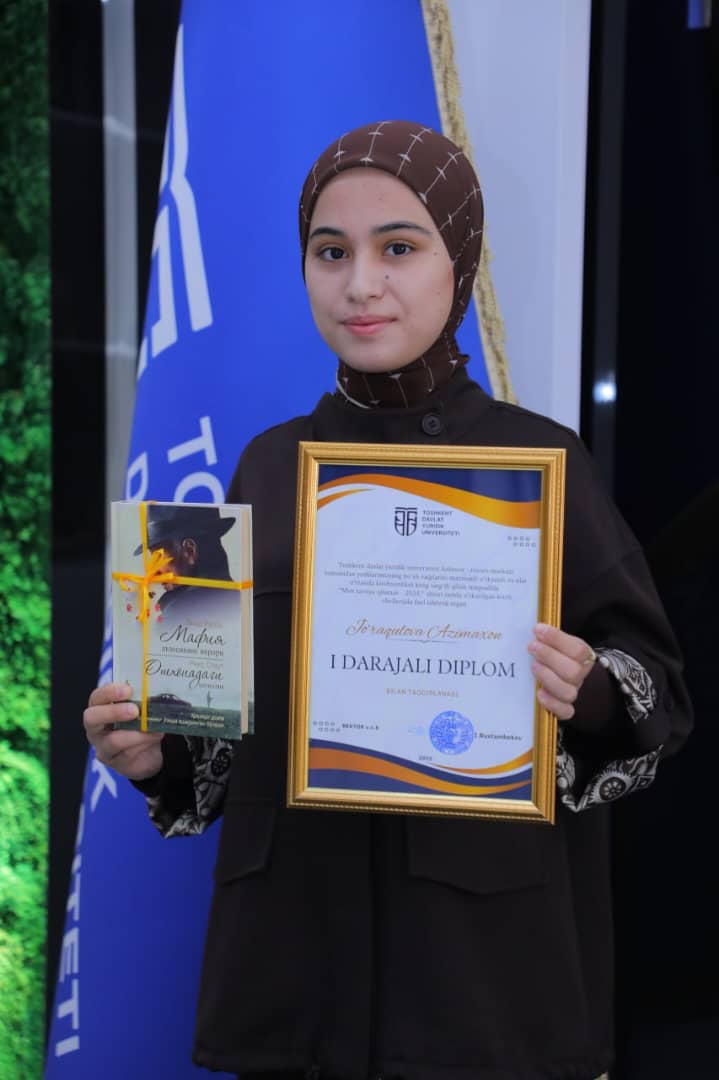
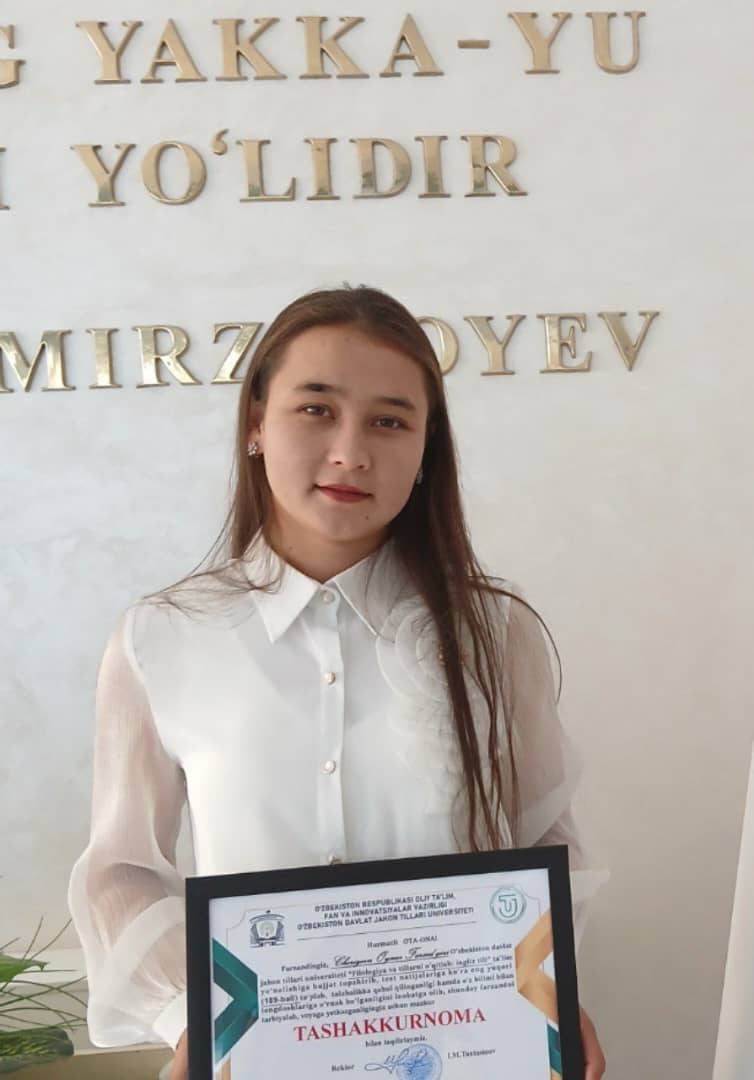
Choriyeva Oynur was born in Muborak district of the Republic of Uzbekistan. She is a student at the Faculty of English Philology of the Uzbekistan State World Languages University.
Similar Posts by The Mt Kenya Times:
- From the runway to youth empowerment
- Breach at Vote 8: What the Attack on the Namibian Defence Establishment Means for National Security
- Inspired by the poem “Time”
- The use of digital educational technologies in the prevention of dental diseases
- Behind the visor: How Nairobi’s ‘Brayo Oyaah’ is redefining Kenya’s road safety culture
About the Author