Fourth Edition Of National Agriculture Summit Kicks Off In Nairobi
 The Mt Kenya Times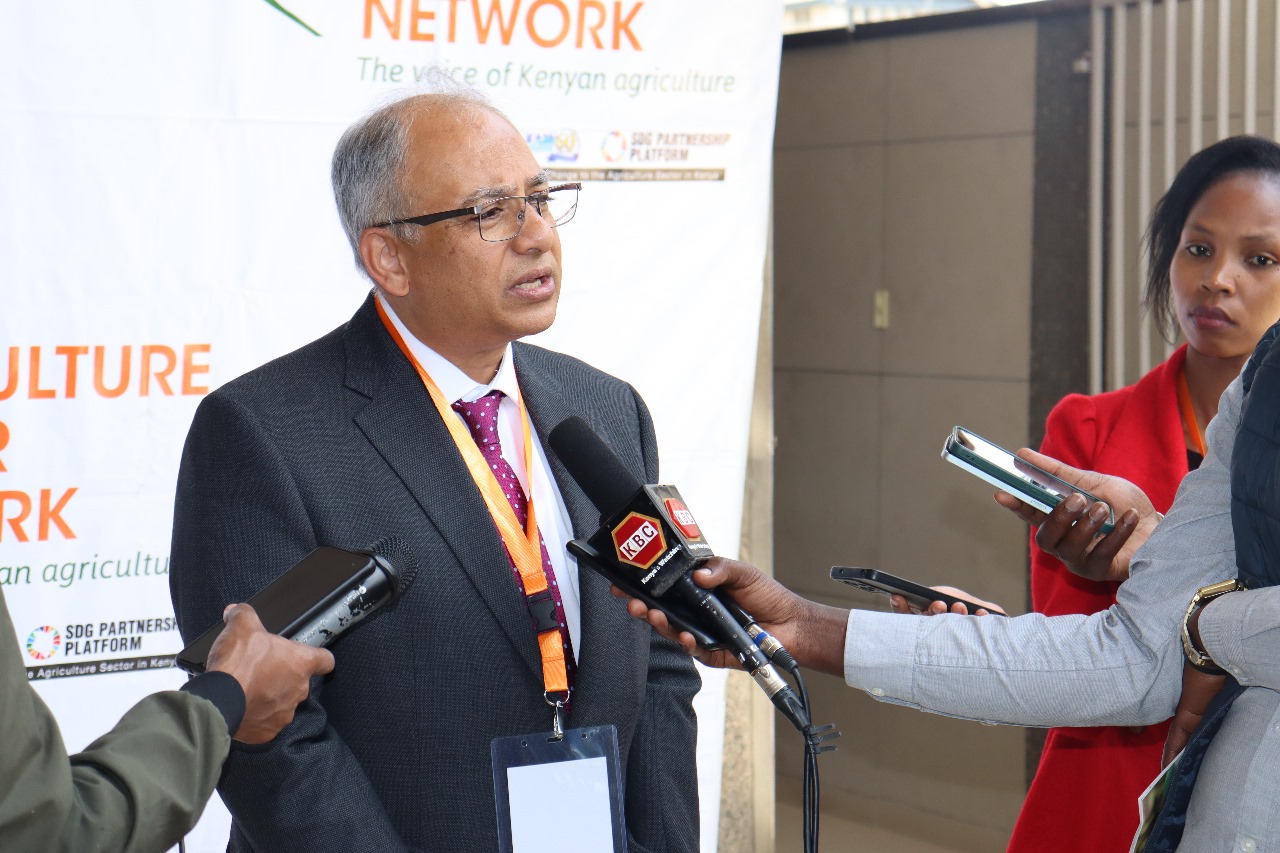
Agriculture Sector Network (ASNET) Chairman Dr Bimal Kantaria issuing his address to the press
By: Cynthia Masibo
The 4th edition of the National Agriculture Summit began yesterday, bringing together key players from Kenya’s agricultural sector. Organized by the Agriculture Sector Network (ASNET), the agricultural sector board for the Kenya Private Sector Alliance (KEPSA), the two-day event aims to promote innovation, research, and create a business-friendly environment for the country’s agricultural industry.
Under the theme “Embracing Sustainability: Innovations, Research, and Competitiveness in Agriculture,” the summit provides a platform for stakeholders to discuss how best to foster a sustainable future in agriculture. With a focus on enhancing market access, funding opportunities, and industry collaboration, the summit emphasizes the importance of innovation and research in driving Kenya’s agricultural progress.
During the opening ceremony, the Cabinet Secretary for Agriculture and Livestock Development, Dr. Andrew Karanja, delivered a keynote address emphasizing the pivotal role of research in agricultural decision-making. “We as a country must focus on transforming and growing our agri-food systems, promoting healthy diets, and ensuring the free movement of food and inputs. Developing shorter supply chains and addressing food volatility are essential,” Dr. Karanja noted. He stressed the need for evidence-based approaches to unlock opportunities and overcome challenges in the sector.
Dr. Bimal Kantaria, Chairperson of ASNET and KEPSA Director for Food Security and Climate Change, echoed these sentiments. “Agriculture remains the backbone of our economy, providing livelihoods for millions and ensuring food security,” he stated. He lauded the summit for creating a vital platform where policymakers, researchers, and entrepreneurs can come together to exchange ideas and collaborate to ensure a sustainable and prosperous future for Kenya’s agricultural sector.
Ms. Carole Kariuki, CEO of KEPSA, highlighted Africa’s competitive advantage, citing its 65% arable land and young population, with 60% under the age of 25. “These factors could drive both agricultural and technological advancements,” Kariuki observed, while also pointing out the challenges of limited access to finance for smallholders and inefficiencies in market access and logistics. She urged stakeholders to embrace digitization and explore alternative finance models such as digital lending platforms and crowdfunding.
The summit has also brought attention to the role of universities and research institutions in fostering agricultural innovations. A dedicated side event at the University of Nairobi will focus on bridging the gap between academia and industry, enabling academic research to be translated into practical solutions for the sector. This initiative aims to strengthen the partnership between higher education institutions and the agricultural industry.
On policy matters, Dr. Vimal Shah, Chairperson of Bidco Africa, stressed the importance of reducing licensing burdens on farmers and ensuring policy coherence to avoid fragmentation. He also advocated for public-private dialogue and the adoption of scientific farming practices to boost productivity. Dr. Shah further emphasized the need to leverage digital platforms for zero-cost data collection and to incorporate bio-fertilizers and bio-pesticides in precision farming, which could enhance Kenya’s agricultural competitiveness.
The first day of the summit featured panel discussions on key issues, including sustainability in agriculture, alongside an expo showcasing innovative agricultural technologies, products, and services. The event is set to conclude with additional panel sessions and a closing ceremony that will outline key takeaways and the way forward for the sector.
Similar Posts by The Mt Kenya Times:
- Mt Kenya Times ePAPER September 19-20, 2026
- Kenya joins US and UK to put citizens on the terrorism frontline
- Kenya’s parliament races to tame the AI frontier
- Kalonzo calls Ruto to order over Uhuru attacks
- Gachagua takes his 2027 campaign to America
About the Author