Kalonzo Musyoka Announces Azimio’s Plans To Form A Shadow Cabinet
 The Mt Kenya Times
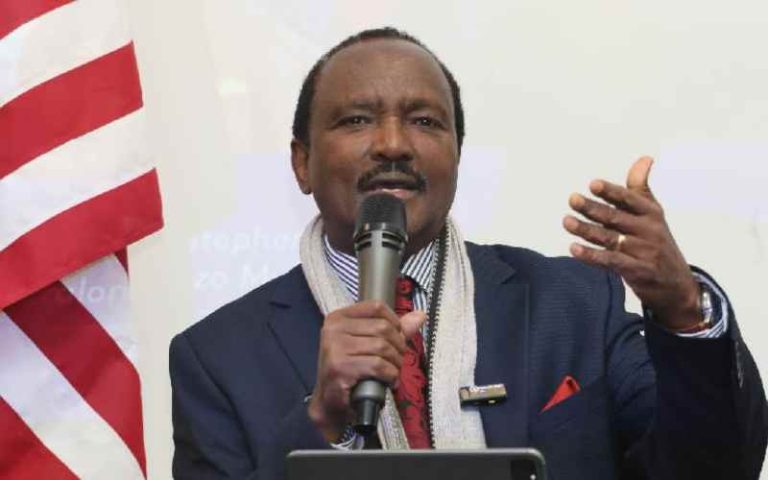
Wiper Leader Kalonzo Musyoka issues his address to the media looking on is and DAP-K leader Eugene Wamalwa at the Ufungamano House.
By Cynthia Masibo

In a bold political move, Wiper Party leader Kalonzo Musyoka has declared that the Azimio la Umoja One Kenya Alliance, Kenya’s leading opposition formation, will soon unveil its own “Cabinet.” The announcement, made during the Katiba@14 address at Ufungamano House on Wednesday, signals a significant escalation in the opposition’s strategy to counter President William Ruto’s government.
Kalonzo, who has increasingly asserted himself as the de facto leader of the opposition, emphasized that this alternative Cabinet would be an inclusive body, representing all segments of Kenyan society. Of particular note, he mentioned that the Cabinet would include members from Generation Z, a demographic that has become increasingly vocal and active in protests against the current administration.
The decision to form a shadow Cabinet appears to be a strategic response to what Kalonzo and other opposition leaders perceive as the shortcomings of President Ruto’s government. By establishing a team that will “shadow” the official Cabinet, the opposition aims to hold the government accountable on key issues, provide alternative policy solutions, and keep the public informed about the government’s performance.
“The opposition’s Cabinet will encompass Kenyans across all age groups, including Gen Zs who have in recent past demonstrated against the government,” Kalonzo stated. This move suggests an effort to not only reflect the demographic diversity of Kenya but also to harness the energy and frustrations of younger citizens who feel increasingly disenfranchised by the current administration.
The concept of a shadow Cabinet is not new in global politics, particularly in parliamentary systems where opposition parties often designate their own spokespeople for each government ministry. However, in Kenya, where the political system is heavily presidential, such an initiative is relatively novel and could set a new precedent in how opposition parties operate.
Kalonzo was unequivocal about the role this unofficial ministerial team would play. “The said unofficial ministerial team will be tasked with shadowing and keeping President William Ruto’s Cabinet in check and accountable,” he remarked. This suggests that the shadow Cabinet will serve as a watchdog, scrutinizing government policies and decisions, and offering counter-narratives where necessary.
This initiative also highlights the growing tensions between the government and the opposition. Since the last general election, where President Ruto narrowly won, the opposition has consistently challenged the legitimacy of his administration. Kalonzo’s latest move can be seen as an attempt to consolidate the opposition’s position as the voice of the Kenyan people, particularly those who feel left behind by the current regime.
During his address, Kalonzo also took the opportunity to criticize President Ruto’s ongoing trip to Luo Nyanza, a region traditionally seen as a stronghold of opposition leader Raila Odinga. Kalonzo downplayed the significance of the visit, suggesting that it was a superficial attempt to win over voters in a region that remains skeptical of Ruto’s intentions.
“Kenyans are already aware of his true colors,” Kalonzo said, adding that Ruto would not be able to win in a fair election if it were held today. This statement underscores the deep-seated animosity between the two political camps and reflects the opposition’s belief that Ruto’s support base is weakening.
As Azimio la Umoja One Kenya prepares to unveil its shadow Cabinet, the political landscape in Kenya is set to become even more polarized. The opposition’s move could invigorate its supporters, particularly among the youth, and put additional pressure on the Ruto administration. However, it also raises questions about the potential for increased political tensions and the stability of the country’s democratic institutions.
Similar Posts by The Mt Kenya Times:
- Mt Kenya Times ePAPER September 19-20, 2026
- Kenya joins US and UK to put citizens on the terrorism frontline
- Kenya’s parliament races to tame the AI frontier
- Kalonzo calls Ruto to order over Uhuru attacks
- Gachagua takes his 2027 campaign to America
About the Author