The Mt Kenya Times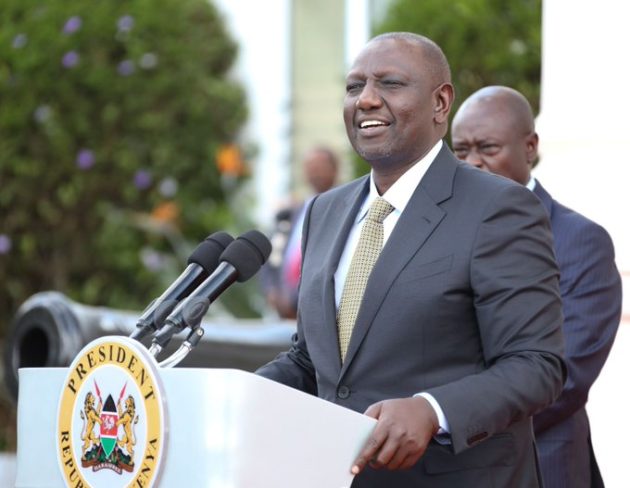
President William Ruto
By: Joseph Mutua Ndonga
Worth Noting:
- The Mau Mau war of independence was inspired by the oppression and brutality that the British army meted on Kenyan people. Enough is enough. We cannot tolerate this anymore.
- The war was pegged on two key issues of reclaiming our land and freedom. The freedom fighters were optimistic that they will win this war. So, what were their expectations once they have liberated their motherlands?
- The first government of post independent Kenya will give priority to the emotive issue of land. This is by dismantling the skewed and oppressive land policies imposed by the colonialists.
- In so doing, the expansive land they had occupied will now revert to the hands of the new government.
As a student of history, allow me to start by saying that the emotive question of land ownership in Kenya dates to back to the colonial era.
This period had been preceded by the scramble for Africa in which powerful nations of the West embarked on an orgy of annexation, forcibly occupation of continent’s land.
This resulted in mass displacement of African people from their homes who were confined into the villages and concentration camps.
This enabled the whites to takeover their vast chunks of fertile lands and use them for big plantations or any other viable economic venture.
The whites believed in divide and rule and this explains why they confined Africans into tribal cocoons.
This would also help them to easily manage these people and use them as slaves to do hard labor in their expansive plantations.
The white settlers would deal ruthlessly with those who declined.
To me, this period marked the genesis of the land grabbing.
Having been annexed by Britain, Kenya first becomes a British Protectorate and later its colony.
The Mau Mau war of independence was inspired by the oppression and brutality that the British army meted on Kenyan people. Enough is enough. We cannot tolerate this anymore.
The war was pegged on two key issues of reclaiming our land and freedom.
The freedom fighters were optimistic that they will win this war.
So, what were their expectations once they have liberated their motherlands?
The first government of post independent Kenya will give priority to the emotive issue of land.
This is by dismantling the skewed and oppressive land policies imposed by the colonialists.
In so doing, the expansive land they had occupied will now revert to the hands of the new government.
The redistribution should be done in a fair and humane manner. All Kenyans were entitled to get their shares.
The dreams of the Mau Mau fighters did not come to pass.
The government of the founding President Mzee Jomo Kenyatta took advantage of the weak legislations enacted by colonialists on land matters to continue with land grabbing.
Kenyatta and his family led what was described as the second phase of the scramble for Kenyan lands.
In what would be seen as single-handedly usurping the role of demarcation, subdivisions and land adjudication, he would allocate himself hundreds of thousands of acres.
He would ensure the lands are registered in the name of Kenyatta family and title deeds are processed immediately.
He would not leave his cronies, buddies and friends behind.
He would tell them to grab huge chunks of the lands as they can.
He would hurl insults to those who declined. The late Bildad Kagia was one of them. He once told him, you fought for freedom but you don’t know its meaning. You will die poor.
According to the final report of the Ndung’u led land commission of Inquiry formed by President Mwai Kibaki, Kenyatta family owns lands equivalent to the whole of Nyanza province. Former President Moi was ranked as the second biggest land owner and Kibaki himself third.
This report was and has never been implemented. It is still gathering dust somewhere in one of the government’s shelves. To date, no leader would want to talk about it. It is a live wire.
In this orgy of land grabbing, Mau Mau fighters and Kenyan citizens have continued to bear the brunt.
One can therefore understand why the successive governments of Independent Kenya turned deaf ear.
A few days ago, President William Ruto waded into this matter vowing to end the menace of land grabbing.
If you know that you are staying on public land or on a land that is owned by another Kenyan, bear this in mind. My government will not protect you and I want to assure Kenyans that there will be no sacred cows. I have already authorized the relevant arms to start the process of recoveries.
You will either buy that land at the current market rate or leave it.
This applies to the land that belongs to individuals if you talk with them and reach a consensus.
When the President made these remarks, the question that came to my mind is. Will he succeed? But upon analysing his credentials and track record, I got convinced that he can do it.
My position was informed by two considerations. One, he is not among the land grabbers indicted by Ndung’u report.
Two, the President said he will do things differently.
He has made great strides for one year he has been at the helm of power. This is in terms of righting the wrongs of the past.
We also know that the President rode to power on a platform of uplifting the living standards of the downtrodden, the hustlers. So, land matters are close to his heart.
Joseph Mutua Ndonga is a writer and political analyst based in Nairobi
Similar Posts by The Mt Kenya Times:
- Phrasal Verbs in Journalistic and Literary Texts: Meaning and Context
- Como dismantle Manchester United 4-1 to deepen Carrick’s crisis
- Kvaratskhelia ruled out for months after ACL injury in PSG win
- Beyond the banter: Uganda’s university rivalry should be about impact
- KWS launches KSh160B conservation programme in Tsavo
About the Author