Rupesh Pillai

By Rupesh Pillai
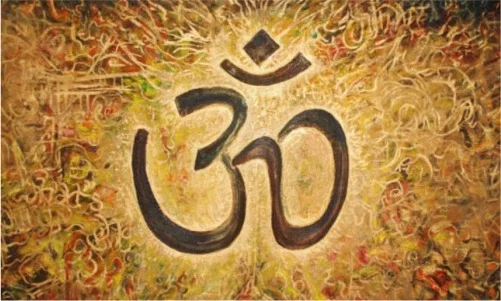 Today when we open any article or videos on social media, we hear only chaos all around. Whether it is ongoing wars in Red Sea, the Israel-Hamas conflict, the Russian and Ukrainian war or the conflict in the Myanmar, etc. There is another war which is going on within oneself. The external and the internal war have led to a situation where the people have lost their peace of mind. The way to restore is the world and people are through self-enlightenment. Sanatan Dharma can be the way to achieve is self- enlightenment. Let’s understand what is this we call the Sanatana Dharma.
Sanatana is explained as:
shāshvatahstu dhruvo nityasadātana-sanātanāh
Which means “imperishable, firm, primaeval, always present, all pervasively present in time and space, and eternal?”
Dharma means:
dharanāt dharma ityaahuh, dharmena vidhrutāh prajāh;
yah syāt dhāranasamyuktah sa dharma iti nischayah
Which means “That which holds together, unites and removes separation that is called dharma? Such dharma holds society together. That which can unite the entire society is most definitely dharma.”
Sanatana means eternal, one which is Anadi (beginningless), Anantha (endless) and Dharma means natural law or righteousness. It is a code of ethics, a way of living through which one may achieve moksha (enlightenment, liberation). Sanatana Dharma is beyond what we call religion. It is the way of life. It provides its followers a clear and balanced view of reality. Sanatana Dharma describes the purpose of life is to recognise one’s higher self and by recognizing one’s duty (dharma) and by performing it with the right action (karma).
Purusharthas, which means the aim of the existence of human, is a vital concept in Sanatana Dharma. The Purusharthas or the four-fold aim of existence is – Dharma, Artha, Kama and Moksha. Dharma is performing ones individual, religious and social duties.
It includes moral rights and behaviours that enable social order, right conduct and those that are virtuous. Artha is the material aspect of human life, the resources that are needed for leading the life that one desires. To uphold Dharma, and perform one’s duties, it is necessary to acquire Artha. Kama is the emotional aspect of human life.
It is happiness that is derived from sensory stimulation. Kama refers to desire and pleasure, anything that brings joy, happiness or pleasure into one’s life which includes art, music, love, intimacy, affection and one’s passion. Moksha is the ultimate aim of the human soul which means freedom from the cycle of birth and death and attaining oneness with the Supreme Self.
A man on the path of liberation always treats others with respect, returns anger with kind words, never harms anyone, not seeking attention, is humble, kind-hearted with a steady mind, is straightforward, and patient.
The ten-fold principles of Dharma include Dhriti, Kshma, Damah, Asteya, Shaucha, Indriyanigraha, Dhi, Vidya, Satyam and Akrodha. Dhriti means firmness, steadfastness, being patient and calm in tough situations. Kshama means forgiveness. Damah means self-restraint, having control over oneself. Asteya means being honest and having integrity in our character. Shaucha means cleanliness of body and mind. Indryanigraha means having control over the senses. Dhi means wisdom to discriminate between the right and wrong. Vidya means knowledge. Satyam means truthfulness. Akrodha means being away from anger even in provoked or tense situation.
It is said the man with half or little knowledge is very dangerous to the society. A man who doesn’t understand the subject must never give lecture on the very subject. Sadly, unlearned and immature politician and public person, who have public followers, try to give lectures on Sanatana Dharma, without even understanding the very basis of it. Such people lead the masses into the world of ignorance and are a serious threat to the society. One of the many misinformation spread about Sanatana Dharma is it spreads casteism.
It is very clearly mentioned in Vedas, Bhagavad Gita and various other scriptures including Manusmriti that there are only four varnas (Brahman, Kshatriyas Vaishyas and Shudras), which is purely based on people’s qualities and activities. This division is irrespective of birth and is purely based on their guns. Brahmans are individuals who have complete knowledge of the Vedas, study various scriptures, perform worship in temples, and guide the rest of society towards enlightenment.
Kshatriya are people, who administrates his kingdom, legislators and military personnel, who are commanded to protect the people, give a gift, offer sacrifices, and study Vedas. Vaishyas are the people who are responsible for the economic growth of society through business and agriculture. They form the backbone of a nation.
Shudras from the working class who serve the society as per their calibre and includes artisans, labourers, etc. There are a lot of examples in our history which show that Varna is not based on the birth of a person. Vishvamitra was a born Kshatriya but became a Brahmana. Valmiki was a thief before he met Sage Narada and he realised his sins and went on to become a Brahmana.
For more than 6000 years, Sanatana Dharma has been teaching the means to take human life to its height in every aspect. Vedas had been the root of Sanatana Dharma which has no author. Every aspect of life has been explained in scientific, social, and logical ways in our religious texts including Vedas, Upanishads, Puranas and other Smritis.
Many civilisations have been lost in history books; their teachings have disappeared. India is the only country where oldest civilisation is still holding onto its roots. Sanatana Dharma has survived various attacks. It has resisted many attempts to be demolished and destroyed.
The Sanatana Dharma needs to be protected and for this, the ancient knowledge which passed on for years by our ancestors must be passed on to the next generations, to make this world a better place to live. It is the universal code which awakens our inner self, restrains selfishness and keeps people in a harmonious state.
Similar Posts by The Mt Kenya Times:
- Mt Kenya Times ePAPER September 19-20, 2026
- Kenya joins US and UK to put citizens on the terrorism frontline
- Kenya’s parliament races to tame the AI frontier
- Kalonzo calls Ruto to order over Uhuru attacks
- Gachagua takes his 2027 campaign to America
About the Author