Scientific Research And Main Historical Sources On Military Affairs In The Emirate Of Bukhara
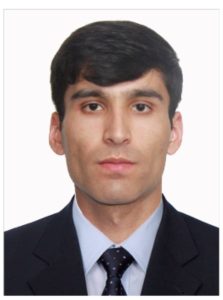
By: Bektoshev G‘iyosiddin Saxriddin
Abstract: This article covers the historical processes related to military affairs, military structure and areas of activity in the Bukhara Emirate from a scientific point of view. In particular, the military reforms of the 19th and early 20th centuries, the composition of the emirate’s troops, the level of armament, and the interaction of military policy with internal and external factors are analyzed. The article provides a scientific assessment based on historical sources related to the topic – documents from the emirate’s period, memoirs, foreign sources and modern historiographical studies. The role of research conducted on military history in current historiography, its relevance and problems of source studies are widely covered. Also, based on available sources, the stages of development of the military system of the Bukhara Emirate and its crisis factors are analyzed in depth.
Keywords: Bukhara Emirate, military affairs, historiography, source studies, military reforms, emirate’s troops, historical sources, military policy, historical analysis.
Scientific Research and Main Historical Sources on Military Affairs in the Emirate of Bukhara
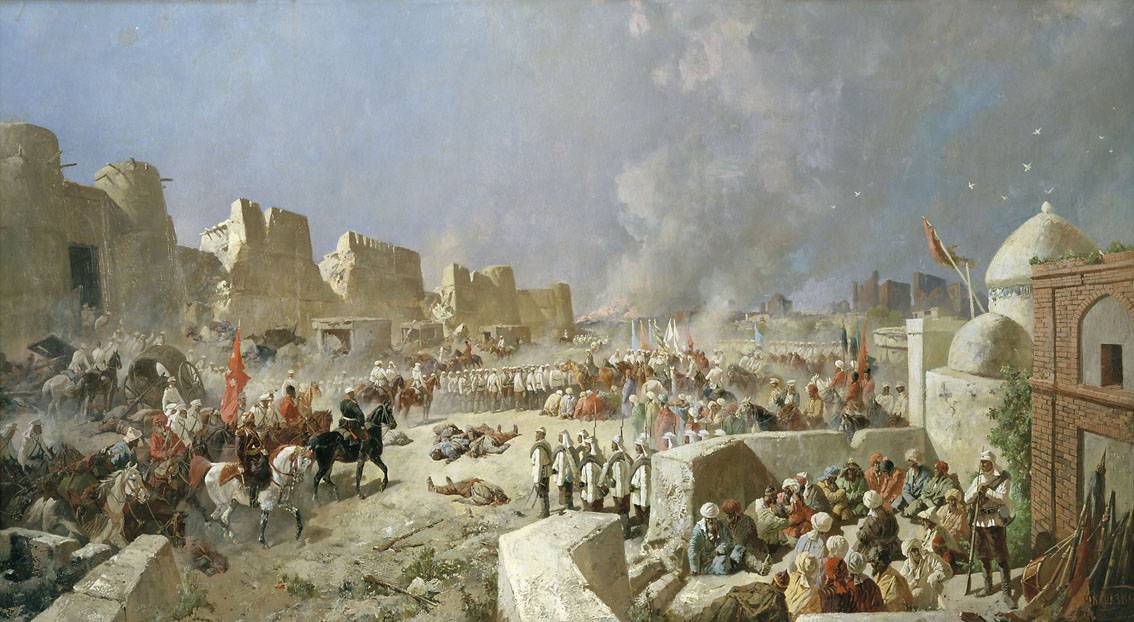
In the administrative affairs of the Emirate of Bukhara, the military skills of high-ranking commanders, military leaders, generals, and emirs held great significance. Much attention was given to neutralizing internal and external threats, expanding the state’s borders, and organizing military campaigns—including the size of the army, its combat readiness, tactics, weaponry, and the military prowess of commanders. The mobilization and provisioning of troops, army composition, battle preparation, armaments, military and guard service, and the execution of military operations had become well-established practices.
Historical sources provide information about the political life, administrative system, and military policies of the emirate.[1] Below, we will explore such sources and their authors. Research and primary sources within the frameworks of historiography and source studies illuminate many aspects of the political, social, and economic history of the Emirate of Bukhara. Works created during the Russian Empire’s military campaigns, occupation, and rule also contribute to the historiographical and source studies of the topic. From these sources, we can glean insights into military affairs in Bukhara during the period under study, particularly on the eve of the Russian invasion—covering social and economic life, the structure and tactics of the Bukhara army, and the roles of military officials.
Works by representatives of the local historiographical school were long suppressed, unpublished, or downplayed in terms of significance, with translations and publications delayed. Nevertheless, some scholars conducted research based on these local sources. Notably, Professor Sh. Vokhidov conducted extensive studies on the history of state administration, ranks and titles, and military affairs in the Emirate, publishing scientific works based on these studies. He translated and annotated works by Muhammad Sharifkhan (Sadr-i Ziyo), the qazi-kalon of Bukhara (e.g., “Zikri Saltanati Podshohoni Mangitdir”), and Muhammad Ali Baljuvani’s “Tarikh-i Nafi” from Tajik. These texts are significant sources for studying the emirate’s governance and military history.
Historical works by Bukhara historians such as Qazi Hamid Baqokhujazoda, Mir Muhammad Siddiq ibn Amir Muzaffar (“Hashmat”), and Muhammad Sharif ibn Qazi Abdu Shukur (Sadr-i Ziyo), particularly the scholarly-literary legacies of the last qazi-kalon of Bukhara, Sadr-i Ziyo (1867–1932), and Hashmat, are valuable for understanding the issues at hand. Sadr-i Ziyo’s “Zikri Saltanati Podshohoni Mang‘it dar Mavaraunnahr” (Chronicle of the Mangit Rulers in Transoxiana) and “Ruznoma” (Diary), and Muhammad Ali ibn Muhammad Said Baljuvani’s “Tarikh-i Nafi” (Useful History), are vital sources. Tarikh-i Nafi covers the administration, internal regulations, and bureaucratic structure of the Bukhara state during the Mangit dynasty in detail.
Another essential source is “Tarikh-i Abulfayzkhon”, written by astronomer, poet, and historian Abdurahman Davlat (widely known as Abdurahman Tole), who served in the courts of Ubaydullakhan and Abulfayzkhon (1711–1747). Though modest in size (161 folios), this work is a continuation of “Ubaydullanoma” and describes the political and social history of Bukhara between 1711 and 1723. This was a period of political weakening in the Khanate, during which local rulers in cities like Balkh, Samarkand, and Fergana moved toward independence. Notably, Fergana broke away to form the Kokand Khanate in 1709, and Samarkand declared independence in 1722, elevating Rajabkhan as ruler (1722–1728), leading to civil wars.
Silsilat us-Salatin was authored by Khoji Mir Muhammad Salim. This rare manuscript has a surviving copy held at the Bodleian Library in Oxford (Manuscript No. 269). Commissioned by Nasiruddin Muhammad Shah, it was written in 1731 and consists of a preface and four parts. The preface discusses the purpose of the work and includes noteworthy information about the author’s life after 1711.
“Tarikh-i Amir Haydar” was written by Bukhara scholars in the late 18th and early 19th centuries. The surviving, abridged manuscript is housed at the Institute of Oriental Studies of the Academy of Sciences of Uzbekistan (manuscript no. 1836). It comprises 96 folios and recounts the social and political history of the Bukhara Khanate during the rule of the Mangit emir Amir Haydar (1800–1826). It consists of 81 chapters, covering the period from Haydar’s birth to his death in October 1826. The work was translated into Russian in the 1950s by A.A. Semenov.
“Fathnomayi Sultoniy” (Sultan’s Victory Chronicle), written by Mir Olim Bukhari at the request of Huzar governor Muhammad Olimbek during Amir Nasrullo’s reign (1826–1827 to 1869–1879), documents events from the rule of Shohmurod (1785–1800) through the early years of Nasrullo’s rule. While the events under Shohmurod and Amir Haydar are briefly summarized, the Nasrullo period is detailed. Only the first volume is available, as the second was never completed. The first part was translated into Russian by O.D. Chekhovich, and the translation manuscript is stored at the Institute of Oriental Studies in Uzbekistan.
“Tarikh-i Salotini Mangitiya” (History of the Mangit Sultans), authored by Mirzo Abduazim Sami Bustoni (1838/39–after 1914), is also significant. His works, “Tuhfayi Shohiy” (A Gift for the King) and “Tarikh-i Salotini Mangitiya”, are important to the field of history. While “Tuhfayi Shohiy” (written between 1900 and 1902) and “Tarikh-i Salotini Mangitiya” (completed in 1907) both cover the era of Amir Muzaffar, they differ in content and focus.
“Tarikh-i Salimiy” (Salimi’s History) was written by Mirza Salimbek ibn Muhammad Rahim, a historian from a wealthy family born in Bukhara in 1850–51. He authored several major historical works, with “Tarikh-i Salimiy” considered the most important. According to N. Norqulov, it was written in the 1920s. Its early sections offer a general history from Genghis Khan to Amir Muzaffar, while the main part—covering 1860–1920—is unique as Salimbek witnessed many of the events described. The book contains detailed accounts of events in Hissar, Kulob, Baljuvon, Qarategin, and Darvoz during Amir Muzaffar’s reign, as well as Bukhara-Kokand and Bukhara-Russia relations and the emirate’s overall condition and administrative structure in the late 19th century.
In conclusion, historical sources serve as primary references for understanding the political, social, economic, and military history of the Emirate of Bukhara. These works highlight the significant role of the military in internal and external affairs during the late 18th and early 19th centuries. By this time, the emirate’s army was mostly irregular and tasked with safeguarding the state. In the early 19th century, the emirs undertook substantial reforms to improve the army and introduce regular military units into its structure.
Student of Shahrisabz state pedagogy inistituty, Bektoshev G‘iyosiddin son of Saxriddin
Similar Posts by The Mt Kenya Times:
- Olise seals France win over Belgium in Nations League thriller
- Fatuma faces Senate scrutiny in PSC commissioner bid
- Birik: Lokichar first oil on course for December
- Eng Mwangi: Dangote refinery could reshape Kenya’s industry
- Mt Kenya Times ePAPER September 29, 2026
About the Author