Territorial Ambitions And The Future Of Global Order: Analyzing Great Power Competition Over Strategic Territories
 The Mt Kenya Times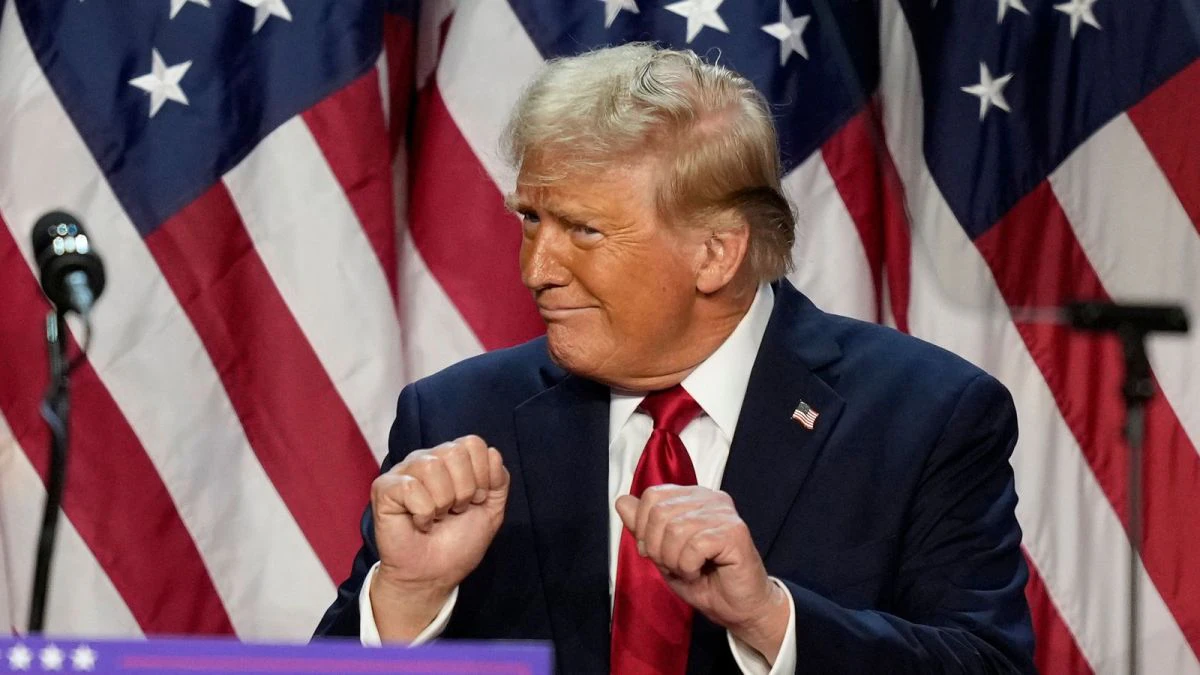
President Donald Trump
By Silas Mwaudasheni Nande
Introduction
The political cartoon presents a stark visualization of contemporary geopolitical tensions: three major powers each eyeing territories they consider essential to their national security. While simplified for satirical effect, this image captures genuine strategic concerns that are reshaping international relations in the 21st century. The Trump administration’s interest in purchasing Greenland, Russia’s ongoing war in Ukraine, and China’s persistent focus on Taiwan represent three distinct but interconnected challenges to the post-World War II international order.
These territorial disputes are not mere historical curiosities or diplomatic oddities. They represent fundamental questions about sovereignty, security, and the balance of power in an increasingly multipolar world. Each case involves a major power seeking to extend its influence over territories it views as critical to its strategic interests, often framing these ambitions in terms of security imperatives. Understanding these situations requires examining the historical context, strategic rationale, and potential consequences of each territorial claim.
This article will analyze each situation in depth, exploring the interests driving these ambitions, the likelihood of their realization, and the broader implications for global geopolitics. The analysis will reveal that while these three cases differ significantly in their particulars, they collectively represent a fundamental challenge to the principles of territorial integrity and national self-determination that have underpinned international law since 1945.
The United States and Greenland: Arctic Strategy and Resource Competition
Historical Context and Recent Developments
In August 2019, President Donald Trump reportedly expressed interest in the United States purchasing Greenland from Denmark, an idea that was quickly rejected by both Danish and Greenlandic officials. While this proposal was widely ridiculed in international media, it reflected genuine American strategic concerns about the Arctic region. With Trump returning to the presidency in January 2025, questions about renewed American interest in Greenland have resurfaced, though any actual acquisition remains highly improbable.
Greenland, the world’s largest island, is an autonomous territory within the Kingdom of Denmark. Its population of approximately 57,000 people, predominantly indigenous Inuit, has steadily moved toward greater autonomy. In 2009, Greenland gained self-government in most domestic affairs, and many Greenlanders aspire to eventual independence, though the territory remains economically dependent on Danish subsidies.
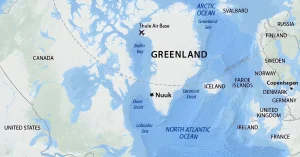
The United States has maintained a military presence in Greenland since World War II, most notably at Thule Air Base, a critical component of North American missile defense systems and Arctic surveillance. This existing relationship demonstrates America’s longstanding strategic interest in the island.
Strategic Interests
Several factors drive American interest in Greenland. First, the Arctic is becoming increasingly accessible due to climate change, opening new shipping routes and making resource extraction more feasible. Greenland possesses vast deposits of rare earth elements, uranium, zinc, lead, and potentially significant oil and gas reserves. As global competition intensifies over these critical resources, particularly rare earth elements essential for modern technology and defense systems, Greenland’s mineral wealth becomes increasingly attractive.
Second, the Arctic is emerging as a new theater of great power competition. Russia has substantially increased its military presence in its Arctic territories, reopening Soviet-era bases and developing new capabilities. China, despite being a non-Arctic nation, has declared itself a “near-Arctic state” and invested heavily in Arctic research and development, including in Greenland itself. This has raised concerns in Washington about Chinese influence in what America considers its strategic backyard.
Third, climate change is making the Arctic strategically important in ways previously unimaginable. The Northwest Passage through the Canadian Arctic and the Northern Sea Route along Russia’s coast are becoming viable shipping lanes for increasing portions of the year, potentially transforming global trade routes. Greenland sits at a crucial position along these emerging pathways.
Finally, Greenland’s geographic position makes it valuable for military purposes beyond Thule Air Base. As great power competition intensifies, the ability to project power in the Arctic and maintain domain awareness becomes increasingly important for any nation with global ambitions.
Likelihood and Obstacles
Despite these strategic interests, an actual American acquisition of Greenland remains extraordinarily unlikely. The primary obstacle is that Greenland is not Denmark’s to sell. The Greenlandic people have self-determination rights under international law, and both Greenlandic and Danish officials have adamantly stated that Greenland is not for sale. Any attempt to purchase or otherwise acquire Greenland without the consent of its inhabitants would violate fundamental principles of international law and democratic governance.
Moreover, the economic costs would be staggering. Greenland currently receives approximately $600 million annually in subsidies from Denmark. The infrastructure investments needed to develop Greenland’s resources and integrate it into American governance structures would cost hundreds of billions of dollars. The political complications of incorporating a predominantly indigenous, Danish-speaking population with its own distinct culture and aspirations into the American political system would be immense.
More realistically, the United States can and likely will expand its presence in Greenland through diplomatic and economic engagement. This might include increased investment in infrastructure, expanded military cooperation, and support for Greenlandic independence (which would potentially create a more pliable partner than Denmark). The U.S. has already reopened a consulate in Nuuk, Greenland’s capital, and increased diplomatic engagement with Greenlandic authorities.
Russia and Ukraine: Imperial Nostalgia and Security Anxieties
Historical Context and the Current Conflict
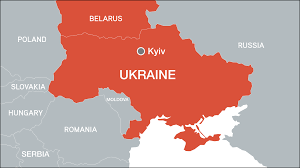 Russia’s invasion of Ukraine in February 2022 represents the most serious territorial conflict in Europe since World War II. The war has killed hundreds of thousands, displaced millions, and fundamentally altered the European security landscape. Unlike the Greenland situation, this is not a hypothetical scenario but an ongoing catastrophe with global ramifications.
The roots of the conflict extend deep into history. Ukraine and Russia share intertwined histories dating back over a millennium, with both nations claiming Kyiv as part of their historical heritage. Ukraine was part of the Russian Empire and later the Soviet Union until declaring independence in 1991 following the USSR’s collapse. However, many Russians, particularly in the leadership, never fully accepted Ukrainian independence as permanent or legitimate.
President Vladimir Putin has repeatedly expressed views suggesting he does not consider Ukraine a genuinely separate nation. In a lengthy essay published in July 2021, Putin argued that Russians and Ukrainians are “one people” artificially divided by historical circumstances and Western manipulation. This worldview, which many historians and political scientists characterize as neo-imperial, frames Ukrainian independence not as the legitimate expression of national self-determination but as a historical aberration to be corrected.
The immediate triggers for the 2022 invasion included Ukraine’s increasingly Western orientation, particularly its aspirations to join NATO and the European Union, and the consolidation of a Ukrainian national identity distinct from and often in opposition to Russian influence. From the Kremlin’s perspective, a Ukraine aligned with the West represents both a security threat and an ideological challenge to Putin’s conception of Russian civilization and sphere of influence.
Strategic Interests
Russia’s interests in controlling Ukraine operate on multiple levels. Strategically, Ukraine provides a buffer between Russia and NATO members. Throughout history, Russia has prioritized strategic depth—distance between its heartland and potential adversaries. The expansion of NATO to include former Soviet bloc countries has steadily reduced this buffer, making Ukraine’s alignment a matter of paramount concern to Russian military planners.
Control of Ukraine would also provide Russia with enhanced access to the Black Sea and strengthen its position in this strategically vital region. The Russian annexation of Crimea in 2014 was partly motivated by the desire to secure the naval base at Sevastopol, home to Russia’s Black Sea Fleet. Control of Ukraine’s extensive Black Sea coastline would significantly enhance Russian naval capabilities and economic opportunities.
Economically, Ukraine possesses rich agricultural land (often called the “breadbasket of Europe”), significant industrial capacity particularly in the east, and potential energy resources. While Russia is itself resource-rich, controlling Ukrainian assets would enhance its economic leverage and deny these resources to competitors.
Perhaps most importantly, Putin appears motivated by ideological and legacy concerns. He views the collapse of the Soviet Union as “the greatest geopolitical catastrophe of the 20th century” and seems determined to restore Russian greatness by reassembling at least part of the former Soviet space under Moscow’s control. Ukraine, as the second-most populous Soviet republic and the one with the deepest historical connections to Russia, represents a crucial piece of this revanchist project.
Current Status and Future Prospects
As of early 2025, the war continues with no clear resolution in sight. Russia controls significant portions of eastern and southern Ukraine, including Crimea (annexed in 2014) and territories in the Donbas region and along the southern coast. However, Russian forces have failed to achieve their apparent initial objective of regime change in Kyiv and subjugation of the entire country.
Ukraine, supported by substantial Western military and economic assistance, has demonstrated unexpected resilience and military effectiveness. However, the war has devastated the country’s infrastructure, economy, and population. The human cost has been immense, with hundreds of thousands of casualties and millions displaced.
Several potential outcomes exist. Russia might succeed in maintaining control over currently occupied territories, effectively partitioning Ukraine and creating a frozen conflict similar to those in Georgia, Moldova, and previously in Ukraine’s Donbas region. Alternatively, Ukraine might, with continued Western support, liberate most or all occupied territories, though this appears increasingly difficult as the conflict has become a grinding war of attrition.
A negotiated settlement seems possible but would require both sides to compromise on fundamental issues. Russia would likely need to abandon maximalist goals of regime change and Ukrainian subjugation, while Ukraine might have to accept, at least temporarily, the loss of some territories. However, any settlement that leaves Ukrainian sovereignty compromised or territories occupied would likely prove unstable and could lead to renewed conflict.
The most concerning scenario involves escalation, potentially including Russian use of nuclear weapons or direct NATO involvement in the conflict. While both sides have shown some restraint in avoiding actions that might trigger such escalation, the risks remain as long as the war continues.
China and Taiwan: Unfinished Civil War and Regional Hegemony
Historical Background
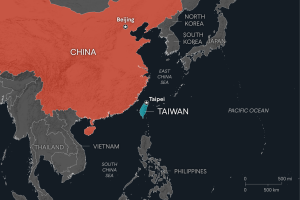 The Taiwan situation differs fundamentally from both the Greenland and Ukraine cases in its historical and legal complexity. Taiwan’s status represents unfinished business from the Chinese Civil War, which ended in 1949 with the Communist Party controlling mainland China and the nationalist Kuomintang (KMT) retreating to Taiwan.
For decades, both the People’s Republic of China (PRC) on the mainland and the Republic of China (ROC) on Taiwan claimed to be the legitimate government of all China. This fiction was maintained internationally until the 1970s, when most countries, including the United States, switched diplomatic recognition from Taipei to Beijing. Today, only a handful of small nations maintain formal diplomatic relations with Taiwan, though many countries maintain robust unofficial relationships.
Taiwan has evolved dramatically since 1949. It transformed from an authoritarian state under martial law to a vibrant democracy. Its economy developed into one of the most advanced in the world, particularly in semiconductor manufacturing, where Taiwan Semiconductor Manufacturing Company (TSMC) produces the majority of the world’s advanced chips. Simultaneously, a distinct Taiwanese identity has emerged, particularly among younger generations who have never known mainland rule and identify as Taiwanese rather than Chinese.
The PRC has never renounced the use of force to achieve “reunification” and considers Taiwan a renegade province that must eventually be brought under Beijing’s control. This position is central to Chinese Communist Party (CCP) legitimacy and national identity. For many Chinese, Taiwan’s continued separation represents a humiliating reminder of China’s “century of humiliation” at the hands of foreign powers.
Strategic Interests
China’s interest in Taiwan stems from multiple factors. First and foremost is nationalist sentiment and CCP legitimacy. The party has built much of its claim to rule on delivering national rejuvenation and restoring Chinese territorial integrity. Allowing Taiwan to remain permanently separate, let alone become formally independent, would represent a fundamental failure and potential threat to CCP rule.
Strategically, Taiwan occupies a crucial position in what Chinese military strategists call the “first island chain”—the string of islands running from Japan through Taiwan and the Philippines to Borneo. This chain currently constrains Chinese naval access to the Pacific Ocean, limiting the operational range of Chinese forces. Control of Taiwan would break this chain, dramatically expanding Chinese strategic options and complicating American and allied defense planning.
Taiwan’s semiconductor industry represents another crucial interest. TSMC alone manufactures approximately 90% of the world’s most advanced chips, making it perhaps the single most strategically important company in the global economy. Chinese control of Taiwan would give Beijing leverage over the entire global technology sector and eliminate a key competitive advantage currently held by the United States and its allies.
Additionally, Taiwan’s successful democracy represents an ideological challenge to the CCP’s authoritarian model. Taiwan demonstrates that Chinese culture is fully compatible with democratic governance, undermining Beijing’s claims that authoritarianism is necessary or inevitable for Chinese societies. This makes Taiwan’s example particularly threatening to CCP legitimacy.
Likelihood and Obstacles
Unlike Ukraine, where invasion has already occurred, Taiwan faces an invasion that has not yet happened but is widely considered possible or even likely within the next decade. Chinese leader Xi Jinping has repeatedly emphasized that the Taiwan issue “cannot be passed down from generation to generation,” suggesting urgency in resolving the matter during his tenure.
China has significantly expanded and modernized its military, particularly its naval and amphibious assault capabilities needed for an invasion of Taiwan. Military exercises around Taiwan have increased in frequency and scale, suggesting both preparation and coercion. Many analysts believe that China is developing the capability to invade Taiwan, though whether it will do so remains uncertain.
However, invading Taiwan would be extraordinarily difficult and risky. The Taiwan Strait’s geography favors defense, and Taiwan has fortified its defenses for decades. An amphibious invasion would be one of the most complex military operations imaginable, requiring air and naval superiority, successful amphibious landings against prepared defenses, and sustained operations across the strait while under potential attack.
Most critically, a Chinese invasion would likely trigger American military intervention. While the United States maintains “strategic ambiguity” about whether it would defend Taiwan militarily, several factors suggest it would likely do so. Taiwan is crucial to American interests in multiple ways: its semiconductor industry is essential to the U.S. economy and military, its fall would dramatically shift the regional balance of power, and American credibility with allies throughout the Indo-Pacific depends on demonstrating commitment to partners’ security.
A U.S.-China war over Taiwan would be catastrophic, potentially involving two nuclear-armed powers and the world’s two largest economies. The economic consequences alone would dwarf those of the Ukraine war, potentially causing a global depression. The risk of nuclear escalation, while hopefully low, cannot be dismissed.
China might pursue alternatives to invasion, including intensified economic and diplomatic pressure, a blockade, or more limited military operations designed to coerce Taiwan without the risks of full-scale invasion. These approaches have their own risks but might appear more attractive to Beijing than the enormous uncertainties of invasion.
Comparative Analysis: Patterns and Differences
These three situations, while distinct, reveal important patterns in contemporary international relations. Each involves a major power eyeing territory it considers strategically vital, framing its interest in terms of security imperatives while the international community largely views these claims as violations of sovereignty and self-determination.
Similarities
All three cases involve great powers challenging the territorial status quo established after World War II (in the case of Greenland and Ukraine) or the post-1949 settlement (in Taiwan’s case). This represents a broader pattern of revisionist powers seeking to overturn what they view as unfair or unstable arrangements that disadvantage them.
Each situation involves a major power framing territorial ambitions in terms of security needs rather than conquest. American officials emphasize Arctic security and Chinese influence when discussing Greenland; Russia claims NATO expansion threatens its security in justifying operations in Ukraine; China presents Taiwan reunification as rectifying historical injustices and completing national reunification rather than aggressive expansion.
Geographic proximity and strategic location drive all three cases. Greenland’s position in the Arctic, Ukraine’s role as a buffer between Russia and NATO, and Taiwan’s location in the first island chain make these territories strategically valuable beyond their intrinsic economic or political importance.
In each case, the population of the targeted territory largely opposes incorporation into the larger power. Greenlanders have no interest in becoming American, Ukrainians are fighting desperately to resist Russian control, and polling consistently shows declining identification with China among Taiwanese citizens, particularly younger generations.
Differences
 The cases differ dramatically in their urgency and likelihood. The Greenland scenario remains largely hypothetical and extremely unlikely to occur through purchase or annexation, though increased American presence is plausible. The Ukraine situation is an ongoing catastrophe, with Russian control of significant territories already established through military force. The Taiwan situation represents a potential future crisis that has not yet occurred but looms as perhaps the most dangerous flashpoint in international relations.
The legal and historical contexts also vary significantly. Greenland has clear status under international law as Danish territory with self-government rights, making any forced transfer illegal and politically impossible. Ukraine is a fully sovereign state recognized by the international community, making Russian invasion a clear violation of international law. Taiwan exists in legal ambiguity, with its status disputed and no international consensus on its sovereignty, complicating responses to Chinese actions.
The economic implications differ vastly in scale. Greenland’s economy is tiny, making its impact on global economics minimal regardless of its political status. Ukraine’s economy, while larger, is primarily regional in significance, though its role in food and some commodity exports has global effects. Taiwan, however, is central to the global technology supply chain, making its status directly relevant to the entire world economy.
International responses have also varied dramatically. The Greenland purchase idea was widely ridiculed but not treated as a serious threat to international order. Russia’s invasion of Ukraine triggered unprecedented Western sanctions and military support for Ukraine, though not direct military intervention. Any Chinese move against Taiwan would likely provoke an even stronger response, potentially including American military intervention, given the higher stakes for U.S. interests.
Implications for Global Order
The collective impact of these territorial disputes extends far beyond the specific territories involved, representing a fundamental challenge to the principles that have governed international relations since 1945.
The Erosion of Territorial Integrity
The most basic principle of the post-World War II international order is the territorial integrity of states and the prohibition on acquiring territory by force. Russia’s invasion of Ukraine directly violates this principle, as would any Chinese invasion of Taiwan. Even the Greenland scenario, if pursued coercively, would challenge principles of self-determination.
When major powers openly flout these principles, the entire system of international law weakens. If Russia can seize Ukrainian territory with relative impunity, or if China can take Taiwan without decisive international response, what prevents other revisionist powers from pursuing their own territorial claims? This could return the world to a more dangerous era where might makes right and borders are subject to constant revision through force.
The Return of Great Power Competition
These territorial disputes signal the end of the post-Cold War era characterized by American unipolarity and relative cooperation among major powers. We are entering a new era of great power competition, with the United States, China, and Russia openly competing for influence, resources, and strategic advantage.
This competition manifests not only in these specific territorial disputes but in broader patterns of military buildup, alliance formation, economic warfare, and technological rivalry. The world is increasingly dividing into competing blocs, with countries forced to choose sides in ways reminiscent of the Cold War but potentially more dangerous given the higher level of economic interdependence.
Regional Stability and Alliance Systems
Each of these disputes affects regional stability in profound ways. In Europe, the Ukraine war has revitalized NATO, led to dramatic increases in defense spending, and pushed previously neutral countries like Finland and Sweden to join the alliance. The European security architecture has been fundamentally transformed, with a new emphasis on territorial defense and deterrence.
In the Indo-Pacific, the Taiwan situation is driving closer cooperation among the United States, Japan, Australia, India (through the Quad), and other regional partners concerned about Chinese assertiveness. New security arrangements like AUKUS are emerging, while traditional alliances are being strengthened and extended.
The Arctic is becoming a new arena of competition, with implications for circumpolar nations and global governance. The relatively cooperative approach to Arctic governance that characterized the post-Cold War era is giving way to greater military competition and bloc politics.
Economic Interdependence and Decoupling
The risks highlighted by these territorial disputes are accelerating economic decoupling, particularly between the United States and China. Companies and governments are reconsidering supply chains that run through potential conflict zones or depend on potentially hostile nations.
The Taiwan semiconductor situation exemplifies this concern. Recognition that a conflict over Taiwan could cripple the global technology sector is driving massive investments in semiconductor manufacturing in the United States, Europe, Japan, and other locations, attempting to reduce dependence on Taiwan. Similar dynamics are playing out across numerous sectors.
This decoupling has significant costs, reducing economic efficiency and potentially lowering global growth. It may also reduce the moderating influence that economic interdependence has traditionally exerted on political conflicts, making war more thinkable.
Nuclear Risks and Escalation Dynamics
Both the Ukraine and Taiwan scenarios involve nuclear-armed powers, raising the stakes to existential levels. Russia has made veiled nuclear threats during the Ukraine war, and any U.S.-China conflict over Taiwan would involve two nuclear powers with substantial arsenals.
The world has not faced serious nuclear risks since the Cold War ended. These territorial disputes are returning nuclear weapons to prominence in strategic calculations, with increased attention to doctrine, escalation dynamics, and crisis management. The erosion of arms control agreements and deterioration in great power relations compounds these risks.
Challenges to International Institutions
These disputes reveal the weakness of international institutions in constraining great power behavior. The United Nations Security Council is paralyzed when permanent members or their close partners are involved in conflicts. International law proves ineffective when major powers choose to ignore it and face insufficient consequences.
This institutional weakness could lead to further deterioration of the rules-based international order, with countries increasingly resolving disputes through power politics rather than law and institutions. Alternatively, it might spur reform efforts to create more effective governance mechanisms, though such reforms face enormous obstacles.
Potential Outcomes and Scenarios
Optimistic Scenario: Managed Competition
In the most optimistic scenario, these territorial disputes are resolved or managed without major war. The Greenland situation remains a hypothetical concern addressed through enhanced U.S.-Danish-Greenlandic cooperation. The Ukraine war ends in a negotiated settlement that, while unsatisfying to Ukraine, preserves its sovereignty and core territory while establishing a stable if frozen conflict. China decides the costs and risks of invading Taiwan outweigh the benefits, instead pursuing long-term political and economic integration.
This scenario requires skillful diplomacy, restraint from all parties, and luck. It results in a world of managed great power competition, with clear spheres of influence, robust deterrence, and effective crisis management mechanisms. While tensions remain high, catastrophic conflict is avoided.
Pessimistic Scenario: Conflict and Fragmentation
The pessimistic scenario sees one or more of these disputes escalating to major war. Russia succeeds in subjugating much of Ukraine, emboldening further aggression. China invades Taiwan, leading to U.S.-China conflict that devastates the global economy and potentially escalates to nuclear use. American actions in Greenland or elsewhere trigger confrontations with other major powers.
This scenario leads to a deeply fragmented world, with hostile blocs, collapsed global governance, severe economic contraction, and the constant threat of catastrophic war. The international order resembles the early 20th century more than the early 21st, with tragic consequences.
Mixed Scenario: Partial Resolutions and Ongoing Tensions
The most likely scenario falls between these extremes. The Ukraine situation ends in an unsatisfying compromise, with Russia controlling some territory but failing to subjugate Ukraine entirely. The Taiwan situation remains tense, with periodic crises but no invasion, as China continues military buildups while seeking political solutions. The Arctic sees increased competition but also continued cooperation on some issues.
This mixed scenario results in a world of persistent tensions, significant military spending, economic inefficiencies from decoupling, and periodic crises, but without catastrophic great power war. It represents a managed deterioration from the relative stability of the post-Cold War era, accepting higher risks and tensions as the new normal.
Conclusion
The territorial ambitions illustrated in the political cartoon—American interest in Greenland, Russian designs on Ukraine, and Chinese focus on Taiwan—represent more than isolated disputes. They exemplify fundamental challenges to the international order and herald an era of intensified great power competition.
Each case reflects a major power’s perceived security imperatives and strategic interests, yet each also challenges principles of sovereignty, territorial integrity, and self-determination that have underpinned international stability for decades. The collision between these revisionist ambitions and the existing order creates risks of catastrophic conflict alongside opportunities for diplomatic engagement and compromise.
The stakes extend far beyond the specific territories involved. How the international community responds to these challenges will determine whether we can maintain a stable, rules-based international order or whether we descend into a more anarchic system where power alone determines outcomes. The choices made by leaders in Washington, Moscow, Beijing, and other capitals over the coming years will shape the global order for generations.
What makes these disputes particularly dangerous is their interconnection. How the Ukraine situation is resolved affects calculations about Taiwan and vice versa. Weakness or irresolution in one area may encourage aggression in another, while effective deterrence or costly failures may promote restraint. The world’s major powers are watching each other carefully, learning lessons that will influence future decisions.
For smaller nations and the populations of disputed territories, these great power games have immediate and potentially tragic consequences. Ukrainians are already paying a terrible price for Russian ambitions. Taiwanese citizens face an uncertain future shadowed by the threat of invasion. Even Greenlanders, in the least acute of these situations, must navigate great power competition over their homeland.
Ultimately, addressing these territorial disputes requires balancing multiple imperatives: maintaining deterrence against aggression, keeping diplomatic channels open for negotiation, supporting international law and institutions while acknowledging their limitations, and managing competition while avoiding catastrophic conflict. There are no easy solutions, only difficult choices with uncertain outcomes.
The cartoon’s simplistic framing—each power wanting territory for security—captures an uncomfortable truth about international politics. Security competitions, once triggered, tend to perpetuate themselves as each side’s actions to enhance its security threaten others. Breaking these cycles requires not only strategic wisdom but also empathy, restraint, and a commitment to principles beyond narrow self-interest.
As we navigate this dangerous era, the fundamental question remains: Can we build an international order that accommodates great power interests while protecting smaller nations’ sovereignty and preventing catastrophic war? The answer to this question will determine not just the fate of Greenland, Ukraine, and Taiwan, but the character of the 21st century itself.
Similar Posts by The Mt Kenya Times:
- Statement win at the Gtech: Brentford outclass Chelsea to claim all three points
- When disability funds become a frontier for accountability: Kenya’s PWDs refuse to be invisible
- Public voices concerns over proposed education laws
- Manufacturing hope at the ballot, accumulating fortunes after the count
- Review of the Novel Pride and Prejudice
About the Author