The AU Chairmanship Debate A Theatre Of Betrayal Mockery And Laughable Hypocrisy
 The Mt Kenya Times
Raila Odinga faces Mahamoud Ali Youssouf
Will Raila Odinga redeem his name or dig deeper into the pits of public mistrust?
By: Midmark Onsongo
Worth Noting:
- The AU chairmanship is no light matter; it’s a seat of influence, a symbol of continental unity, and an opportunity to shape Africa’s trajectory. But Raila’s aspirations for this lofty position are stained by a history that demands scrutiny. How does a leader, famed for his defiance against corruption and his fiery speeches at Kamukunji grounds, reconcile his dreams of African leadership with the reality of his recent compromises? Does Africa deserve a leader who has failed to stand firm at home?
- Consider the irony. The man who rallied Kenyans to the streets, risking life and limb for the promise of a better tomorrow, now faces accusations of abandoning the people he swore to protect. From Kibra to Kisumu, whispers of discontent grow louder.
Tomorrow’s African Union (AU) chairmanship debate looms like an ominous cloud, casting long shadows over Raila Odinga, Kenya’s perennial political chessmaster and self-styled enigma. But beneath the veneer of diplomacy lies a burning question that cannot be silenced—how does one preach integrity while dining with the very hands that starved the masses? For a man who once roared against government tyranny, Raila’s sudden warmth toward the ruling elite reeks of paradox. Can he justify his new dance with President William Ruto’s government as a selfless act of statesmanship, or is it merely another scene in the tragicomedy of political betrayal?
The Kenyan populace has long been acquainted with Raila’s firebrand oratory, his undying rhetoric of liberation and fairness. Yet, in March 2023, his handshake with the government he vehemently opposed left many jaws agape and hearts heavy. The same Raila who led Azimio protests, decrying the rising cost of living, seemed all too willing to sheath his sword when the opportunity to negotiate with Ruto arose. What changed? Was it the promise of AU glory, whispered behind closed doors, or the tantalizing prospect of personal gain? The man who decried electoral theft in August 2022 now cozies up to the architects of his defeat. A political oxymoron, or simply politics as usual?
The AU chairmanship is no light matter; it’s a seat of influence, a symbol of continental unity, and an opportunity to shape Africa’s trajectory. But Raila’s aspirations for this lofty position are stained by a history that demands scrutiny. How does a leader, famed for his defiance against corruption and his fiery speeches at Kamukunji grounds, reconcile his dreams of African leadership with the reality of his recent compromises? Does Africa deserve a leader who has failed to stand firm at home?
Consider the irony. The man who rallied Kenyans to the streets, risking life and limb for the promise of a better tomorrow, now faces accusations of abandoning the people he swore to protect. From Kibra to Kisumu, whispers of discontent grow louder. How will Raila, the self-declared defender of the downtrodden, defend himself when confronted with the glaring truth of his recent actions? Will he invoke the ghosts of the handshake era with President Uhuru Kenyatta in 2018, a deal that birthed the Building Bridges Initiative but also alienated his core supporters? Or will he lean on the crutch of pan-Africanism, painting himself as a savior who sacrifices for the greater good?
The debate itself promises to be a spectacle of contradictions, with Raila’s name intertwined with controversies that refuse to fade. His critics will likely cite his failure to follow through on promises, from electoral justice to social reforms. But the most damning question remains: how does Raila explain his newfound alignment with Ruto, a leader he once described as irredeemable? The events of March 2023 stand out, when Kenyans watched as Raila’s rhetoric shifted, his fire dampened, and his demands softened. Is this the mark of a visionary, or a man who has learned to bend with the wind?
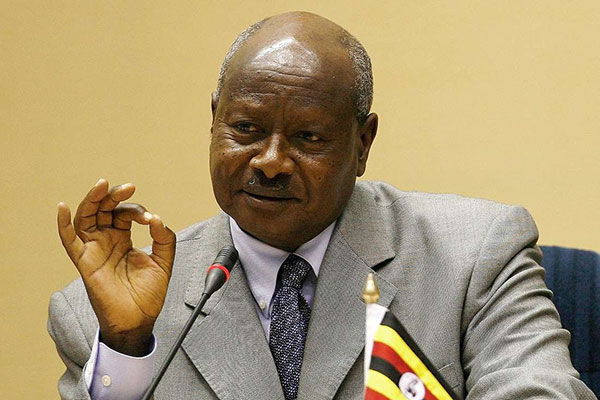
And yet, let us not forget the other players in this drama. Raila’s rivals, including Uganda’s President Yoweri Museveni, whose tenure as AU chair was marked by allegations of authoritarianism, will no doubt use his perceived inconsistencies to their advantage. Museveni, for all his flaws, has mastered the art of political survival, outlasting adversaries with his cunning. How will Raila, a man whose career has been defined by near-misses and close calls, convince the AU that he has what it takes to lead Africa into a new dawn?
There’s also the specter of Ethiopia’s Prime Minister Abiy Ahmed, a Nobel Peace Prize laureate whose tenure has been marred by the Tigray conflict. Abiy’s presence at the debate will underscore the complexity of African leadership—a reminder that ideals often clash with reality. If Raila’s track record in Kenya is any indication, the AU will have to grapple with the question of whether leadership should be awarded based on potential or proven resilience.
Tomorrow’s debate will likely see Raila invoking his historical role in Kenya’s fight for democracy. He will remind the audience of his detention during the Moi era, his role in the Second Liberation, and his tireless advocacy for constitutional reforms. But history, as powerful as it is, cannot erase the present. Can a man whose recent actions betray a troubling flexibility of principle be trusted with the reins of a continent?
The streets of Nairobi tell their own story. From the bustling markets of Gikomba to the quiet corners of Kawangware, Kenyans voice their skepticism. “Raila fought for us, but now he’s dining with the enemy,” mutters a vendor selling second-hand clothes. “How can he lead Africa when he’s failed us here?” Others are less critical, arguing that Raila’s actions reflect a pragmatic understanding of power. “Politics is about compromise,” says a boda boda rider in Kibera. “Maybe he’s playing the long game.”
But compromise comes at a cost. For Raila, the cost may well be his legacy. How does one balance the pursuit of power with the need for principles? The AU chairmanship debate will force him to confront this paradox head-on. Will he rise to the occasion, or will he crumble under the weight of his own contradictions?
And what of President Ruto, the man Raila once accused of orchestrating his downfall? Ruto’s administration, plagued by allegations of cronyism and economic mismanagement, has been quick to capitalize on Raila’s perceived weaknesses. By offering Raila a seat at the table, Ruto has effectively neutralized his most vocal critic. It’s a masterstroke of political strategy, but one that raises troubling questions about the state of opposition politics in Kenya.
As the clock ticks down to the debate, one can’t help but wonder: is this the Raila Odinga that Kenyans deserve? Can he convincingly argue that his recent actions serve the greater good, or will his legacy be tarnished by accusations of betrayal? The AU chairmanship is a test not just of Raila’s ambitions, but of his ability to navigate the treacherous waters of politics without losing sight of the shore.
Today will reveal whether Raila can reclaim his narrative or whether he will be consigned to the annals of history as a leader who fell short of his potential. The world watches, and Africa waits. Will Raila rise as a unifier, or will he falter under the weight of his contradictions?
This article was scripted by;
MIDMARK ONSONGO, SGS
(Socio-Geographic Scholar)
Similar Posts by The Mt Kenya Times:
- Why James 3:1 prescribes the harshest judgment for teachers
- City stay perfect as late Cunha goal saves United
- Passaris joins walk for dignity: Nairobi representative backs campaign for incontinence support
- Diaspora Times Global Sep 19 – Sep 25, 2026
- Tibet’s glacial catastrophe: Behind Beijing’s wall of silence, a climate disaster reshapes a region
About the Author