The Dark Shadow Of Authority: Unmasking Police Brutality And State-Sanctioned Terror In Kenya
 The Mt Kenya Times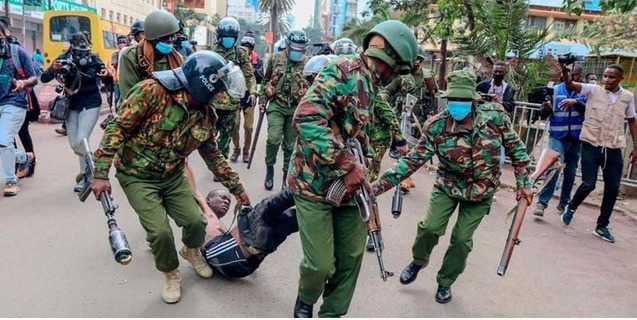
Police Brutality And State-Sanctioned Terror In Kenya
By Jerameel Kevins Owuor Odhiambo
“Power is the ability not just to tell the story of another person, but to make it the definitive story of that person.” – Ngũgĩ wa Thiong’o
A dark and sinister chapter is unfolding in Kenya, one that threatens to cast a long shadow over the nation’s hard-won democracy and the fundamental rights of its citizens. The recent abduction of veteran journalist Macharia Gaitho serves as a chilling reminder of the insidious nature of state-sponsored violence and the erosion of civil liberties in a country that once stood as a beacon of hope in East Africa. This heinous act, perpetrated by those sworn to protect and serve, is not an isolated incident but rather a manifestation of a deeply entrenched culture of impunity within the National Police Service. The abduction of Gaitho, a respected voice in Kenyan journalism, represents a flagrant violation of press freedom and a direct assault on the pillars of democracy that countless Kenyans have fought and died to establish and preserve. It is a stark reminder that the journey towards true democracy and the rule of law is far from complete, and that vigilance must be maintained lest the hard-won gains of the past be swept away in a tide of authoritarianism and state-sanctioned terror.
The abduction of Macharia Gaitho is but the latest in a long and troubling series of incidents that have seen Kenyan citizens forcibly disappeared, their fates unknown and their families left to grapple with unimaginable anguish and uncertainty. These abductions, carried out with a chilling efficiency that speaks to their systematic nature, represent a grave threat to the very fabric of Kenyan society and the principles enshrined in its constitution. The methods employed in these abductions are nothing short of barbaric, with victims often subjected to physical and psychological torture that violates not only Kenyan law but also international human rights conventions to which Kenya is a signatory. The use of such inhumane tactics by those entrusted with upholding the law is a damning indictment of the state of law enforcement in Kenya and raises serious questions about the values and priorities of those in positions of power. It is a stark reminder that the legacy of colonial-era policing, with its emphasis on control and subjugation rather than service and protection, continues to cast a long shadow over Kenya’s law enforcement institutions.
The transformation of the National Police Service from a force dedicated to serving and protecting the public to one that appears to prioritize the interests of the political elite represents a profound betrayal of the trust placed in it by the Kenyan people. This shift in focus, from safeguarding the rights and freedoms of all citizens to becoming an instrument of oppression wielded by those in power, strikes at the very heart of Kenya’s democratic aspirations. The use of police resources to cow and intimidate those who dare to speak out against government policies or expose corruption is a clear violation of the principles of freedom of expression and association enshrined in the Kenyan Constitution. It represents a dangerous slide towards authoritarianism, where dissent is silenced not through the force of argument but through the argument of force. This perversion of the police’s mandate raises troubling questions about the future of democracy in Kenya and the ability of citizens to hold their government accountable without fear of reprisal.
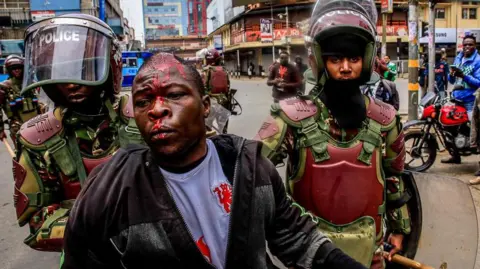
In a nation where the specter of extrajudicial killings looms large, the question of safety becomes paramount. Who, indeed, can Kenyans turn to when those tasked with their protection become the very source of their fear? The grim reality that some of those abducted in a manner similar to Gaitho have been found dead speaks volumes about the extent to which the rule of law has been eroded in Kenya. These deaths, often shrouded in mystery and met with official indifference or obstruction, represent not just individual tragedies but a collective trauma inflicted upon the Kenyan people. They serve as a stark reminder of the vulnerability of citizens in the face of unchecked state power and the urgent need for comprehensive reform of Kenya’s law enforcement and justice systems. The fact that such atrocities can occur with apparent impunity is a damning indictment of the current state of accountability within the National Police Service and the broader government apparatus.
The actions of the National Police Service in these abductions and extrajudicial killings stand in stark contradiction to the letter and spirit of the Kenyan Constitution, as well as numerous statutes designed to protect the rights and freedoms of citizens. Article 29 of the Constitution explicitly guarantees every person the right to freedom and security of the person, including the right not to be subjected to torture in any manner, whether physical or psychological. The systematic violation of these rights by the very institution charged with upholding the law represents a constitutional crisis of the highest order. Furthermore, Kenya’s ratification of international human rights treaties, such as the International Covenant on Civil and Political Rights and the Convention against Torture and Other Cruel, Inhuman or Degrading Treatment or Punishment, places a legal obligation on the state to prevent and punish such acts. The failure to do so not only undermines Kenya’s standing in the international community but also betrays the trust placed in the government by its citizens.
The need for a comprehensive overhaul of the National Police Service has never been more urgent or apparent. The current state of affairs, where the police force appears to operate as an extension of political power rather than as an independent institution dedicated to serving the public, is untenable in a democratic society. This reform must go beyond superficial changes and address the deep-rooted cultural and structural issues that have allowed human rights abuses to become endemic within the force. It requires a fundamental reimagining of the role of law enforcement in Kenyan society, one that prioritizes professionalism, dignity, and service to the community over loyalty to political masters. This transformation must be underpinned by robust accountability mechanisms, including an independent oversight body with the power to investigate and prosecute officers involved in human rights abuses. Only through such radical reform can the National Police Service hope to regain the trust and respect of the Kenyan people.
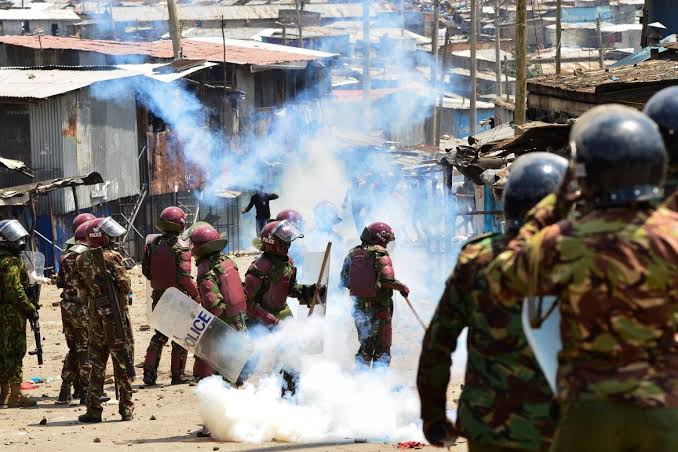
The independence of the National Police Service from political interference is not merely a desirable goal but an essential prerequisite for the functioning of a healthy democracy. The current subservience of the police force to the political class and the government of the day represents a dangerous concentration of power that threatens the very foundations of democratic governance in Kenya. This lack of independence not only undermines the ability of the police to carry out their duties impartially but also erodes public trust in law enforcement institutions. It creates a climate of fear and intimidation where citizens are reluctant to exercise their constitutional rights, knowing that doing so may invite retribution from a police force that acts as the enforcer of political will rather than the guardian of public safety. The restoration of police independence must therefore be a top priority for any reform effort, with clear legal and institutional safeguards put in place to insulate law enforcement from undue political influence.
The abduction of Macharia Gaitho and others like him must be seen not as isolated incidents but as symptoms of a deeper malaise afflicting Kenyan society. They are manifestations of a governance model that prioritizes control over service, repression over dialogue, and impunity over accountability. This model, rooted in colonial-era practices and perpetuated by successive post-independence governments, is fundamentally at odds with the aspirations of the Kenyan people for a free, just, and democratic society. It represents a betrayal of the sacrifices made by countless Kenyans in the struggle for independence and the subsequent fight for multiparty democracy. The continued use of abduction, torture, and extrajudicial killing as tools of state control is not only a moral abomination but also a strategic blunder that threatens to undermine the very stability and prosperity that such tactics purportedly aim to protect.
The role of the judiciary in addressing these grave human rights violations cannot be overstated. Kenyan courts have, on numerous occasions, demonstrated their willingness to stand as a bulwark against executive overreach and police brutality. Landmark decisions such as the decision in the case of Willie Kimani, which saw police officers convicted for the murder of a human rights lawyer, his client, and a taxi driver, serve as powerful reminders of the importance of an independent judiciary in safeguarding the rule of law. However, the persistence of police abuses despite such rulings highlights the need for more systemic reforms and the strict enforcement of court orders. The judiciary must continue to play a proactive role in holding law enforcement accountable, issuing clear guidelines on the use of force and detention procedures, and ensuring that victims of police brutality have access to justice and reparations.
The international community also has a crucial role to play in addressing the crisis of police brutality and state-sanctioned violence in Kenya. As a signatory to numerous international human rights treaties, Kenya has obligations that extend beyond its borders. The United Nations Human Rights Council, the African Commission on Human and Peoples’ Rights, and other regional and international bodies must exert pressure on the Kenyan government to address these systemic abuses. Economic partners and donor countries should consider making aid and trade agreements contingent on demonstrable progress in police reform and human rights protection. International civil society organizations and media outlets must continue to shine a spotlight on these abuses, ensuring that they remain at the forefront of global attention and preventing the Kenyan government from sweeping them under the rug.
The case of Macharia Gaitho and others like him underscores the urgent need for a comprehensive national conversation on the role of law enforcement in a democratic society. This dialogue must involve all stakeholders, including government officials, police representatives, civil society organizations, legal experts, and, most importantly, ordinary citizens who bear the brunt of police misconduct. It should aim to address not only the immediate issues of police brutality and abductions but also the deeper structural and cultural factors that have allowed such abuses to flourish. This conversation must grapple with difficult questions about the legacy of colonialism in Kenya’s governance structures, the militarization of law enforcement, and the relationship between security and human rights. Only through such an open and honest dialogue can Kenya hope to chart a path towards a law enforcement model that truly serves and protects all its citizens.
The path forward for Kenya in addressing the crisis of police brutality and state-sanctioned violence is neither easy nor straightforward. It requires political will, sustained public pressure, and a fundamental reimagining of the relationship between the state and its citizens. The reform of the National Police Service must be seen not as an end in itself but as part of a broader process of democratic renewal and institutional reform. This process must include strengthening civilian oversight mechanisms, improving police training and professionalism, addressing systemic corruption, and fostering a culture of respect for human rights within law enforcement. It also requires a commitment to addressing the root causes of crime and social unrest, including poverty, inequality, and political marginalization, which are often used to justify heavy-handed policing tactics. Only by tackling these underlying issues can Kenya hope to build a truly effective and humane law enforcement system that serves the needs of all its citizens.
In conclusion, the abduction of Macharia Gaitho and the broader pattern of police brutality and state-sanctioned violence in Kenya represent a grave threat to the nation’s democratic future and the fundamental rights of its citizens. These acts stand as a stark reminder of the ongoing struggle to transform Kenya’s law enforcement institutions from instruments of oppression into true guardians of public safety and individual liberty. The path forward requires not only comprehensive reform of the National Police Service but also a broader societal commitment to the principles of democracy, human rights, and the rule of law. It demands courage from citizens to continue speaking truth to power, resilience from civil society to persist in its advocacy for justice, and wisdom from leaders to recognize that true security can only be achieved through respect for human dignity and the rights of all. As Kenya stands at this critical juncture, the words of Ngũgĩ wa Thiong’o serve as both a warning and a call to action, reminding us of the power of narrative in shaping reality and the urgent need to reclaim the story of Kenya’s future from those who would write it in the ink of oppression and fear.
The writer is a legal scrivener and writer
Similar Posts by The Mt Kenya Times:
- DCP takes healthcare pledge to Murang’a heartland
- Sifuna bets his political life on a presidential run
- Ruto turns Nandi rally into opposition assault as 2027 battle lines harden
- Kenya’s Ebola cases climb to eight as outbreak spreads beyond health workers
- Kenya braces for heavy rains as El Niño and Indian Ocean Dipole combine
About the Author