The Deportation Dilemma: When Africa Becomes America’s Dumping Ground
 The Mt Kenya Times
 By Silas Mwaudasheni Nande
Introduction
The recent acceptance by several African nations of non-national immigrants deported from the United States has sparked a complex geopolitical debate that cuts to the heart of sovereignty, humanitarian obligations, and international power dynamics. This unprecedented arrangement—wherein countries like Rwanda, Uganda, and others have agreed to receive individuals with no historical, cultural, or legal ties to their territories—represents a troubling evolution in migration management that demands rigorous examination.
At first glance, the policy appears as a pragmatic solution to America’s immigration challenges. Yet beneath this veneer of cooperation lies a tangled web of potential security threats, exploitation of African vulnerabilities, and the disturbing possibility that these deportees may serve as instruments of American influence on the continent. This analysis explores the multifaceted dangers this arrangement poses to African nations, the immigrants themselves, and the broader architecture of international relations.
The Sovereignty Trap: How Economic Desperation Undermines National Autonomy
The fundamental question that emerges from this arrangement is why sovereign African nations would agree to accept individuals who bear no connection to their countries. The answer lies in the asymmetrical power relationship between the United States and African nations—a relationship characterized by economic dependency, aid conditionality, and the perpetual quest for Western approval.
Many African countries operate under crushing debt burdens and rely heavily on foreign aid, development assistance, and international investment. When the United States approaches these nations with proposals to accept deported immigrants, the request rarely comes in isolation. It arrives packaged with implicit or explicit promises of increased aid, trade preferences, investment guarantees, or diplomatic support. The offer becomes nearly impossible to refuse, particularly for nations struggling with underdevelopment and seeking to maintain favorable relations with the world’s largest economy.
This creates a sovereignty crisis. True sovereignty encompasses not merely the legal right to self-governance but the practical capacity to make independent decisions free from external coercion. When a nation accepts foreign nationals it has no obligation to receive because refusing might jeopardize its economic lifeline, sovereignty becomes theoretical rather than actual. The decision reflects not the national interest but capitulation to external pressure.
Rwanda’s acceptance of deportees under various agreements illustrates this dynamic. The country has positioned itself as a reliable Western partner, eager to demonstrate its capacity for international cooperation. Yet this eagerness may stem less from genuine humanitarian concern than from a calculated strategy to secure continued Western support for the Kagame government. The deportees become bargaining chips in a larger geopolitical game where African agency is subordinated to American immigration policy preferences.
Moreover, this arrangement establishes a dangerous precedent. If African nations can be persuaded to accept America’s unwanted immigrants, what other burdens might they be pressured to shoulder? The logic extends beyond migration to waste disposal, military basing, or becoming testing grounds for policies deemed too controversial for implementation on American soil. Each concession erodes sovereignty further, transforming African nations into appendages of American policy rather than independent actors with their own priorities and interests.
The Security Nightmare: Unknown Quantities in Fragile States
Perhaps the most immediate threat posed by accepting non-national deportees concerns national security. African countries agreeing to these arrangements receive individuals about whom they know virtually nothing. These deportees arrive with limited documentation, uncertain backgrounds, and often no verifiable history. They are, in essence, human question marks deposited into already complex social and security environments.
Many African nations struggle with existing security challenges—terrorism, ethnic conflict, organized crime, and political instability. Introducing thousands of individuals whose backgrounds cannot be adequately verified compounds these vulnerabilities exponentially. Among these deportees may be individuals with criminal records, gang affiliations, extremist sympathies, or simply deep resentments against both the countries that rejected them and those forced to receive them.
The United States deports individuals for various reasons: visa violations, criminal convictions, asylum denials, or illegal entry. While not all deportees pose security risks, the screening capacity of most African nations cannot match American intelligence and security infrastructure. African countries lack access to comprehensive international criminal databases, sophisticated biometric systems, or the investigative resources to conduct thorough background checks. They must essentially trust American assurances about who these individuals are—a trust that may prove tragically misplaced.
Consider the potential for criminals deported from the US to establish operations in their new African host countries. Individuals involved in drug trafficking, human smuggling, financial fraud, or violent crime bring skills and networks that can rapidly metastasize in environments with weaker law enforcement capacity. A drug trafficker deported from Los Angeles might find fertile ground for operations in Kigali or Kampala, where anti-narcotics resources are limited and corruption may be more prevalent. Rather than solving America’s problems, deportation simply relocates them to places less equipped to handle them.
The terrorism dimension deserves particular attention. While most deportees have no connection to extremist movements, the possibility that some might cannot be dismissed. Individuals radicalized in American prisons or communities, frustrated by their deportation, or seeking purpose in unfamiliar environments might prove susceptible to recruitment by militant groups operating across Africa. The Sahel region, the Horn of Africa, and parts of East and Central Africa host various armed groups that could exploit the presence of disoriented, resentful individuals with American cultural knowledge and language skills.
Furthermore, the social integration challenges these deportees face may itself create security risks. Arriving in countries where they don’t speak local languages, understand cultural norms, or possess relevant job skills, many deportees will struggle with unemployment, marginalization, and alienation. This toxic combination historically produces exactly the conditions that drive individuals toward crime or extremism. African nations may thus find themselves inadvertently incubating security threats through policies imposed on them by external actors.
The Intelligence Trojan Horse: Deportees as American Assets
Among the more disturbing theories circulating in security and diplomatic circles is the possibility that some deportees may serve as American intelligence assets—either wittingly or unwittingly. This suspicion, while difficult to prove definitively, rests on several plausible foundations that African nations would be unwise to dismiss out of hand.
The United States maintains the world’s most extensive intelligence apparatus, with presence and interests across the African continent. American intelligence agencies monitor terrorism, track Chinese and Russian influence, assess political stability, and gather economic intelligence. Traditional methods—embassy personnel, contractors, satellite surveillance, signals intelligence—provide valuable information but have limitations. Human intelligence from individuals embedded within local populations offers perspectives and access these traditional methods cannot match.
Deportees, particularly those who maintain American cultural orientation and English language proficiency, could serve as ideal intelligence assets. They physically reside in African countries but remain culturally American, creating natural cover for ongoing relationships with US handlers. A deportee who reports on local political sentiments, Chinese business activities, or emerging security concerns might do so voluntarily out of continued loyalty to America or in exchange for promises of future immigration benefits. Others might be leveraged through threats regarding family members remaining in the US or legal vulnerabilities.
The strategic positioning of deportees adds credence to these concerns. If deportees were distributed randomly, suspicions might be less warranted. However, if patterns emerge—concentrations in countries hosting Chinese infrastructure projects, near strategic mineral deposits, in regions experiencing political transition, or in areas where American influence competes with rival powers—the strategic hypothesis becomes more compelling.
Rwanda, for instance, sits at the intersection of multiple American strategic interests. The country borders the mineral-rich Democratic Republic of Congo, plays a role in regional peacekeeping, and positions itself as a tech-forward African success story. Deportees in Rwanda could provide grassroots intelligence on Rwandan domestic politics, Congolese cross-border dynamics, Chinese economic activities, and regional security developments. Their presence offers America eyes and ears that embassy officials, constrained by diplomatic protocols, cannot easily provide.
Even deportees who are not formal intelligence assets may serve American interests inadvertently. Their socialization in American culture means they often retain American political perspectives, consumer preferences, and worldviews. As they integrate into African societies, they may influence local attitudes toward the United States, serve as informal advocates for American interests, or simply represent an American cultural presence that competes with Chinese, Russian, or indigenous African influences. Soft power need not be orchestrated to be effective.
The possibility of intelligence operatives among deportees creates a paranoid dynamic that poisons social cohesion. Local populations may view all deportees with suspicion, wondering if their new neighbors serve foreign interests. This suspicion breeds discrimination, violence, and surveillance that victimizes innocent people while potentially missing actual operatives trained in tradecraft. African governments face an impossible choice: implement intrusive monitoring of deportees that violates civil liberties and consumes scarce resources, or adopt a laissez-faire approach that leaves potential intelligence operations unopposed.
The Humanitarian Crisis: Deportees as Victims

While security and geopolitical concerns dominate policy discussions, the human dimension of this arrangement demands equal attention. The deportees themselves—whatever their legal status or background—are human beings thrust into situations not of their choosing, and they face profound challenges that African nations are ill-prepared to address.
Most deportees sent to African countries with which they have no connection arrive in a state of profound dislocation. They may have lived in the United States for years or decades, building lives, relationships, and identities. Some left their countries of origin as children and have no meaningful memories of those places. Their deportation to yet another unfamiliar country—one they never chose and with which they have no cultural or linguistic connection—constitutes a form of geographic and social exile that international law barely contemplates.
The practical challenges are immense. Deportees typically arrive with minimal resources, no local support networks, and little understanding of local conditions. They don’t speak Kinyarwanda, Swahili, or other local languages. They don’t understand local customs, employment markets, or social hierarchies. They possess American cultural references and expectations that may be useless or counterproductive in African contexts. This combination virtually guarantees unemployment, poverty, and marginalization.
African host countries rarely possess adequate resources or infrastructure to support these populations. Refugee and asylum systems designed for traditional refugees—people fleeing their own countries—don’t readily accommodate individuals who are neither citizens nor traditional refugees. These deportees exist in a legal and bureaucratic limbo, often lacking clear paths to employment authorization, education access, healthcare, or eventual citizenship. They become permanent temporary residents, unable to put down roots or build sustainable futures.
The mental health toll is devastating. Many deportees experience depression, anxiety, post-traumatic stress, and suicidal ideation. They’ve been rejected by the country they considered home and dumped in places that view them as unwanted foreigners. They’re separated from families, careers, and communities. They face uncertain futures with limited agency. African mental health systems, already overwhelmed and underfunded, cannot adequately address this influx of traumatized individuals requiring culturally sensitive, linguistically appropriate care.
Women and children among deportees face particular vulnerabilities. Women may confront gender-based violence, sexual exploitation, or trafficking. Children may lack access to appropriate education, face discrimination, or become separated from caregivers. LGBTQ deportees sent to countries with repressive sexual orientation laws may face persecution worse than anything they experienced in the United States. The elderly, disabled, or chronically ill may find themselves without access to necessary medical care or social support.
This humanitarian crisis creates moral burdens for African host countries. Despite having no obligation to these individuals, African governments must either provide services they can barely afford or watch vulnerable people suffer on their territory. Either choice consumes resources that could otherwise address the needs of their own citizens, creating understandable resentment among local populations who see foreigners receiving attention and resources while their own needs go unmet.
The Social Powder Keg: Integration Failures and Community Tensions
The successful integration of immigrants requires time, resources, intentional policy, and social willingness to accept newcomers. Even under ideal conditions, integration poses challenges. The deportee acceptance arrangement offers none of these ideal conditions, virtually guaranteeing social conflict that may have lasting consequences for African social cohesion.
Local populations in host communities understandably question why their governments accept foreign nationals with no connection to their countries while many citizens struggle with unemployment, inadequate services, and poverty. This perception of preferential treatment—even if deportees receive minimal support—breeds resentment and xenophobia. Politicians and demagogues can easily exploit these sentiments, blaming deportees for crime, unemployment, or social problems whether or not evidence supports such claims.
African countries have their own histories of xenophobic violence. South Africa has experienced repeated attacks against foreign African nationals. Kenya and Tanzania have seen tensions with refugee populations. Uganda, despite its relatively generous refugee policies, has witnessed conflicts between refugees and host communities over resources. Introducing a new category of foreigners—particularly those associated with wealthy, powerful America—into these delicate social environments risks igniting violence.
The cultural clash dimension cannot be ignored. Deportees socialized in American culture often carry values, behaviors, and expectations that conflict with local norms. Attitudes toward gender relations, authority, individualism, sexuality, and religion may differ substantially from those prevailing in host communities. These differences, when combined with language barriers and economic competition, create friction. A deportee’s innocent behavior, perfectly acceptable in American contexts, may be viewed as arrogant, disrespectful, or threatening in African settings.
Criminal activity or antisocial behavior by even a small minority of deportees can poison attitudes toward the entire group. If deportees become associated—rightly or wrongly—with increased crime, drug use, prostitution, or other social ills, local populations may demand their removal or take matters into their own hands through vigilante violence. African governments then face the unenviable task of protecting unpopular foreign populations from their own citizens, straining police resources and political capital.
The formation of deportee enclaves represents another problematic possibility. If deportees cluster together for mutual support and cultural familiarity, they may create separate communities that don’t integrate into broader society. These enclaves, while providing comfort to deportees, may be viewed by locals as foreign implants, mini-Americas within African cities. This separateness breeds mutual suspicion and prevents the social mixing necessary for integration. Yet preventing enclave formation requires dispersing deportees, which increases their vulnerability and isolation.
Youth dynamics deserve particular attention. Young deportees who grew up in American gang culture, hip-hop scenes, or street life may import these subcultural elements into African contexts. While cultural exchange can be enriching, the importation of gang structures, drug cultures, or violence-celebrating aesthetics into African communities with their own struggles with youth alienation could prove explosive. Local youth, attracted to the perceived glamour of American street culture, may emulate destructive behaviors they observe in deportees.
## Economic Exploitation and Burden-Shifting

From an economic perspective, the deportee acceptance arrangement represents a transfer of costs from the United States to significantly poorer African nations. This cost-shifting, dressed up as international cooperation, exemplifies the exploitative dynamics that have characterized North-South relations for centuries.
Managing immigrant populations—even those with legal status—requires substantial resources. Housing, healthcare, education, social services, legal assistance, and integration programs all cost money. The United States, despite being the world’s largest economy, has decided these costs are too burdensome and has essentially outsourced them to countries with a fraction of its wealth. Rwanda’s GDP per capita is roughly 1% of America’s, yet Rwanda is expected to absorb costs the US deems excessive.
Host African nations will bear immediate and long-term costs. In the short term, they must provide reception facilities, basic necessities, and administrative processing for arriving deportees. Medium-term costs include law enforcement, healthcare, social services, and managing community tensions. Long-term costs involve ongoing support for deportees who cannot achieve self-sufficiency, management of second-generation issues as deportees have children, and addressing whatever social problems emerge from failed integration.
These costs arrive without corresponding economic benefits. Deportees typically don’t bring capital, job-creating skills, or investment that might offset their costs. Unlike voluntary economic migrants who arrive with resources and plans, deportees arrive under duress with nothing. While some may eventually become economically productive, many will remain dependent on state support indefinitely. African governments effectively subsidize American immigration policy by assuming these costs.
The opportunity cost is particularly galling. Resources devoted to managing deportees cannot be spent on education, healthcare, infrastructure, or economic development for citizens. Every dollar spent housing deportees is a dollar not spent building schools. Every police officer managing deportee-related issues is an officer not addressing crime affecting citizens. In countries where resources are desperately scarce, these tradeoffs have real human consequences for African citizens.
Defenders of these arrangements might argue that African countries receive compensation—financial assistance or other benefits—making the exchange equitable. However, the evidence suggests such compensation rarely matches actual costs, arrives with conditions limiting its use, or comes with strings attached that constrain national sovereignty in other areas. Moreover, accepting payment to receive unwanted populations reduces sovereign nations to paid service providers in America’s immigration system, a role incompatible with genuine independence.
The labor market impacts further complicate the economic picture. Deportees entering African labor markets compete with citizens for limited jobs, potentially depressing wages and increasing unemployment. While labor market competition can stimulate efficiency and innovation, this benefit presumes relatively balanced supply and demand. In economies with massive youth unemployment—many African countries see youth unemployment rates above 30%—adding more job seekers without corresponding job creation simply intensifies competition for scarce opportunities.
Geopolitical Implications: Recolonization by Other Means
Stepping back to examine the broader geopolitical canvas, the deportee acceptance arrangement reveals deeply troubling patterns that echo historical power relationships. The expectation that African nations should solve problems created by Western immigration policies reflects an assumption that Africa exists to serve Western interests—an assumption rooted in colonial attitudes that supposedly ended decades ago.
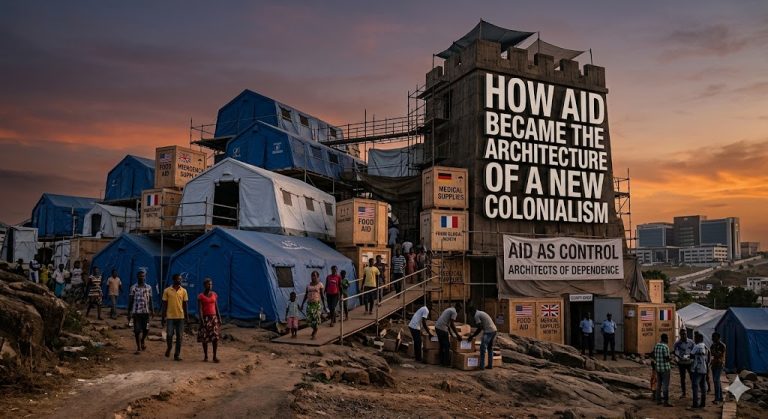
During the colonial era, European powers used Africa as they saw fit: for resource extraction, labor exploitation, strategic positioning, and burden disposal. The post-colonial era was supposed to mark Africa’s emergence as a realm of sovereign, self-determining nations charting their own courses. Yet arrangements like deportee acceptance suggest that independence remains incomplete. When African nations must accept policies they didn’t design to address problems they didn’t create, their sovereignty is revealed as constrained rather than absolute.
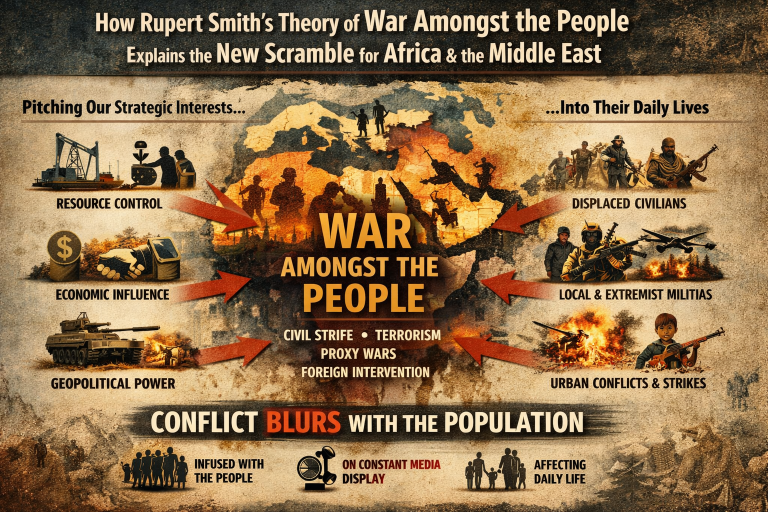
This dynamic reflects what some scholars term “neocolonialism”—the continuation of colonial power relationships through economic, diplomatic, and political mechanisms rather than direct military occupation. The deportee arrangement exemplifies this perfectly. No African nation was invaded or formally conquered, yet they find themselves implementing American immigration policy on African soil. The mechanism is different; the subordination is similar.
The arrangement also illuminates the broader competition for influence in Africa among global powers. The United States, China, Russia, and European nations all seek to expand their influence across the continent, viewing Africa as crucial to future geopolitical competition. America’s ability to persuade African nations to accept its deportees demonstrates and reinforces American influence while potentially undermining Chinese and Russian positions.
China has invested hundreds of billions in African infrastructure, trade, and development assistance, carefully cultivating relationships across the continent. If African nations appear to prioritize American preferences—even on matters as domestically sensitive as immigration—it signals that American influence remains paramount despite Chinese economic engagement. The deportee arrangement thus serves as a demonstration of American geopolitical primacy, showing both African nations and America’s rivals where ultimate loyalty lies.
Russia and European nations observe these dynamics carefully. If African countries can be persuaded to accept American deportees, might they similarly accept Russian or European requests on other matters? The precedent suggests that African nations remain penetrable to external influence, inviting further attempts at manipulation. Conversely, African nations that resist such arrangements signal greater independence, potentially making them attractive partners for powers seeking to challenge American influence.

The arrangement also affects African regional integration efforts. The African Union and regional economic communities like the East African Community promote free movement, economic integration, and pan-African solidarity. Yet when individual African nations accept deportees from outside the continent, potentially complicating regional movement and security, it raises questions about whether national decisions prioritize external relationships over continental solidarity. This tension between extraterritorial commitments and regional integration goals creates friction that may hinder Africa’s collective advancement.
Furthermore, the deportee issue intersects with Africa’s broader relationship with immigration and refugees. Africa hosts millions of refugees from internal conflicts and is generally more generous in refugee protection than wealthy Western nations. Yet Africa receives minimal international support for these populations while being pressured to accept additional deportees from the West. This double standard—Africa must accept refugees from African conflicts without adequate support while also accepting deportees from wealthy countries—exemplifies the inequitable international system African nations navigate.
The Legal and Ethical Vacuum
International law provides surprisingly little guidance on the deportee acceptance arrangement, revealing gaps in the global legal architecture governing migration, sovereignty, and state responsibility. The resulting legal vacuum enables powerful states to impose arrangements that may violate the spirit, if not the letter, of international humanitarian and human rights law.
The principle of non-refoulement—the prohibition on returning individuals to places where they face persecution or serious harm—is central to international refugee law. Yet this principle has traditionally been interpreted to apply to returns to countries of origin, not to third countries. If the United States deports someone to Rwanda rather than their country of origin, does non-refoulement apply? If deportees face persecution in Rwanda, does the US bear responsibility? International law provides no clear answers, creating a responsibility vacuum where no state may be accountable for resulting harm.
The concept of “arbitrary exile”—prohibited under international human rights law—similarly occupies murky territory in this context. Deportation to a country with which one has no connection arguably constitutes exile, yet the legal status of such removals remains undefined. Are these deportees stateless persons entitled to special protections? Are they refugees? Neither category fits perfectly, leaving them in legal limbo without clear rights or protections.
African nations accepting deportees may themselves violate international law obligations to their own citizens. Governments have primary responsibility to protect their citizens’ rights and welfare. When resources are diverted to foreign populations or when citizens face increased security risks from deportees, governments may be failing their fundamental obligations. Yet the international community rarely scrutinizes these dimensions, focusing instead on praising African “generosity” or “cooperation.”
The ethical dimensions are equally troubling. The arrangement treats human beings as commodities to be transferred between countries based on financial or diplomatic considerations rather than human rights or human dignity. Deportees become bargaining chips, and their welfare is subordinated to geopolitical calculations. This commodification of human beings recalls the darkest chapters of history when people were bought, sold, and shipped across continents against their will.
The lack of deportee consent is particularly problematic. While states have the right to control immigration and remove non-citizens, the removal to third countries with which deportees have no connection raises questions about whether such extreme measures can be imposed without consent. If a Honduran immigrant in the US is deported to Rwanda, has their right to some form of self-determination been violated? Should they have input into where they are sent? Current practice treats their preferences as irrelevant, yet this may represent a form of human rights violation international law has yet to adequately address.
## The Path Forward: Resistance and Alternatives
Given the manifold threats and injustices embedded in the deportee acceptance arrangement, what should African nations and the international community do? Several responses merit consideration, ranging from outright rejection to carefully conditioned acceptance with robust safeguards.
The most principled response would be for African nations to collectively refuse participation in these arrangements. Through the African Union or regional bodies, African countries could declare that they will not accept deportees with whom they have no connection, establishing a firm boundary against pressure from powerful states. This unified stance would make it difficult for the US or other countries to play African nations against each other, offering inducements to some while threatening others.
Such collective action requires overcoming coordination challenges and fears of retaliation. Countries dependent on American aid or facing immediate economic crises may be unwilling to jeopardize relations with Washington over deportee issues. However, history suggests that collective resistance to unjust international arrangements can succeed. The Non-Aligned Movement, debt relief campaigns, and other instances of Global South coordination demonstrate that weaker states can achieve results through unity that they cannot achieve individually.
Short of outright refusal, African nations should at minimum demand comprehensive compensation that reflects actual costs, establish strict conditions on deportee acceptance, and retain absolute sovereignty over decision-making. Compensation should cover not only immediate reception costs but long-term integration expenses, security enhancement, social services, and contingency funds for problems that may arise. If accepting deportees is so valuable to the United States, America should pay handsomely for the privilege.
Conditions might include: thorough background checks and information sharing by the deporting country, guarantees that deportees have no serious criminal records or security concerns, acceptance only of individuals who voluntarily agree to relocation to the specific African country, provision of ongoing financial support for each deportee, and agreements that deportees can return to the US if integration fails. Such conditions would shift burdens back toward the United States while providing African nations with greater protection and control.
African nations should also insist on sunset clauses and regular review mechanisms. Any agreement to accept deportees should be temporary and subject to renewal only if the arrangement proves beneficial and poses no significant problems. This ensures that African nations retain flexibility to terminate arrangements that prove more costly or dangerous than anticipated.
International civil society, human rights organizations, and activists should expose and oppose these arrangements, pressuring both the United States and African nations to reconsider. Public awareness campaigns can highlight the injustices involved, the risks posed to African security and sovereignty, and the questionable treatment of deportees themselves. International pressure can create political costs that change calculations.
The United Nations and regional human rights bodies should investigate whether deportee arrangements violate international law obligations. Reports, resolutions, and legal opinions from respected international institutions can provide African nations with legitimacy and support for refusing participation. While such bodies lack enforcement power, their moral authority and ability to shape international discourse should not be underestimated.
Perhaps most importantly, the international community should develop clear legal frameworks governing third-country deportation arrangements. The current vacuum enables exploitation and abuse. New international agreements should establish minimum standards: informed consent requirements for deportees, compensation obligations for deporting states, protections against arbitrary exile, accountability mechanisms for harm that occurs, and recognition that sovereignty includes the right to refuse accepting non-nationals without penalty.
Conclusion: Sovereignty, Dignity, and the Future of International Relations
The acceptance by some African nations of immigrants deported from the United States represents far more than a technical immigration policy arrangement. It embodies fundamental questions about sovereignty, human dignity, international justice, and the power dynamics shaping our global order.
For African nations, these arrangements pose concrete threats: security vulnerabilities from inadequately vetted deportees, economic burdens that drain scarce resources, social tensions that may explode into violence, and possible intelligence penetration that compromises national security. Beyond these immediate dangers lies the deeper threat to sovereignty itself—the reduction of independent nations to instruments of American policy, valued not for their own dignity and interests but for their utility in solving problems created elsewhere.
For deportees, the arrangement inflicts profound injustice. Whatever their immigration violations or legal status, they are human beings entitled to basic rights and dignity. Their deportation to countries with which they have no connection constitutes a form of exile that international law barely contemplates and humanitarianism cannot accept. They become pawns in geopolitical games, their welfare subordinated to diplomatic calculations made by governments they cannot influence.
For the international system, these arrangements reveal the continuing reality that formal sovereignty does not guarantee actual independence, that powerful states still dictate terms to weaker ones, and that the post-colonial era has not fully transcended colonial power dynamics. The ability of the United States to externalize its immigration challenges onto African nations demonstrates that the international order remains hierarchical rather than equal, with some nations enjoying genuine sovereignty while others experience only its trappings.
The way forward requires courage, coordination, and commitment to principles that transcend immediate interests. African nations must recognize that true development and security cannot be built on foundations of compromised sovereignty and externally imposed burdens. The short-term benefits of maintaining good relations with Washington cannot justify long-term threats to national security, social cohesion, and independent decision-making.
The international community must acknowledge that migration challenges, while difficult, cannot be solved by shifting burdens from wealthy to poor countries, from powerful to weak states. Sustainable solutions require addressing root causes—the conflicts, poverty, and persecution that drive migration—rather than playing geographic shell games with human beings. They require equitable responsibility-sharing based on capacity and historical responsibility rather than the ability to coerce cooperation.
Ultimately, the deportee acceptance issue illuminates the unfinished project of decolonization. Formal independence was achieved decades ago, but genuine sovereignty—the capacity to chart one’s own course free from external dictation—remains elusive for many African nations. Until Africa can say “no” to arrangements that threaten its interests without fearing economic retaliation or diplomatic isolation, independence remains incomplete.
The presence of American deportees in African cities, towns, and villages serves as a daily reminder of this continuing imbalance. Each deportee represents a question: Does Africa exist to serve its own people’s needs, or to absorb the problems wealthy nations find inconvenient? The answer African nations give—through their policies, their collective action, and their willingness to resist pressure—will shape not only the fate of these deportees but Africa’s future in a world still struggling to move beyond the power dynamics of its colonial past. The time for clarity, courage, and collective action is now, before these arrangements become so normalized that resistance becomes impossible and sovereignty becomes a word without meaning.
Similar Posts by The Mt Kenya Times:
- When young lives become disposable
- The day death refused to be scammed
- Statement win at the Gtech: Brentford outclass Chelsea to claim all three points
- When disability funds become a frontier for accountability: Kenya’s PWDs refuse to be invisible
- Public voices concerns over proposed education laws
About the Author