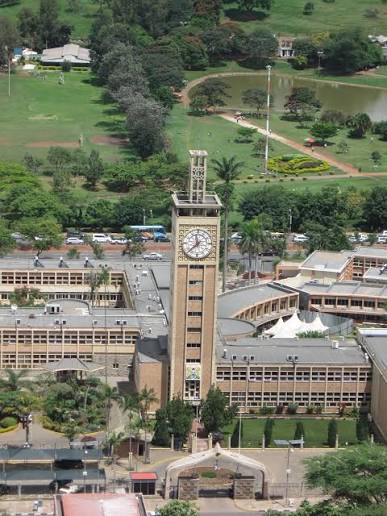
The Legislature’s Deceptive Dance Reveals Parliament’s Betrayal As It Turns Into A Puppet Of Democracy
 The Mt Kenya Times
National Assembly
By: Midmark Onsongo
Worth Noting:
- The Kenyan Parliament has lost its roar. It has become a place where words mean little, and actions are even less significant. It exists not as a center of decision-making but as a silent partner to the executive, passing laws and policies without proper scrutiny, oversight, or critical debate.
- In what can only be described as a tragic farce, MPs have turned the once powerful legislature into a sideshow of democracy—a mere rubber stamp for decisions already made by the executive. Where is the oversight? Where is the resistance? The Kenyan people wait for answers that never come because their representatives have chosen the path of least resistance, becoming mere shadows of the leaders they claim to be.
“If you sell your soul to the devil, don’t expect redemption.” This quote could not ring truer than in Kenya’s current political scene, where the legislature, once regarded as a beacon of hope and democracy, has been reduced to nothing more than a puppet of the executive. The legislature, the supposed watchdog and representative of the people, has transformed into a hollow institution—a prostitutional rubber stamp for executive whims and desires. What was once a chamber of debate and protection for the Kenyan people is now a marketplace where loyalty is bought, and ideals are sold. Kenyan lawmakers have mastered the art of hypocrisy, putting on two faces—one that fiercely criticizes at public funerals and another that meekly obeys when seated in the very chambers of parliament. At public events, Members of Parliament (MPs) can be heard roaring like lions, their voices thunderous and bold, promising the electorate that they will challenge the tyranny of the executive and restore justice to the common folk. With poetic elegance and sharp rhetoric, they evoke passion and hope. The people listen, captivated by the vocal theatrics, thinking they are witnessing the birth of resistance and the revival of democratic oversight. But it is all a well-rehearsed charade. The same MPs who shout with vigor at public gatherings, particularly at funerals, return to parliament with their tails between their legs, submissive, obedient, and utterly docile. Their passionate cries in public fade into pathetic whimpers when faced with real legislative duties.
The Kenyan Parliament has lost its roar. It has become a place where words mean little, and actions are even less significant. It exists not as a center of decision-making but as a silent partner to the executive, passing laws and policies without proper scrutiny, oversight, or critical debate. In what can only be described as a tragic farce, MPs have turned the once powerful legislature into a sideshow of democracy—a mere rubber stamp for decisions already made by the executive. Where is the oversight? Where is the resistance? The Kenyan people wait for answers that never come because their representatives have chosen the path of least resistance, becoming mere shadows of the leaders they claim to be. The transformation of parliament from a vibrant democratic institution into a servile tool for the executive is the ultimate betrayal of the Kenyan people. These lawmakers, the same ones who go to funerals and yell about how the government has failed the people, are the very individuals who, in the confines of the parliamentary chamber, fail to stand up for those same people. Their words at public events may be fiery, but their actions in parliament are cold, calculated, and in favor of the very executive they criticize outside the chamber. It is a betrayal of democracy itself, as the legislature’s role is to serve as a check on the excesses of the executive, not as its enabler. This betrayal, however, is not born out of ignorance but out of greed. Many MPs have long abandoned the notion of representing the people, instead seeking personal gain through backdoor deals and political favors. They align themselves with the executive, not because they believe in its policies, but because doing so guarantees them a share of the spoils. Parliament, once a place of ideals, has become a marketplace where political loyalty is traded for money, positions, and power. It is no secret that MPs are willing to sell their votes and their voices for the right price, turning their backs on the very people they claim to represent. It is a grotesque and tragic spectacle—a dance of deception where the puppeteer, the executive, pulls the strings, and the legislature obediently follows. The result of this mockery of democracy is that the Kenyan people suffer. Policies that harm the ordinary citizen pass through parliament with alarming ease. There is no debate, no resistance, and no meaningful opposition. The executive controls parliament like a puppet master, with MPs moving only when directed. This has led to laws being passed that prioritize the interests of the elite over those of the common folk. The people, expecting their representatives to fight for them, are instead left betrayed and forgotten. What remains is an empty shell of democracy, where the legislature no longer represents the people but serves the whims of those in power. It is in this dark reality that the question must be asked: how long will this continue? How long will the legislature be content with playing second fiddle to the executive? The answer, unfortunately, seems to be as long as it is profitable for MPs to do so. Parliament has become a business, and MPs its salespeople, hawking their votes to the highest bidder. The executive knows this, and so it has little reason to fear parliamentary oversight. The legislature, by design, is supposed to be a counterbalance to the executive’s power, but in practice, it has become an enabler of executive overreach. The few brave MPs who dare speak out against this system are marginalized, their voices drowned out by the overwhelming tide of sycophants eager to curry favor with the executive. These few, who still hold onto the ideals of democracy, face an uphill battle. They are the minority in a legislature that has turned its back on its purpose. The Kenyan people deserve representatives who will stand up for them, not those who are willing to sell their souls for political and financial gain. The Kenyan people deserve a parliament that will challenge the executive, scrutinize its decisions, and hold it accountable when necessary.
Yet, hope remains. Change must come, not from within the walls of parliament, but from the people. It is the citizens of Kenya who must demand more from their representatives. They must hold their MPs accountable for their actions in parliament, not just their words at public events. The Kenyan people must reject the double-faced politicians who promise one thing at funerals and deliver the opposite in parliament. The people must reclaim their voice, and in doing so, reclaim their parliament. The legislature’s current role as a prostitutional rubber stamp for the executive is not inevitable. It is a result of complacency and greed, but it is not irreversible. Parliament can once again be a place where real debates happen, where policies are scrutinized, and where the interests of the people are prioritized over those of the elite. But this will only happen if the people demand it. The Kenyan people must reject the politics of deception and demand a legislature that serves their interests, not the interests of the executive. In the end, it is the people who hold the power to change the course of their country’s future. The time has come for the Kenyan people to stand up and say enough is enough. Parliament must be reclaimed, not for the benefit of the few, but for the good of all. The dance of deception must end, and the real work of democracy must begin.
This article was scripted by;
MIDMARK ONSONGO, SGS
(Socio-Geographic Scholar)
Similar Posts by The Mt Kenya Times:
- ‘No one will touch Kylian’: Macron draws a line
- Three from three: City’s new era is up and running
- Love came home to Sheema
- When strength becomes silence
- Keeping a flame alive: The Turkic world’s debt to Ganira Pashayeva
About the Author