The Slumbering Sentinel: IPOA’s Dereliction of Duty in Kenya’s Police Brutality Crisis
 The Mt Kenya Times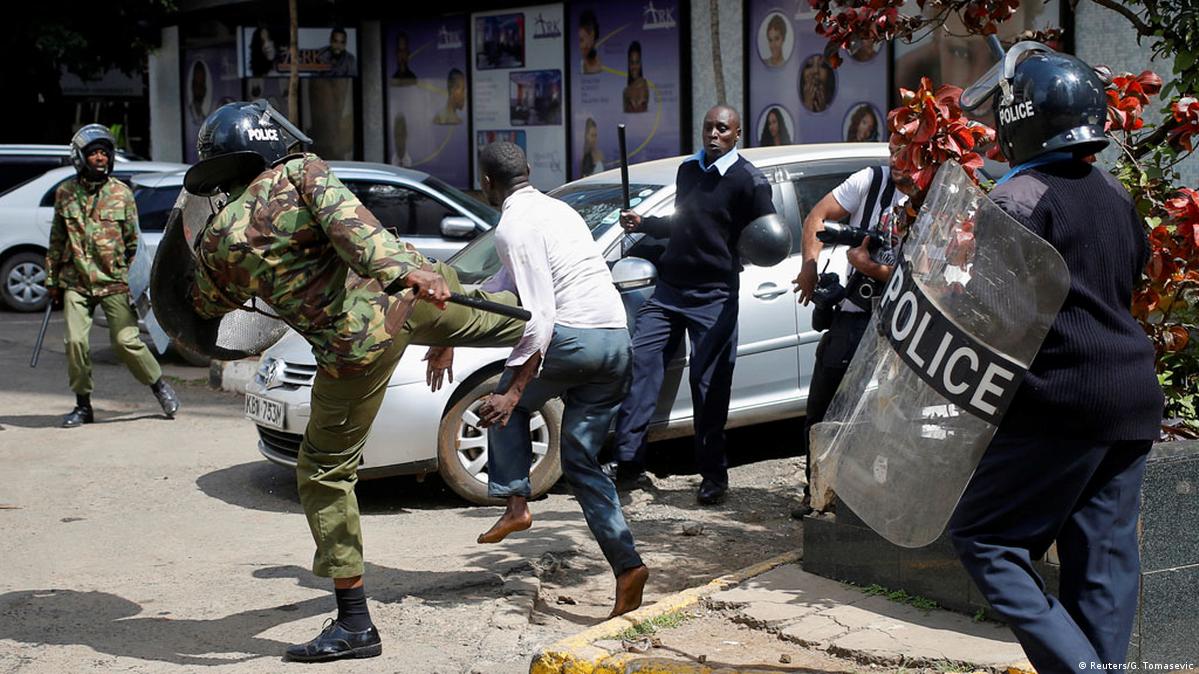
Kenya's Police Brutality Police Officers During Protests
By Jerameel Kevins Owuor Odhiambo
Worth Noting:
- The concept of democratic policing, as elucidated in the landmark case of Ransley v Republic (2018) eKLR, emphasizes the necessity of police accountability to civilian oversight bodies. Justice Mumbi Ngugi, in her ruling, underscored that “the police must not only be accountable to the law but also to the democratic will of the people.” This judicial pronouncement serves as a damning indictment of IPOA’s current modus operandi, which seems to prioritize bureaucratic inertia over proactive oversight.
- Furthermore, the case of Coalition for Reform and Democracy (CORD) & 2 others v Republic of Kenya &10; others [2015] eKLR, brought to the fore the constitutional imperatives of peaceful assembly and the concomitant responsibility of the state to facilitate, rather than impede, such expressions of democratic participation.
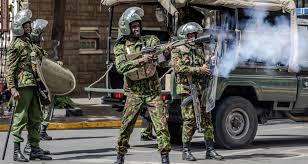
Independent Policing Oversight Authority (IPOA) stands as a beacon of hope for citizens seeking accountability and justice in the realm of law enforcement In the tumultuous landscape of Kenya’s evolving democracy. Established under the Independent Policing Oversight Authority Act of 2011, this statutory body was meant to be the vanguard of police reform, ensuring that the Kenya Police Service operates within the bounds of the law and respects human rights. However, recent events have cast a long shadow over IPOA’s efficacy, revealing a stark disparity between its mandate and its actual performance, particularly in addressing the egregious instances of police brutality witnessed during public demonstrations.
The raison d’être of IPOA is multifaceted, encompassing the investigation of police misconduct, monitoring police operations, and recommending policy changes to enhance the effectiveness and accountability of the police force. Yet, in the face of mounting evidence of excessive force, extrajudicial killings, and flagrant violations of constitutional rights by police officers during protests, IPOA’s response has been lackluster at best and complicit at worst. This dereliction of duty not only undermines the very foundation of democratic policing but also erodes public trust in the institutions meant to safeguard civil liberties.
The concept of democratic policing, as elucidated in the landmark case of Ransley v Republic (2018) eKLR, emphasizes the necessity of police accountability to civilian oversight bodies. Justice Mumbi Ngugi, in her ruling, underscored that “the police must not only be accountable to the law but also to the democratic will of the people.” This judicial pronouncement serves as a damning indictment of IPOA’s current modus operandi, which seems to prioritize bureaucratic inertia over proactive oversight.
Furthermore, the case of Coalition for Reform and Democracy (CORD) & 2 others v Republic of Kenya &10; others [2015] eKLR, brought to the fore the constitutional imperatives of peaceful assembly and the concomitant responsibility of the state to facilitate, rather than impede, such expressions of democratic participation. The court’s assertion that “the use of force by police officers in the context of protests should be an absolute last resort” stands in stark contrast to the recurring scenes of police brutality during demonstrations, a situation that IPOA seems woefully unprepared or unwilling to address.
The principle of proportionality, a cornerstone of ethical policing, has been egregiously violated in numerous instances of crowd control operations. The case of Katiba Institute v Independent Policing Oversight Authority & 3 others [2018] eKLR highlighted IPOA’s statutory obligation to investigate such violations suo moto. However, IPOA’s tepid response to well-documented cases of disproportionate force usage betrays a systemic failure in fulfilling its legislative mandate.
IPOA’s apparent somnolence in the face of escalating police brutality can be attributed to a confluence of factors, including but not limited to, inadequate resourcing, political interference, and a lack of investigative zeal. The Authority’s failure to leverage its statutory powers to compel cooperation from the police force, as provided for under Section 7 of the IPOA Act, is particularly troubling. This reluctance to assert its authority perpetuates a culture of impunity within the police ranks and undermines the very rationale for IPOA’s existence.
The concept of “command responsibility,” as articulated in international human rights law and recognized in Kenyan jurisprudence through cases like Robert Alai v The Hon. Attorney General & another [2017] eKLR, places the onus on senior police officials for the actions of their subordinates. IPOA’s failure to pursue high-ranking officers for their role in orchestrating or condoning brutality during protests represents a significant lacuna in its oversight function and contravenes the spirit of command responsibility.
IPOA’s inefficacy in ensuring the implementation of its recommendations, as mandated by Section 6(k) of the IPOA Act, has rendered much of its work exercises in futility. The case of Law Society of Kenya v Inspector General of Police & 3 others [2015] eKLR emphasized the binding nature of IPOA’s recommendations on the police service. Yet, the persistent flouting of these recommendations without consequence underscores IPOA’s inability or unwillingness to exercise its full authority.
The principle of police demilitarization, a crucial aspect of democratic policing, has been largely ignored in Kenya, with IPOA failing to adequately address the increasing militarization of police responses to civilian protests. This trend, which runs counter to the ethos of community policing espoused in the National Police Service Act, has been met with a conspicuous silence from IPOA, further cementing its reputation as a feckless oversight mechanism.
The deficiencies of the Independent Policing Oversight Authority (IPOA) extend beyond mere administrative lapses and instead undermine the foundational principles of Kenya’s constitutional framework. The constitutional right to life, as articulated in Article 26 of the Constitution of Kenya, 2010, and the constitutionally protected freedom of assembly under Article 37, are routinely infringed upon during law enforcement actions targeting protestors. IPOA’s persistent inability to conduct thorough and expeditious investigations into these breaches constitutes a de facto abandonment of its constitutionally mandated responsibilities, thereby betraying the public trust bestowed upon it.
IPOA’s systemic failures not only jeopardize the sanctity of constitutional guarantees but also erode the rule of law upon which Kenya’s democratic governance is predicated. By neglecting to uphold its statutory obligations to investigate and prosecute instances where fundamental rights are violated, IPOA perpetuates a climate of impunity within law enforcement agencies. This climate not only subverts public confidence in the accountability mechanisms designed to safeguard civil liberties but also undermines the credibility of Kenya’s legal and judicial systems on the international stage.
In essence, the persistent shortcomings of IPOA do not solely constitute bureaucratic inefficiencies but rather manifest as a systemic failure that undermines the very fabric of Kenya’s constitutional democracy. The continued disregard for constitutional protections and the rule of law in the face of recurring violations during police operations underscores the urgent need for comprehensive reform and robust enforcement of accountability measures within Kenya’s law enforcement agencies.
In conclusion, the Independent Policing Oversight Authority stands at a critical juncture. Its continued ineffectiveness in the face of rampant police brutality not only jeopardizes the lives and liberties of Kenyan citizens but also threatens the very fabric of democratic governance. The Authority must undergo a radical transformation, shedding its current image as a toothless watchdog and embracing its role as a robust, independent, and proactive guardian of ethical policing. Failure to do so will render IPOA nothing more than a bureaucratic appendage, complicit in the very abuses it was created to prevent, and ultimately irrelevant in the pursuit of a just and democratic Kenya.
The writer is a legal researcher and lawyer
Similar Posts by The Mt Kenya Times:
- Why James 3:1 prescribes the harshest judgment for teachers
- City stay perfect as late Cunha goal saves United
- Passaris joins walk for dignity: Nairobi representative backs campaign for incontinence support
- Diaspora Times Global Sep 19 – Sep 25, 2026
- Tibet’s glacial catastrophe: Behind Beijing’s wall of silence, a climate disaster reshapes a region
About the Author