The Wars in the African Great Lakes Region: a Gunpowder of Beliefs?
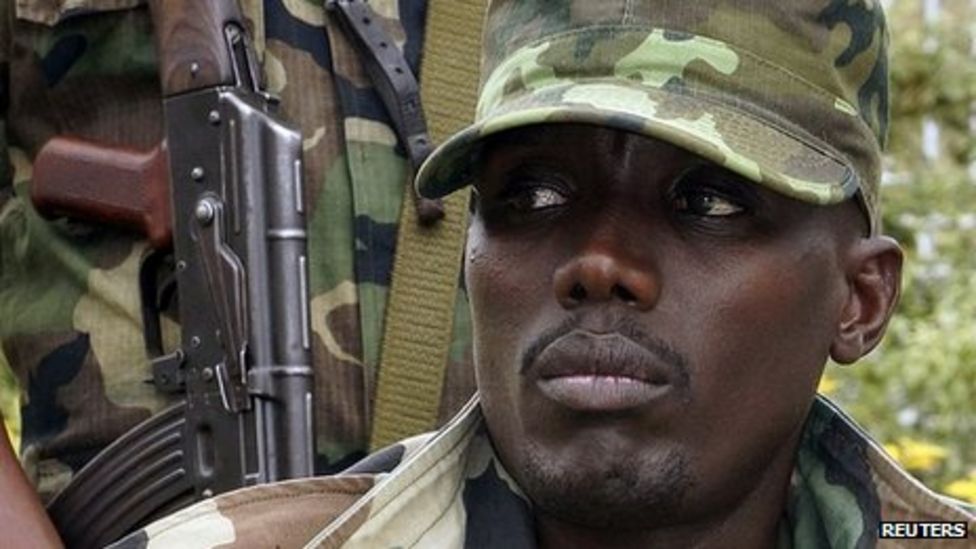
DR Congo's M23 rebel chief Sultani Makenga

By: Ngobi Ambrose Ogwang Osagyefo
Worth Noting:
- Nonetheless, this favored peace-building mechanism, which is edified every so-often only to respond to the flatly hackneyed causes— that one government must be in support of so and so armed group, or that it’s because the habitation is a mineral rich region— seemingly a set of fatal mistakes that blacken the root-cause of these wars by favoring the obvious, has proven by its failures to be unyielding. Recently, a team of experts from the United Nations Security Council established (in a 131 pages report), “solid evidence” that Rwanda was providing “troop reinforcements” for specific M23 operations.
- It is very obvious that such an establishment would be made, since M23 rebels are majorly of the Tutsi origin, their leader, Sultani Makenge having served in the Rwandan Patriotic Front, a former rebel group and current political party governing Rwanda.

Understanding the uniqueness of the wars in the African great lakes region, as combatant extensions of louring beliefs, might be the remaining peace button to be pressed in solving these series of decades-stretching strifes. Historically, the emergency of armed groups in the eastern region of Congo, a regional habitation of these wars, is attributable to the differences amongst particular groups stacked by differing beliefs about their role in the current states that make up the region.
For example, the recently revived (and considerably the top deadliest), March 23 Movement (M23), proclaims its aim as fighting for Tutsi rights within Congo and opposed to Hutu groups that are against the current Tutsi government in Rwanda; two explicit cultural/ethnic beliefs, which plant M23 as a disgruntled group.
The Alliance for Democratic Forces (ADF), another armed group in the habitation, understands its struggle as a religious quest, aiming to establish a sharia government in Uganda. Even the Mai-Mai rebels, who advocate for a secession of eastern Congo from the mainstream, are another dangerous belief expressionist group.
At the bottom of these groups’ aims sits disgruntlements that are beyond the gunpowder they wield, each disgruntlement shaping dangerous beliefs, one group considering itself as marginalized, another as exploited, mistreated or betrayed.
Irrefutably, a simple consideration of the weak operational and structural set up of these armed groups: the Mai Mai rebels superstitiously claiming to be protected by some kind of magical waters, M23 being a defection from the Congolese national army, and ADF members being forcefully recruited; makes it sharply clear that combined military efforts of international actors would suffice to debase these armed groups.
That, for instance, has been the favored fashion of settling these wars (since the Uganda–Rwanda operations backing Laurent Kabila to oust dictatorial President, Mobutu Sese Seko in May 1997); Rwanda and Uganda taking the lead in every matter, and recently Kenya too deploying its troops, while a sea of countries deploying under the United Nations Organisation Stabilization Mission in the Democratic Republic of Congo (MONUSCO).
Nonetheless, this favored peace-building mechanism, which is edified every so-often only to respond to the flatly hackneyed causes— that one government must be in support of so and so armed group, or that it’s because the habitation is a mineral rich region— seemingly a set of fatal mistakes that blacken the root-cause of these wars by favoring the obvious, has proven by its failures to be unyielding. Recently, a team of experts from the United Nations Security Council established (in a 131 pages report), “solid evidence” that Rwanda was providing “troop reinforcements” for specific M23 operations.
It is very obvious that such an establishment would be made, since M23 rebels are majorly of the Tutsi origin, their leader, Sultani Makenge having served in the Rwandan Patriotic Front, a former rebel group and current political party governing Rwanda.
And as it is such obvious, the President of Rwanda trashed the report positing his continued support of peace-building efforts in the region, along with a query of what would be his motive to support an armed group that is already armed— insisting that soldiers that joined M23 were from factions in the national Congolese army (Forces of the Democratic Republic of Congo), who defected (for their own disgruntlement), while fully armed.
Assuredly, these efforts will continuously be futile, rather than having a definite answer to the state of wars in the region, only blaming involved entities as if doing so would make the said entities recall off the catastrophic activities of these armed groups.
In reality, it would be logical to look at the functionality of these armed groups, establish their values and beliefs, and converge efforts to deconstruct them. And necessarily, deconstruction might not mean regional countries deploying to fight against these armed groups—rather, cultivating a solution from studying causes of their current belief systems.
As it’s expected, such studies would bear results that point to their unhappiness about particular issues within the current arrangements of affairs in the regional states. Perhaps that way, it would be easy to negotiate a genuine transition to a peaceful climate, committing and working on those specific areas forming their unhappiness, and integrating the armed groups into the mainstream societies of the regional states.
Similar Posts by The Mt Kenya Times:
- Mt Kenya Times ePAPER October 23, 2026
- Ruto’s parting COMESA call: Remove the barriers, honour the commitments
- Direct hospital access to KEMSA cuts drug delays, says PS
- Africa can’t wait: Continent seeks $1 trillion for climate adaptation
- Ruto passes the baton as Africa’s trade bloc faces a fragmenting world
About the Author