The Mt Kenya Times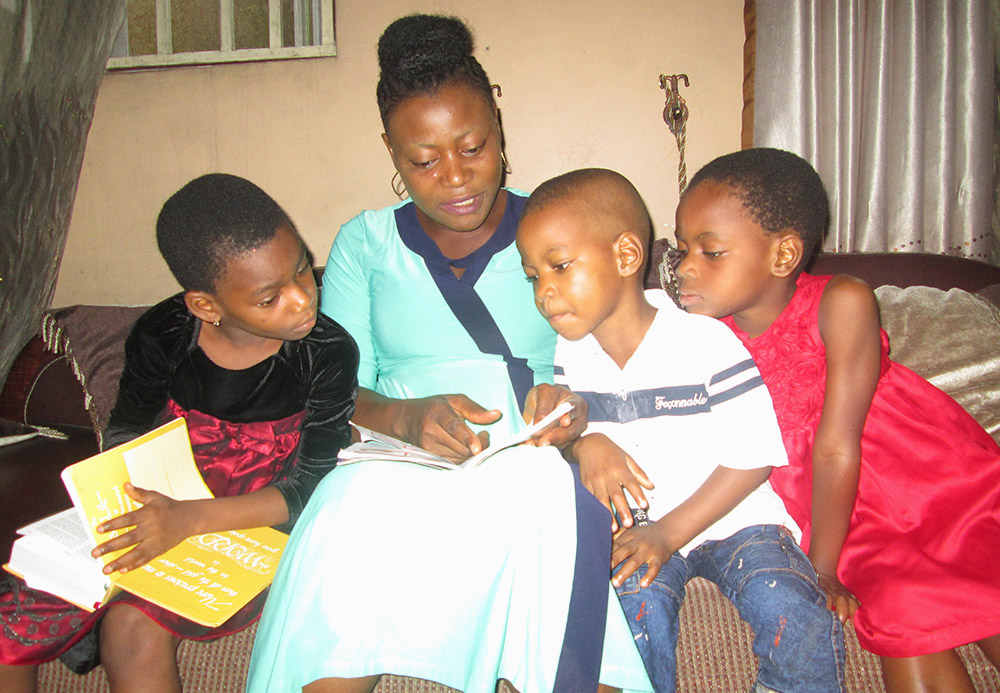
By: Wanjohi. P. Mugambi
Worth Noting:
- The child is a living growing organism. He grows in a family which belongs to a group. Thus the child starts with a biological foundation and grows up in a social environment. Every organism is a product of its unique experiences interacting with its own unique genetic endowment.
- Since the child lives and grows in a social context, the people in his environment, particularly the parents and other members of the family earlier and the teacher and the fellow pupils in the school later, are very significant in determining the way in which the child develops.
- As a biological organism the child is influenced by pains and pleasures which are common to all organisms.
There are three points that influences a child while growing
(a)Acceptance: This involves genuine love of the parents for the children. They take interest in their development not as their duty but as “the deeper reality of their own inner selves”. They accept their children for “what they are, rather than for their good manners, scholastic achievement and good looks”, we may very well expect good citizens from such families where children are wanted and accepted.
(b) Rejection: In some of the families some children are treated as unwanted children. This may be due to various reasons. One reason may be the more of children who cause a great financial problem for the parents. Sometimes parents go on giving birth to more children expecting a male child or a female one. Hence the female children who are born while parents expect a male one may become unwanted and they may be rejected by parents to get proper love and affection. Sometimes if the parents do have a happy married life may ignore children. If the father is not happy with the mother due to some reason or other he may also be disinterested with her chileren and vice versa. This act of rejection may be expressed in various ways. It may take the form of open hostility towards the child or the children or parents may show lack of interest and concern for them. In some parents, the feeling of rejection or hatred may rest in unconscious state and for this they may hesitate to apply even the mildest discipline with the fear of losing control over themselves and do harm to the child.
(c) Over protection: This over protection is experienced when the parents have only one child or only one male child among a number of female ones. It is maximum when only one child survives after the immature death of a number of children or parents get a child after long anticipation during old age. It may be also due to some condition in the child or some several illness that thatens the life of the child. When there is over protection from parents side they allow full liberty to the child and expect perfection with their children.When children are given so much independence they misutilise this and become spoiled. We cannot blame parents for this over protecting attitudes as this is built up unconsciously in their minds.
There are certain objections to treating children as though they can be manipulated like bunsen burners. It is better, argue some, to return to Preyer and observe certain selected behaviours in the home, school or neighbourhood in much the same way that othologists study monkeys. This has its attractions but it should not be imagined that it is either easy or necessarily reliable; so much depends on the observer, who must be carefully trained. If this is done, then the technique has ” much to offer.
If, for example, we are interested in the different responses to Father Christmas in three, four-and five-year-olds, one way to find out is to watch them when Father Christmas comes into the room. Indeed, there are some questions that can be answered only by these means. The use of video cameras has given a great fillip to systematic observation of these types, for several observers can watch the same film over and over again until they all agree on their interpretation. But that last word, interpretation, reveals a fundamental weakness. No matter how many video films are taken, ultimately behaviour has to be interpreted and this is no easy matter. Take a child who quarrels with another. Was that action a push, or a smack? Was it accidental? Was it intentional but was the force used accidental? When one adds the possibility of something happening off-camera, or out of the view of the observer, the problems multiply. Nevertheless, if one is researching into relatively discrete, easily definable behaviour—for example, how many times a child gets off a chair in a 30- minute period—personal observation is invaluable. Whatever is done with or to a child should, ethically be in his or her best and direct interest. It should also be done with the informed consent of either the child or the child’s parents.
This can raise some difficult questions. If one informs a child, or parents about an observational study, this might affect the child’s behaviour and thus invalidate the work. At what age should one assume that children can have sufficient understanding to give informed consent? If it is uncertain whether or not a research student’s results will be of value can that student say that asking a child to spend time being tested is in that child’s direct interest? Similarly, is it ethical for a child to be made uncomfortable during an experiment ? Can be legitimately ask questions of children about their families and friends? There are no pat answers to any of these ethical problems. Nevertheless, they cannot be ignored and each study has to be considered on its merits.
The child is a living growing organism. He grows in a family which belongs to a group. Thus the child starts with a biological foundation and grows up in a social environment. Every organism is a product of its unique experiences interacting with its own unique genetic endowment. Since the child lives and grows in a social context, the people in his environment, particularly the parents and other members of the family earlier and the teacher and the fellow pupils in the school later, arevery significant in determining the way in which the child develops. As a biological organism the child is influenced by pains and pleasures which are common to all organisms. But as a member of the society he is also influenced by rewards and punishments given by people among whom he grows and by their approval and disapproval.
The child is not only a growing organism he is also a learning organism. His growth depends upon the biological basis. His learning depends upon the perceptual and conceptual processes, which have also biological basis in the nervous system. Learning is the most basic process because human feelings, actions and values are acquired over a lifetime. Much early learning takes place at home as the child is being socialized; other learnings take place in a more formal way when a child is educated in the school system. The purpose of socialization and education is to instil the appropriate feelings, behaviours and values of the group in which he lives. Today there are also the mass media, namely, the cinema, the radio, the television and newspapers and periodicals which also expose him tomany situations and themes which are unique to his own group and also of the various other social group throughout the world.
Similar Posts by The Mt Kenya Times:
- Nigeria Starts Making Its Own Next-Generation Malaria Nets
- Diaspora Times Global Oct 3 – Oct 9, 2026
- Kwale’s electricity push moves from grid to growth
- Linguistic Features Of Chromatonyms In English And Uzbek
- A Poem, a Universe: A poetry book gaze at Jumaniyoz Jabborov’s “Ko‘zgudagi sanam”
About the Author