Siaya assembly joins push to put every eligible voter on the register
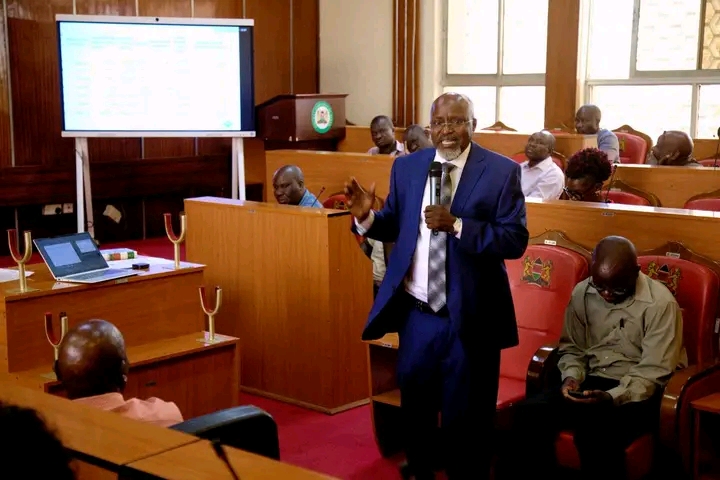
Siaya County Speaker George Okode, Members of the County Assembly, and officials from the IEBC County Office
County Speaker George Okode leads members in talks with IEBC officials as Kenya’s 2027 electoral countdown accelerates
By James Kilonzo Bwire
Siaya County Assembly Speaker George Okode yesterday met with members of the county assembly and officials from the Independent Electoral and Boundaries Commission’s county office to review voter registration statistics and strengthen preparations for the 2027 General Election, in what observers are calling one of the more concrete examples of county-level electoral engagement seen this cycle.
The meeting, which focused on the current state of voter registration in Siaya and the broader challenge of expanding civic participation ahead of next August’s polls, reflects a growing recognition among county leaders that the task of building a credible electoral register cannot be left to the national commission alone. With the IEBC projecting a target voter register of approximately 28.5 million — up from the 22.1 million registered voters who participated in the 2022 General Election — local institutions have a critical role to play in closing that gap.
Okode, a lawyer by profession who is serving his third consecutive term as Speaker, has long championed civic engagement in Siaya. During an earlier phase of the continuous voter registration exercise, he adopted three polling stations within his home area of Siger sub-location in Rarieda Constituency, personally committing to ensure that every eligible voter in those areas was registered. Yesterday’s meeting extended that commitment to the institutional level, bringing together elected members and electoral officials in a structured exchange that went well beyond routine administrative protocol.
“We need to use every possible means to reach every potential voter,” Okode told members at the meeting, urging colleagues to treat the registration exercise as an urgent priority rather than a peripheral concern. His message carried weight not only because of his office but because of the county’s historical significance in Kenyan electoral politics — Siaya has consistently produced some of the country’s most engaged voters and has been a decisive constituency in multiple national elections.
The timing of the engagement is significant. Kenya is now in the thick of pre-election season, with the IEBC having already gazetted the 2027 election period and unveiled key timelines for aspirants and campaigns. The commission launched its Enhanced Continuous Voter Registration exercise in March 2026, targeting 2.5 million new registrations in the first phase alone and deploying officials and KIEMS kits to registration centres across all 47 counties. Despite that momentum, with nearly three million new registrations recorded since the exercise began in September 2025, significant work remains to reach the projected target.
County assemblies occupy a distinctive position in Kenya’s democratic architecture. Their members are closer to the ground than any national institution — they understand which communities lack accessible registration centres, which demographic groups remain disengaged, and what practical barriers are preventing eligible citizens from joining the register. When that local intelligence is brought into direct conversation with IEBC officials, as happened yesterday in Siaya, the result is a more responsive and better-targeted registration effort.
The barriers are real and varied. In some parts of Siaya and counties like it, distance to registration points remains a challenge. In others, low awareness — particularly among young first-time voters and residents of remote sub-locations — continues to suppress uptake. Yesterday’s meeting gave county assembly members the opportunity to surface these issues directly with IEBC officials and agree on practical responses, from identifying additional registration sites to coordinating community outreach with local leaders and civil society organisations.
There is also a broader democratic argument at stake. A voter register that fails to capture the full eligible population does not just reduce participation numbers — it distorts representation. When large groups of citizens go unregistered, the governments elected in their absence are structurally less accountable to them. Every eligible Kenyan who registers and votes strengthens the mandate of whoever wins and the legitimacy of the institutions that emerge from the polls.
For Siaya, a county with a strong tradition of civic awareness and political participation, yesterday’s meeting is a signal that local leadership intends to deliver a comprehensive registration drive in the months remaining before the register closes. With Okode leading from the front and members of the county assembly now formally engaged with the IEBC, the county is well-placed to set a standard that others might follow.
The IEBC’s message to all eligible Kenyans who have not yet registered remains simple and urgent: the time is now, and the 2027 election will be shaped by those who show up — beginning with those who register.
Similar Posts by The Mt Kenya Times:
- Mt Kenya Times ePAPER September 10, 2026
- Ruto tells Rift Valley “I love you” — but a million unregistered voters tell a different story
- Counties foot the bill for health deals they never signed
- Matiang’i breaks silence on DCP’s Mt Kenya grip, Jubilee’s future and the Nyoro war
- Methu demands action on Ruto’s idle Moyale gold mine order
About the Author