The Mt Kenya Times
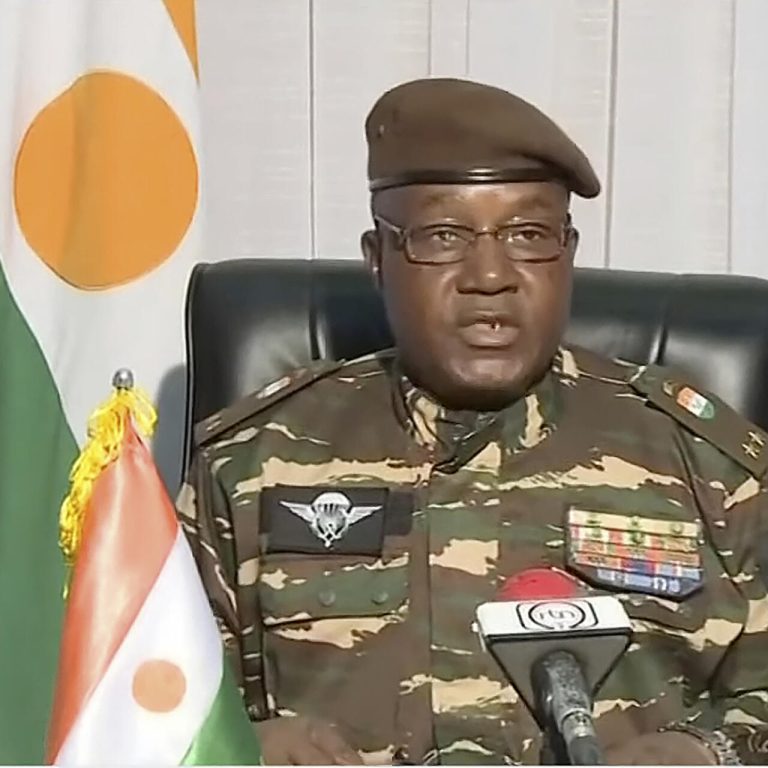
Somalia’s former president Mohamed Abdullahi Farmaajo
The shocking truth behind Somalia’s corruption crisis: a nation mired in a web of deceit and betrayal
By: Midmark Onsongo
Worth Noting:
- The Somali government is a labyrinth of deceit, where politicians, businessmen, and warlords mingle in a grotesque dance of manipulation. In 2021, a report from the United Nations revealed how Somali leaders and business elites orchestrated fraudulent deals worth millions of dollars, often in collaboration with foreign interests.
- These deals are not just about pocketing funds—they are about maintaining power, buying influence, and ensuring that the system remains rigged in favor of a select few. If you doubt this, ask yourself how it is possible that Somalia, despite receiving billions of dollars in international aid, continues to rank among the world’s poorest nations.
- What happens to this aid? Where does it go? The answer is in the hands of a few who use their positions for personal enrichment.
“Inna Allah ya’muru bil ‘adli wal ihsani wa i’ta’i dhil qurba,” says the Quran (16:90), “Indeed, Allah commands justice, the doing of good, and liberality to kith and kin.” But what happens when the very system meant to protect its people turns into a platform for betrayal and exploitation? Somalia, a country that once harbored hopes for growth and peace, now wears the shame of being the most corrupt nation on the planet. It is an open secret, but few dare to name it out loud—until now.
Imagine this: a nation where corruption is not an unfortunate occurrence but a deeply embedded norm, and where the idea of justice feels like a distant dream, crushed beneath the weight of greed, self-interest, and power plays. Somalia’s corruption crisis is not just a matter of misused funds or diverted resources; it is a system that perpetuates poverty, breeds instability, and crushes the spirit of its people. This isn’t just another scandal to discuss in the corridors of power—this is the reality for millions of Somalis whose hopes for a better tomorrow are choked out by the very individuals sworn to serve them.
According to Transparency International’s Corruption Perceptions Index (CPI) 2023, Somalia has yet again claimed the dubious title of the most corrupt country in the world, scoring a lowly 12 out of 100. This is not the first time Somalia has held this position, and at this rate, it seems unlikely to be the last. While corruption seeps into the corners of every institution, it is the government that plays the most significant role in perpetuating this vile culture. But what are the driving forces behind this scandalous reputation, and who are the people that sustain this corrupt machine?
The Somali government is a labyrinth of deceit, where politicians, businessmen, and warlords mingle in a grotesque dance of manipulation. In 2021, a report from the United Nations revealed how Somali leaders and business elites orchestrated fraudulent deals worth millions of dollars, often in collaboration with foreign interests. These deals are not just about pocketing funds—they are about maintaining power, buying influence, and ensuring that the system remains rigged in favor of a select few. If you doubt this, ask yourself how it is possible that Somalia, despite receiving billions of dollars in international aid, continues to rank among the world’s poorest nations. What happens to this aid? Where does it go? The answer is in the hands of a few who use their positions for personal enrichment.
Take, for example, the infamous case of former Somali Prime Minister Hassan Ali Khaire. Under his leadership, reports from the World Bank and the IMF indicated a lack of transparency and accountability in the management of Somalia’s financial resources. In 2020, a special UN investigation into the Somali National Army (SNA) found that military resources were routinely diverted for personal gain, leading to critical shortages in equipment and supplies for the very troops tasked with defending the nation. The investigation exposed the depth of this corruption, with military officers pocketing funds intended for soldiers, leading to a weakening of the country’s already fragile defense structures.
This corruption is not isolated—it trickles down to the lowest levels of society. Somalia’s police force, the judiciary, and even local administrations are rife with bribery and favoritism. In 2022, a survey conducted by the Somali Civil Society Organizations (SCSO) found that nearly 80% of Somalis had to pay bribes to get basic services, whether it was obtaining a passport, enrolling a child in school, or even receiving medical treatment. The report also revealed that 65% of Somalis felt that the police force was part of the problem, rather than the solution, as officers often demand bribes to carry out basic duties.
And yet, despite this widespread corruption, the individuals at the helm remain untouchable. It is a nation where those in power have mastered the art of evading justice, thanks to their deep ties to warlords and criminal enterprises. In 2019, Somalia’s former president Mohamed Abdullahi Farmaajo came under fire for his failure to tackle corruption within his government. Accusations of embezzlement, mismanagement, and cronyism were leveled against his administration, but nothing came of it. Farmaajo’s reign was marked by a series of shady dealings and political manipulations, including the controversial extension of his presidential term through unconstitutional means.
However, Farmaajo’s failure to address corruption is not the sole reason Somalia remains stuck in this vicious cycle. The international community, despite providing aid, has repeatedly failed to hold Somali leaders accountable. The presence of foreign forces in Somalia, particularly from the African Union Mission in Somalia (AMISOM), while essential for security, has often been seen as a cover for the corrupt dealings of local leaders. The UN, along with countries like the United States and the United Kingdom, continue to funnel aid into Somalia without demanding real reforms or accountability from the government. This international complicity only strengthens the corrupt practices that have made Somalia a pariah in the eyes of the global community.
Corruption in Somalia isn’t just about money—it’s about the lives it ruins. It is about a system where the government has failed to provide for its citizens, leaving them to rely on the shadowy networks of warlords, tribal leaders, and criminal cartels. Somalia’s weak governance and fractured political landscape create the perfect breeding ground for corruption. There are no real checks and balances, and the judiciary is compromised, with judges frequently bribed to rule in favor of the highest bidder. This creates a dangerous environment where the rule of law is absent, and justice is only for those who can afford it.
The situation is made worse by the fact that Somalia remains caught in a cycle of violence. The al-Shabaab terrorist group, an extremist organization that has plagued Somalia for over a decade, continues to thrive in this corrupt environment. The group’s ability to operate freely in the country is partly due to corrupt officials turning a blind eye to their activities or even supporting them for personal gain. In fact, in 2018, the United Nations reported that Somali government officials were complicit in helping al-Shabaab fund its operations through the extortion of local businesses. This alliance between corrupt officials and terrorist groups creates an environment where lawlessness reigns, and ordinary Somalis are the ones who suffer the most.
But there is hope. There is a growing movement within Somalia to confront corruption head-on. Civil society organizations, activists, and a few brave politicians are starting to expose the rot within the system. In 2023, a group of Somali journalists bravely uncovered a massive bribery scandal involving top government officials and foreign contractors. This story sent shockwaves through the nation, and while those responsible have yet to be fully held accountable, the public’s growing awareness of the issue is a step in the right direction.
Somalia’s corruption crisis is not just a shame for its leaders—it is a stain on the global community. As long as the international community continues to turn a blind eye to the rampant corruption in Somalia, the country will remain in the clutches of those who profit from its suffering. It is time for the world to stop pretending that Somalia’s leaders are working for the good of their people. It is time to demand real accountability and force the corrupt elites to pay for their crimes. In the words of the Somali proverb, “War isku daray ma gaadho,” meaning “A problem cannot be solved by trying to avoid it.” The time to confront the corruption in Somalia has come, and the world must act before the country slips further into chaos. It’s not just a Somali problem—it’s a global one. And until the rot is removed, Somalia will remain a nation on the brink, trapped in the cycle of corruption that has defined its existence for far too long.
This article was scripted by;
MIDMARK ONSONGO, SGS
(Socio-Geographic Scholar)
Similar Posts by The Mt Kenya Times:
- Sengwer youth: When will Kenya stop treating a minority like an afterthought?
- When young lives become disposable
- The day death refused to be scammed
- Statement win at the Gtech: Brentford outclass Chelsea to claim all three points
- When disability funds become a frontier for accountability: Kenya’s PWDs refuse to be invisible
About the Author