State And Religion: Controversy Around KSh1.2 Billion Church Project at State House
By Benson Maina
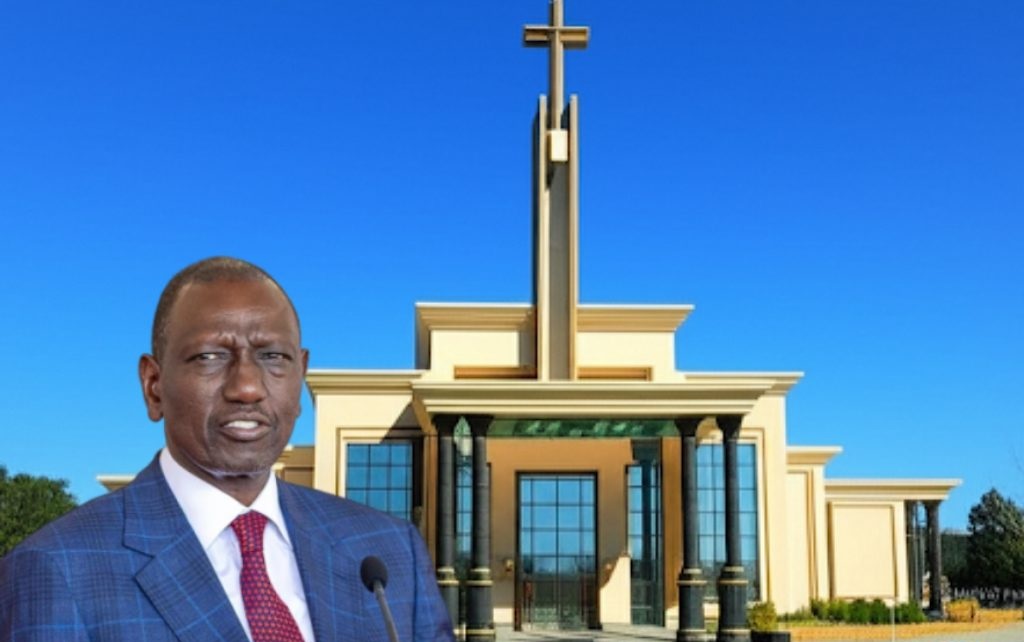
President William Ruto’s decision to construct a KSh 1.2 billion church within the State House grounds has stirred intense national debate, raising ethical, legal, and constitutional questions. The mega project, designed to seat 8,000 worshippers, has ignited criticism across political, religious, and public circles.
The timing of the project has drawn particular ire. With the country grappling with high inflation, rising unemployment, and underfunded public services such as healthcare and education, many Kenyans see the development as an extravagant misallocation of resources. Critics argue that, even if privately funded, the symbolism of such a grand religious structure on public land sends the wrong message in a period of economic hardship.
Kenya is a secular state with a rich tapestry of faiths — Christianity, Islam, Hinduism, and traditional African religions among them. Some citizens feel that the president’s move disproportionately favors evangelical and Pentecostal Christianity, potentially marginalizing other religious groups. This has raised concerns about religious inclusivity and the constitutional requirement for the state to remain neutral on religious matters.
Legal experts have also weighed in, pointing to Article 8 of the Kenyan Constitution, which states: “There shall be no State religion.” They argue that constructing a Christian church on public land may violate this provision. Furthermore, Article 131(1)(c) obliges the President to promote national unity — a duty some say is undermined by such overt religious symbolism tied to one faith.
Despite President Ruto’s insistence that the project is funded from his own pocket and will not cost the taxpayer “a single cent,” doubts persist. Kenyans are asking how a private citizen — even the president — can use personal funds to develop public property. The lack of transparency around the source of the funds and the decision-making process has further fueled skepticism.
Some political leaders, including MPs Peter Salasya and Ndegwa Njiru, have openly criticized the project and the church’s apparent silence on government accountability. They argue that religious institutions, often seen as moral compasses and watchdogs of the state, are failing in their role by remaining silent as the government appears to prioritize religion over essential public services.
President Ruto has remained defiant in the face of criticism. “Tutajenga kanisa la Mungu, shetani akasirike afanye ile anataka,” he declared, meaning, “We will build God’s church; let the devil be angry and do what he wants.” He has maintained that the project is an expression of personal faith and gratitude to God, insisting he owes no apology for what he deems a noble initiative.
This is not the president’s first religious construction. In 2022, while serving as Deputy President, Ruto built a chapel at his official residence in Karen — a testament to his deep personal commitment to Christianity.
While the construction of a KSh 1.2 billion church at State House may reflect President Ruto’s devotion and religious values, it has sparked a nationwide debate on governance, constitutionalism, and the separation of church and state. For many, it has raised critical questions about the boundaries between personal faith and public duty in a secular republic.
Similar Posts by The Mt Kenya Times:
- Olise seals France win over Belgium in Nations League thriller
- Fatuma faces Senate scrutiny in PSC commissioner bid
- Birik: Lokichar first oil on course for December
- Eng Mwangi: Dangote refinery could reshape Kenya’s industry
- Mt Kenya Times ePAPER September 29, 2026
About the Author