

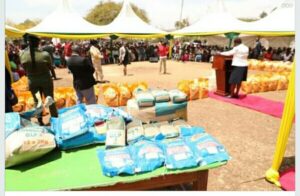
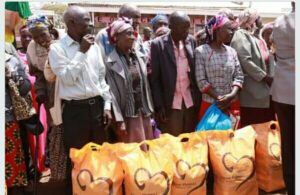
Distribution of food and seeds to drought stricken regions in Meru County by Governor Kawira Mwangaza.

By: Mwanika Gakii Juliet
Worth Noting:
- Climate change is a global phenomenon that has impact to all people of the world, but its effects disproportionately affect both men and women. As climate change intensifies, women continue to struggle and suffer most.
- Women meanwhile, endure poverty and residual social cultural discrimination that add to the pressure that come with climate change and thus, they bear much more of the burden of rebuilding families and communities.
- Previous development efforts focused more on roads and infrastructure and failed to focus also on wells, fields, and forests where women fetch water, gather firewood and grow crops thus the current menace of climate change.
Global warming that has led to climate change is a collective good problem to the international system. Climate change acts as a reminder of the interconnectedness of the international system, bringing forward the vulnerabilities that serge from the connectedness, but also the need for shared solutions and collaborations. This article comes at an important time of international observance when old commitments of COP 26 are expected to be delivered and new commitments established in anticipation of the conference of parties COP 27 to be held in Sharm al-Sheikh, Egypt as from Nov 6th to 18th. As different states delegates do their final touches on their agendas for the conference, they should ensure women representation, participation and issues are also part of their climate change discussions.
International Relations revolve around finding solutions to key problems that serve global collective interests through burden sharing. For instance, every country has an interest in stopping the impacts of climate change, a goal that can only be achieved through collective action by countries of the world. Yet, each country has its own interest in coal mining and burning fossil fuels to keep their economy running. But countries are bound by foreign policies that guide their relations since the international system is in a state of anarchy (has no central authority/no world police) through; memberships to international and regional governmental organizations such as United Nations and African Union, and International and regional Treaties such as the Paris Agreement on Climate Change and Green Recovery Action Plan. Such treaties and memberships ensure countries contribute to international and regional efforts to curb vicious and chaotic situations where mutual gains from such international efforts of burden sharing would disappear if they didn’t exist.
The Paris Agreement was adopted in Paris in 2015. The world governments pledged their commitment to reduce greenhouse carbon emission below 1.5 degree Celsius pre-industrial levels by 2030. However, report by the United Nations Intergovernmental Panel on Climate Change (IPCC) states that with global temperature rise already above 1-degree Celsius, the window on keeping warming below 1.5 degree is rapidly closing. Therefore, the world need to act “now or never” to avoid catastrophic climate change leading to drought, widespread of hunger, unlivable heat waves, extinction and, rising sea levels. The report shows we are unlikely to keep global heating level below 1.5-degree Celsius without rapid and immediate climate change actions. These means that the ambition of emissions reduction pledges for 2030 needs to be seven times higher to be in line with the collective 1.5-degree Celsius goal of the Paris Climate Change Agreement.
Climate change is a global phenomenon that has impact to all people of the world, but its effects disproportionately affect both men and women. As climate change intensifies, women continue to struggle and suffer most. Women meanwhile, endure poverty and residual social cultural discrimination that add to the pressure that come with climate change and thus, they bear much more of the burden of rebuilding families and communities. Previous development efforts focused more on roads and infrastructure and failed to focus also on wells, fields, and forests where women fetch water, gather firewood and grow crops thus the current menace of climate change.
At the COP 26 climate summit, the leaders of Tanzania, Bangladesh and Estonia were the first signatories of the Glasgow “women’s Leadership Statement” out of the 140 heads of states that were present. The statement was a call for countries to support the leadership of women and girls on climate action at all levels of society and politics. Articulating from Chimamanda Ngozi “Dangers of a one sided Story”, States should focus on including all actors for a more complete picture of issues in climate change reconstruction and negotiations. In the eyes of many, uprising activism on women participation and inclusion means a feminized future, but it is worth noting that, to the climate female activists preferred future is not feminized, but one in which men and women participate in reducing damage and unequal hierarchical social structures.
Across Africa and the world at large women have been historically discriminated. The society has socialized women and girls roles and responsibilities as private/domestic thus, invisible in the public. In the recent past, women issues were seen of less significance, they were segregated from more ‘strategic issues’ of economic stability and human security. Development efforts and plans were made in a manner that was gender neutral at best. Most national development plans were established without the crucial consultation of women or considering the significant roles they played whether or not the initiatives involved women indirectly or directly.
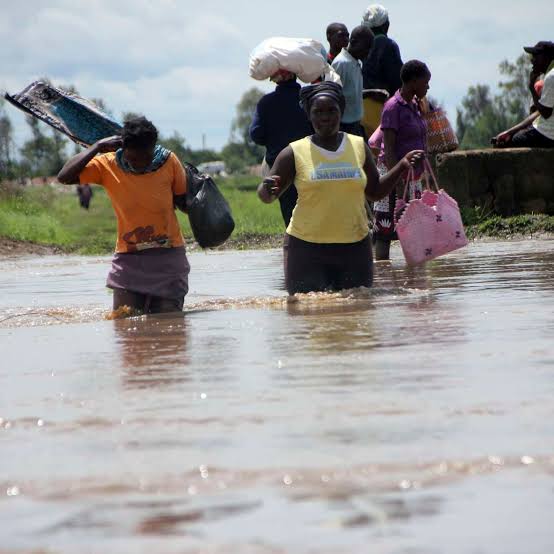
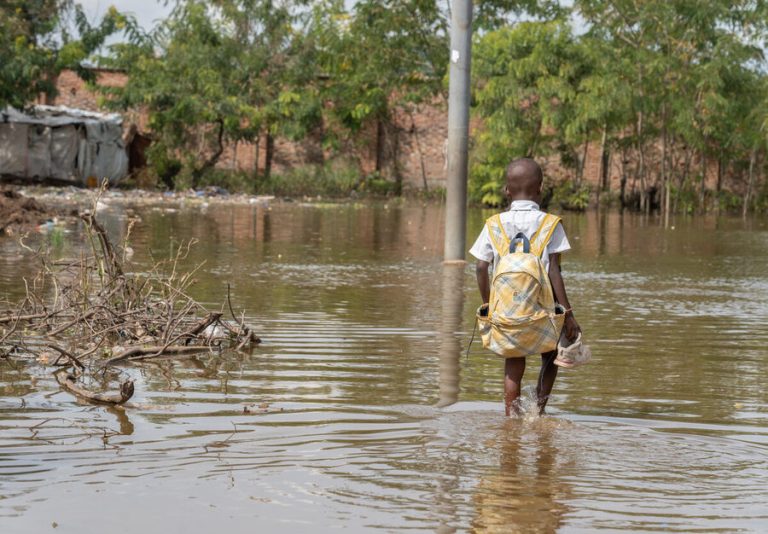
In rural settings across the world and especially in the global south, women shoulder a lager burden of climate change. Girls and women shoulder the social responsibility to gather water, food and, firewood. As famine and drought intensify, they have to travel long distances and spend more time obtaining these resources. Therefore, household responsibilities like cleaning, gathering resources, caring for children, and cooking are becoming harder to manage. Notwithstanding all the above, when food is scarce, women eat less than children and men. This has also seen a lot of girls in the affected regions drop out of school leading to high rates of early marriages, human trafficking and domestic and gender based violence. On the other hand, women have less time to invest in other sources of income, which has posed as an obstacle to economic independence. The highlighted consequences are all examples of loss and damage in the context of climate change effects and women issues.
From the existing number of women climate change activists for instance, Elizabeth Mazingira from Kenya and Vanessa Nakate from Uganda, women lead climate action movements just to name a few clearly shows that women are not helpless victims for it has been shown by their remarkable resilience on matters climate change. Despite girl’s and women’s contribution in climate change solutions, their access to climate finance remains minimal as most of their initiatives are small scale. To scale the climate change challenge and gender inequality, girls and women need access to climate finance.
Most authors have focused more on women representation and participation in matters climate change and failed to research on their influence in the same area. It is important to note that for their impacts to be felt, various factors need to be put into consideration for effective implementation of existing policies which has to do with increased opportunity for women in leadership positions and gender sensitivity. Literature shows that female legislators are more likely to give more consideration to women and “human issues” as compared to male legislators. “Human issues” are related to women issues and have been described as matters related to families, gender equality, children, health, education and welfare. They assert that framing of issues matters; when an issue is framed as a woman’s issue but is a “human issue”, “women lead the charge” but may not have the support of male legislators.
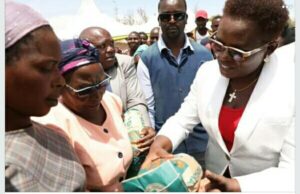
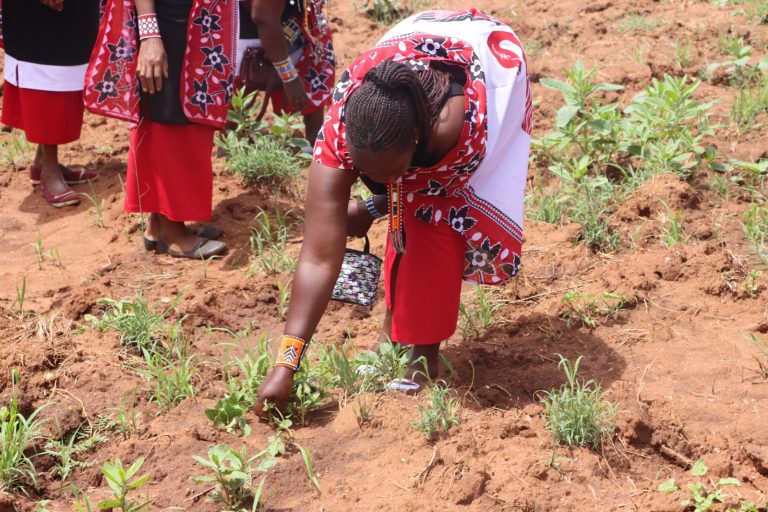
Meru County Governor- Kenya, Hon.Bishop Kawira Mwangaza in her initiative “operation okolea kaana kaamiiru” (Operation saving the lives of Meru residents), distributing food and seeds to Meru residents of regions that have been severely affected by drought.
In additional, research shows that in terms of problem-solving approaches, women tend to issue a collective or consensual approach. Female legislator tend to act differently than their male counterparts. Increased number of gender representation directly translates into better consideration of women in their drafting of law and various policies. Also, studies demonstrate that although female politicians have a wide range of position they often are more compassionate, better at working across the aisle and more willing to compromise qualities intricately bound in successful policy making.
It is clear that the world’s most pressuring climate change mitigation problems simply cannot be solved without women involvement .It is wise to note that climate change impacts women and men differently therefore, the climate change solutions will need to put into consideration gender inequalities in their climate change mitigation strategies. Thus, in this time of transformative change- establishing and promoting the status of women through education and, inclusion in decision and policy making is not just a moral imperative but a strategic evolutionary change; it is very significant to our planet’s survival and prosperity. It is a good strategy for a smarter national and foreign policy.
About the author; Mwanika Gakii Juliet,
A Gender and Climate Change activist,
Tigania-East, Meru County-Kenya.
Similar Posts by The Mt Kenya Times:
- Diaspora Times Global Aug 29 – Sep 5, 2026
- When soldiers turn on the junta they helped create
- Educational empowerment: A non-negotiable investment in Kenya’s future
- What aging parents want their adult children to understand
- Zimbabwe to roll out emotional learning programme to all 72 districts
About the Author

 Brenda Holo