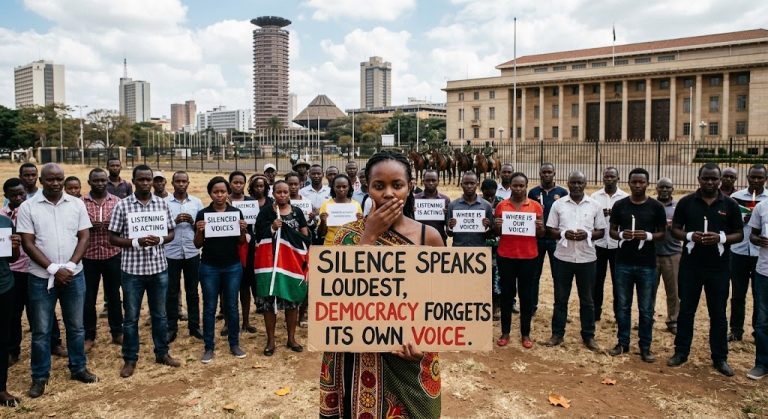
Democracy is at risk when states fail to provide public goods to their citizens. This threat is common to all countries


By Lukanga Samuel
Worth Noting:
- Firstly, irregularities in the electoral process are a common threat to democracy. Although over the last thirty years elections have become freer and fairer according to available measurements, this trend was recently reversed in 27 out of 158countries, elections in 2018 were less free and fair and so in 2021.
- Crises of electoral processes can afflict any type of democracy, but are particularly recurrent in younger and less stable democratic systems as seen in the recent presidential elections in Kazakhstan and Bolivia. The governments of young democracies are tempted to use the power of the state to cling to office and make the life of their opponents harder. They can obstruct the opposition’s political campaigns, as Kazakh President Kassym-Jomart Tokayev did during the last president elections.
People around the globe yearn for democracy-at least when it offers more than elections. They expect equality, participation and basic public goods such as health, education, housing and transport.
On 25 October 2019, the largest demonstration in Chilean history took place.Around one million people marched in the capital, Santiago de Chile, holding a loft banners demanding dignity. Three decades ago, huge numbers of Chileans also also took to the streets demanding an end to the military dictatorship and the election of a democratic government.
Today, Chileans are pressing for radical changes to a socio-economic model perceived as deeply unfair and to political institutions seen as abusive and corrupt.
Are demonstrations like the one in Chile an indicator that democracy is in crisis, or are they on the contrary a way of demanding more and better democracy?
In it’s most basic sense, a democracy is a political system in which a variety of political forces compete for the support of citizens, as expressed through suffrage. Almost 40 percent of the global population lives in a country that fulfills that minimal condition.
A more complex definition of democracy goes beyond the narrow focus on elections. It includes three other sets of criteria: institutions that check the power of the elected authorities and that protect the equality of citizens before the law: institutions that enable the deliberation among citizens necessary for electing representatives and taking informed decisions. And also, institutions that deliver public goods in basic areas of social life such as health, education, housing and transport.
Some European countries display features of all these institutions. Yet, for most citizens around the globe, this ideal-type democracy is simply an aspiration.
In Chile, the calls for dignity mean more and better public goods; and in Sudan, citizens are calling for a transition to a democratic civilian government. The demands are different, but they all pursue the goal of putting in place a political system based on democratic institutions.
Not every conflict is a crisis. Democratic societies are by definition prone to disagreement and conflict. It has become common place among academics and commentators to say that democracy is in crisis. But we must examine this statement carefully since democratic societies are composed of plurality of groups with different visions of how society should be organized.
In contrast to an autocracy such as a monarchy or a one party system, in democracies, social groups can express their visions freely and compete for the control of the state. Only when conflict and disagreement turn holders of diverging opinions into enemies to be harassed, attacked or even eliminated, is a country facing a crisis that may ultimately even see the breakdown of that democracy.
In Venezuela, for instance, the government and the opposition saw each other as enemies. This led to a failed coup against president Hugo Chavez in 2002, who responded by suppressing the opposition and capturing the judiciary. In 2017, Chavez’s successor, Nicolas Maduro, stripped the opposition-controlled parliament of it’s powers and has since trapped the country in spiralling repression.
Different sets of democratic institutions can be under threat in democracies; elections, political rights and the rule of law, public deliberation, and public goods.
Firstly, irregularities in the electoral process are a common threat to democracy. Although over the last thirty years elections have become freer and fairer according to available measurements, this trend was recently reversed in 27 out of 158countries, elections in 2018 were less free and fair and so in 2021.
Crises of electoral processes can afflict any type of democracy, but are particularly recurrent in younger and less stable democratic systems as seen in the recent presidential elections in Kazakhstan and Bolivia. The governments of young democracies are tempted to use the power of the state to cling to office and make the life of their opponents harder. They can obstruct the opposition’s political campaigns, as Kazakh President Kassym-Jomart Tokayev did during the last president elections.
Secondly, the institutions in charge of protecting citizen’s political rights can be affected. As in the case of breaches to elections, threats against political rights and the rule of law are often perpetrated by the incumbent government themselves. These threats have even emerged in relatively stable democracies, such as USA where president Donald Trump endeavored to erode the rule of law by arguably abusing the right of presidential pardon for political allies, and continuing attacks against the media as amplified by a recent law suit against the new York times.
But incumbent governments are not the only ones directly responsible for the erosion of the rule of law. In socially segregated societies like Nigeria or Philippines, crucial institutions such as judges and prosecutors are captured by corporate actors and their economic power. In these societies, trust in institutions has plummeted and the rule of law is perceived to serve vested economic interests rather than citizen’s rights.
Thirdly, as in the case of the rule of law, the the institutions that support public deliberations such as independent and pluralist media can be undermined by incumbents and market actors. In Poland, for instance, the ruling law and justice party took control of state broadcasters and intimidated foreign owned media outlets such as the US owned TVN . The opposite is happening in Brazil, a socially and racially segregated country with a population of about 210million, in which three corporate groups linked to elite families control the 19 most important national media outlets.
Digital politics through social media can hinder public deliberation when used to spread hate speech that bullies minority Social groups and fake news that hampers people’s ability to make informed decisions. This might play a role in the recent mass protests in Hong Kong or in Chile, where protesters and bystanders struggle to distinguish the truth from fake news.
Finally, democracy is also at risk when states fail to provide public goods to their citizens. This threat is common to all countries, although different levels of development and degrees of democratic maturity surely determine where citizens set the bar to assess the quality of the goods. In more prosperous countries like in Western Europe, citizens are more demanding regarding the quality of public goods. This is a particularly prominent source of democratic crises in liberal market economies where the state has rolled back its function as a provider of public goods and in some cases even as a market regulator.
In contemporary neoliberal societies, education, health and housing are not universal rights but either expensive commodity for the high and middle classes or low quality public goods for the lower middle class and the poor.
In parts of UK and in Chile, leading neoliberal economies, even water is a fully privatized commodity. Access to health, education and housing is divided: it either comes at the cost of household indebtedness or is limited to underfunded and substandard public goods. The intrinsic unfairness of this socially segregated model is the underlying cause for demonstrations in Chile, Ecuador and Columbia.
For the first time since 1930s, the number of countries facing an erosion of democratic institutions exceeds the number of countries undergoing an improvement of democratic institutions
We must advance the global governance of the global media and social media platforms in order to reduce the manipulation of information. We must improve the enforcement of norms that regulate the practices of transnational corporations and global production chains that increase segregation and social inequality in democracies in the global south, West, North and East.
Multilateral financial institutions must provide leeway for progressive democratic leaders to adopt non-orthodox redistributive policies in the interests of the lower and middle classes, while preventing the emergency of authoritarian leaders. In doing so, the international community could help to fulfill the promises of democracy.
For God and my Country Uganda!
Lukanga Samuel
lukangasamuel55@gmail.com
The writer is a social development enthusiast and a judicious youth leader from Nakaseke District.
Similar Posts by The Mt Kenya Times:
- ICC member states dismiss prosecutor Khan over serious misconduct
- Court convicts Obado, Oyamo and Obiero of Sharon Otieno’s murder
- Kenya’s KSh995.7 billion borrowing plan risks squeezing credit for small bus
- Business leaders and policymakers urge Kenya’s 7.4 million small enterprises to aim beyond survival
- Stanbic Kenya Foundation opens digital learning centre at Embu school
About the Author


 Dan
Dan